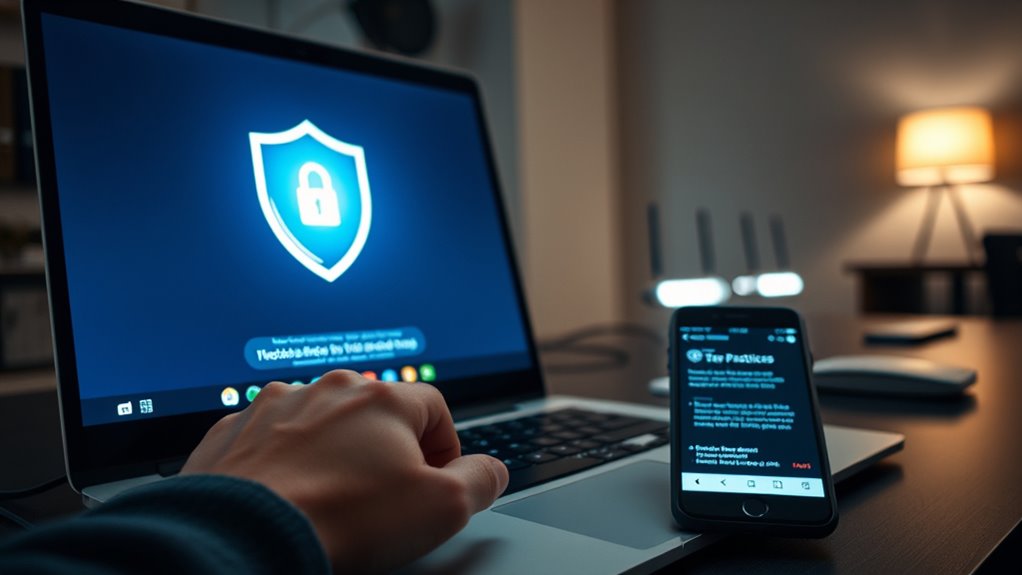

To protect your data, you should adopt strong password policies with complex combinations and enable multi-factor authentication. Keep your software and systems updated regularly to patch vulnerabilities. Secure your Wi-Fi with WPA3 encryption and use network segmentation to limit access. Deploy firewalls and intrusion detection systems to monitor threats in real time. Also, educate yourself and others on best practices for online security; exploring these strategies further can boost your defenses effectively.
Key Takeaways
- Enforce strong password policies and multi-factor authentication to prevent unauthorized access.
- Keep all software and systems updated with the latest security patches regularly.
- Secure your Wi-Fi network with WPA3 encryption and use network segmentation.
- Deploy and properly configure firewalls and intrusion detection systems to monitor and block threats.
- Educate users on security best practices, including recognizing phishing scams and safe data handling.

TP-Link AX1800 WiFi 6 Router (Archer AX21) – Dual Band Wireless Internet, Gigabit, Easy Mesh, Works with Alexa – A Certified for Humans Device, Free Expert Support
DUAL-BAND WIFI 6 ROUTER: Wi-Fi 6(802.11ax) technology achieves faster speeds, greater capacity and reduced network congestion compared to…
As an affiliate, we earn on qualifying purchases.
As an affiliate, we earn on qualifying purchases.
Implement Strong Password Policies and Authentication Measures
Implementing strong password policies and authentication measures is essential to protect your network from unauthorized access. You should enforce password complexity requirements, ensuring users create strong, unique passwords that combine uppercase and lowercase letters, numbers, and special characters. This reduces the risk of brute-force attacks. Additionally, multi-factor authentication adds an extra security layer by requiring users to verify their identities through a second method, such as a mobile app or biometric scan. This way, even if a password is compromised, unauthorized access remains unlikely. Regularly updating passwords and educating users about best practices further strengthens your defenses. Incorporating security technologies can enhance your protection strategies and adapt to evolving cyber threats. Staying informed about latest security vulnerabilities is also vital for maintaining a robust security posture. Utilizing network monitoring tools can help detect suspicious activities early and prevent potential breaches. By implementing these measures, you considerably reduce vulnerabilities and help safeguard your network against cyber threats.

Yubico – YubiKey 5C NFC – Multi-Factor authentication (MFA) Security Key and passkey, Connect via USB-C or NFC, FIDO Certified – Protect Your Online Accounts
POWERFUL SECURITY KEY: The YubiKey 5C NFC is the most versatile physical passkey, protecting your digital life from…
As an affiliate, we earn on qualifying purchases.
As an affiliate, we earn on qualifying purchases.
Keep Software and Systems Up to Date

Keeping your software and systems up to date is a critical step in maintaining network security. Regular software patching addresses known vulnerabilities before attackers can exploit them, reducing potential entry points. Stay vigilant by enabling automatic updates whenever possible, ensuring that security patches are applied promptly. Effective vulnerability management involves monitoring for new threats and applying patches quickly to minimize risks. Outdated software can harbor security flaws, making your network an easy target for cybercriminals. By prioritizing timely updates, you prevent potential breaches and protect sensitive data. Remember, neglecting software updates can lead to costly security incidents. Make updating your systems a routine part of your security protocol to maintain a resilient, protected network environment. Additionally, understanding sound vibrations and their impact on system health can help identify underlying vulnerabilities and optimize security measures. Regularly reviewing system logs can also reveal suspicious activities early and strengthen your defenses, especially when combined with appliance testing to ensure all connected devices are functioning safely. Incorporating employee training on security best practices further enhances your defense against social engineering attacks and other threats.

Firewall and intrusion detection and prevention system
As an affiliate, we earn on qualifying purchases.
As an affiliate, we earn on qualifying purchases.
Secure Your Wi-Fi Network

After ensuring your software and systems are up to date, securing your Wi-Fi network becomes the next essential step in protecting your digital environment. To do this effectively, focus on these key actions:
- Enable robust network encryption, such as WPA3, to safeguard data transmitted over your Wi-Fi.
- Use Wi-Fi segmentation to separate your main network from guest or IoT devices, reducing potential vulnerabilities.
- Change default passwords on your router to strong, unique credentials, preventing unauthorized access.
- Review your network’s vetted privacy policy regularly to ensure your data handling practices remain secure and transparent.
These steps help guarantee your Wi-Fi connection isn’t an open door for cyber threats. By implementing network encryption and Wi-Fi segmentation, you notably strengthen your network’s defenses, keeping your data safe from prying eyes.

Mini Tool Organizer Patches – Visual Identifier Patches for Tool Bags, EDC Organizers and Workshop Gear
Laser cut mini patch with wrench and screwdriver icon perfect for mechanics engineers and DIY enthusiasts hook backed…
As an affiliate, we earn on qualifying purchases.
As an affiliate, we earn on qualifying purchases.
Use Firewalls and Intrusion Detection Systems
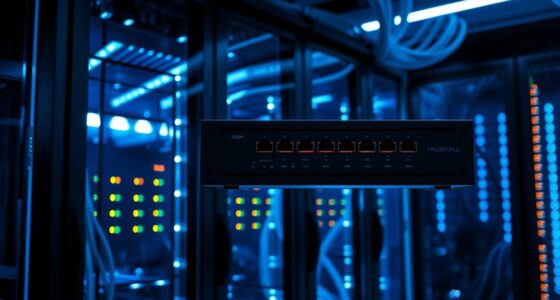
Firewalls and intrusion detection systems (IDS) are essential tools that actively monitor and block malicious traffic before it reaches your network. Proper firewall configuration is crucial; ensure it is tailored to your network’s needs, blocking unauthorized access while allowing legitimate traffic. Regularly update your firewall rules to adapt to evolving threats. Intrusion detection adds an extra layer by analyzing network activity for signs of suspicious behavior or potential breaches. When configured correctly, IDS can alert you to threats in real-time, enabling swift responses. Both tools work together to create a robust defense, preventing cyberattacks before they compromise your data. Additionally, understanding network security fundamentals helps in maintaining a comprehensive defense strategy. Implementing remote monitoring tools can further enhance your ability to detect and respond to threats promptly. Remember, maintaining an effective firewall setup and consistent intrusion detection is vital for safeguarding your network from emerging threats. Staying informed about security best practices is also key to adapting your defenses against new vulnerabilities. Incorporating advanced threat detection techniques can further improve your security posture by identifying sophisticated attack patterns.
Educate Employees and Users on Security Best Practices

Have you trained your employees and users to recognize and respond to security threats? Educating them is essential for maintaining network safety. Focus on improving phishing awareness so they can identify suspicious emails and links. Here are three key steps:
- Conduct regular security training sessions on phishing tactics and how to avoid falling for scams.
- Teach users to verify sources before clicking links or sharing sensitive information.
- Emphasize the importance of updating passwords and using access control measures to protect data.
- Incorporate continuous learning models that adapt to emerging threats in real-time to enhance security awareness and response strategies, including understanding the role of self watering plant pots in promoting consistent plant health. Additionally, providing ongoing updates about cookie management and privacy settings empowers users to make informed decisions about their online safety. Recognizing the significance of electric dirt bikes and their capabilities can also help in understanding the importance of secure and reliable technology systems.
Frequently Asked Questions
How Often Should I Change My Passwords for Optimal Security?
You should change your passwords every three to six months to guarantee peak security. Regular password rotation helps prevent unauthorized access, especially if a security breach occurs. Additionally, stay on top of security updates for your accounts, as they often include important enhancements to protect your data. By consistently updating your passwords and applying security updates, you minimize the risk of cyber threats and keep your information safe.
What Are the Most Common Vulnerabilities in Outdated Software?
Outdated software leaves you vulnerable to hackers, just like unlatched doors invite intruders. The most common vulnerabilities include unpatched security flaws, missing software patches, and delayed security updates. Cybercriminals exploit these weaknesses to access your data or infect your system. To stay protected, regularly install software updates and security patches. Keeping your software current minimizes risks, closing security gaps before they can be exploited.
How Can I Identify if My Wi-Fi Network Has Been Compromised?
You can identify if your Wi-Fi network has been compromised by noticing unusual activity or slow speeds. Use network monitoring tools to detect Wi-Fi intrusion, such as unfamiliar devices connected to your network. Check your router’s admin panel for unknown IP addresses or devices. Regularly changing your Wi-Fi password and enabling encryption also helps prevent unauthorized access. Stay vigilant and monitor your network for any suspicious activity to keep your data secure.
Are Free Firewalls Sufficient for Small Business Protection?
Free firewalls might provide basic protection for your small business, but they’re usually not enough. They often lack advanced features like intrusion detection, malware scanning, and regular updates that are essential for robust security. Relying solely on a free firewall leaves your network vulnerable to sophisticated threats. To truly safeguard your data, consider investing in a reputable paid firewall solution designed specifically for small business needs.
What Are Effective Ways to Test Employee Security Awareness?
You can effectively test employee security awareness through phishing simulations and security training programs. Conduct regular phishing tests to see how employees respond to fake attacks, identifying those who need additional training. Complement this with engaging security training programs that educate staff on recognizing threats. Consistent testing and education keep your team alert, empower them to act securely, and strengthen your overall network safety posture.
Conclusion
By mastering these methods, you’ll maximize your network’s security and minimize risks. Implementing intelligent, incremental improvements creates a safer, stronger system. Stay vigilant, secure your settings, and educate everyone involved. Remember, consistent caution and continuous communication are your best defenses. Protect your data diligently and delight in the peace of mind that comes with a protected, prepared network. Keep these practices in mind, and your digital domain will stay safe, secure, and sound.