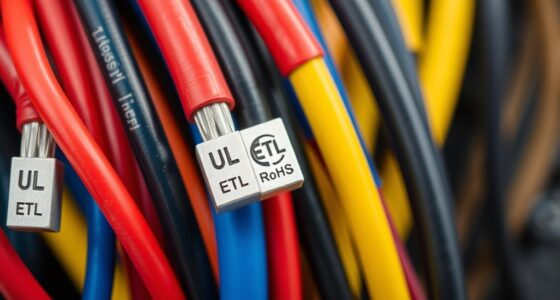
Ensuring your cabling infrastructure complies with GDPR is critical for protecting personal data and maintaining security standards. You need to contemplate physical safeguards, encryption, and regular audits to identify vulnerabilities. Neglecting these aspects can lead to costly breaches and legal penalties. Understanding the key steps to align your infrastructure with GDPR requirements not only safeguards your data but also reinforces your organization’s commitment to data integrity. The next steps could make all the difference.
Key Takeaways
- Implement data encryption for all data transmitted through cabling systems to prevent unauthorized access.
- Restrict physical access to cabling infrastructure with secure access controls and logging.
- Regularly audit and update security measures to ensure ongoing GDPR compliance.
- Maintain an accurate inventory of cables, connectors, and hardware to identify and address vulnerabilities promptly.
- Train staff on security best practices and promote a culture of physical and data security awareness.

Ensuring compliance with GDPR in cabling infrastructure is essential for protecting personal data and avoiding hefty penalties. When setting up or maintaining your network, you must recognize that the physical backbone of your data processing environment plays a crucial role in safeguarding sensitive information. Proper cabling isn’t just about speed or efficiency; it’s also about ensuring that data remains secure from unauthorized access or breaches. To achieve this, incorporating robust data encryption and strict access control measures is vital. Data encryption transforms information into an unreadable format during transmission, ensuring that even if someone intercepts your cables or data signals, they won’t be able to decipher the data. This layer of security helps you meet GDPR’s requirement to protect personal data against accidental or unlawful destruction, loss, or alteration. You should consider encrypting all data flowing through your cabling infrastructure, whether it’s stored locally or transmitted across networks. Doing so makes it significantly more challenging for malicious actors to exploit vulnerabilities in your physical setup. Additionally, implementing continuous monitoring of your cabling systems allows for early detection of suspicious activity, further enhancing your security posture. Access control forms another pillar of GDPR compliance within your cabling system. You need to limit physical access to your cabling infrastructure to authorized personnel only. This means implementing secure entry points, such as locked server rooms or cable pathways, and using access logs to track who enters these areas. When combined with proper authentication procedures, access control reduces the risk of tampering, data theft, or accidental damage to your cabling infrastructure. Remember, physical vulnerabilities can be just as damaging as cyber threats, so you should regularly review and tighten security measures. Additionally, maintaining an inventory of all cables, connectors, and networking hardware allows you to quickly identify and respond to any suspicious activity or unauthorized access attempts. It’s also important to ensure that your cabling infrastructure aligns with GDPR’s principles of data protection by design and by default. This means integrating security measures like data encryption and access control from the outset during planning and installation. Regular audits help confirm that these protections are functioning effectively, and updates or improvements are made as needed. You should train your staff on security best practices, emphasizing the importance of safeguarding physical access points and understanding the role of encryption. By doing so, you create a security-aware culture that supports compliance and minimizes risks.

TESMEN TLP-900AR Network Cable Tester, RJ11 RJ45, for CAT5/6/POE/STP, Multi-function Cable Tracer with Pairing, Continuity, QC&NCV, Suitable for Ethernet, Telephone, Wire maintenance and sorting-Green
Anti-interference network cable tester: TESMEN TLP-900A/R can cable tracking, line positioning, suitable for CAT5/CAT6/POE/shielded cables and telephone lines,…
As an affiliate, we earn on qualifying purchases.
As an affiliate, we earn on qualifying purchases.
Frequently Asked Questions
How Often Should GDPR Compliance Audits Be Conducted for Cabling Systems?
You should conduct GDPR compliance audits for cabling systems at least annually. During these audits, guarantee data encryption and access control measures are up-to-date and effective. Regular checks help identify vulnerabilities, verify that sensitive data remains protected, and confirm that your access controls prevent unauthorized access. By staying proactive, you reduce risks of non-compliance, safeguard personal data, and maintain your organization’s trust and legal standing under GDPR requirements.
What Specific Data Types in Cabling Infrastructure Are Most at Risk Under GDPR?
Think of your cabling infrastructure as a vault holding precious gems. Sensitive personal data, like names, addresses, and financial details, are most at risk under GDPR. You need robust data access controls to lock down this vault and prevent unauthorized entry. Without strict controls, you risk leaks that could expose individuals’ private information, leading to hefty penalties and loss of trust. Protect these critical data types diligently.
Are There Industry Standards for Gdpr-Compliant Cabling Infrastructure?
Yes, industry standards for GDPR-compliant cabling infrastructure emphasize data encryption and access controls. You should verify that data transmitted through cabling is encrypted to prevent unauthorized access. Implement strict access controls to limit who can handle or view sensitive data. Regularly update security protocols and conduct audits to maintain compliance. These standards help protect personal data and align your infrastructure with GDPR requirements effectively.
How Does GDPR Impact the Selection of Cabling Materials and Vendors?
Imagine a delicate web where each strand matters—you realize GDPR influences your choices. You must prioritize vendor selection that emphasizes material certification, ensuring materials meet data protection standards. When selecting cabling materials, you look for vendors committed to GDPR compliance, prioritizing secure, certified products. This approach not only safeguards data but also aligns your infrastructure with legal standards, making your network both reliable and compliant.
What Training Is Required for Staff Managing Gdpr-Compliant Cabling Infrastructure?
You need to provide staff with training that emphasizes employee awareness of GDPR requirements and proper access controls. This includes educating them on handling sensitive data securely, recognizing potential security risks, and understanding their responsibilities in maintaining compliance. Regular training sessions, updates on data protection policies, and practical exercises can help guarantee your team stays informed and vigilant, reducing the risk of breaches and ensuring your cabling infrastructure remains compliant.

Door Access Control System RFID Keypad Fail Secure Electric Drop Bolt Lock Kit with Exit Button
Easy to use: The system can be opened by entering a password or swiping a card, making it…
As an affiliate, we earn on qualifying purchases.
As an affiliate, we earn on qualifying purchases.
Conclusion
By prioritizing GDPR compliance in your cabling infrastructure, you considerably reduce the risk of data breaches—did you know that 60% of small businesses face cybersecurity threats within their first year? Implementing physical security measures, encryption, and regular audits not only safeguards personal data but also helps you stay legally compliant. Staying proactive and fostering a security-aware culture ensures your infrastructure supports data protection standards, giving you peace of mind and maintaining your organization’s reputation.
cabling infrastructure inventory management tools
As an affiliate, we earn on qualifying purchases.
As an affiliate, we earn on qualifying purchases.

IT Security Risk Control Management: An Audit Preparation Plan
As an affiliate, we earn on qualifying purchases.
As an affiliate, we earn on qualifying purchases.