When you choose a cable for your home or business, you might notice a UL mark on its packaging. This certification indicates the cable has undergone rigorous testing to meet safety standards. But what exactly does UL certification verify, and why is it important for ensuring your safety and the reliability of your electrical systems? Understanding these aspects can help you make more informed decisions about the products you rely on daily.
Key Takeaways
- UL certification ensures cables meet strict safety and performance standards through independent testing.
- It assesses fire resistance to prevent flame spread and enhance safety during fires.
- UL testing verifies material durability for long-term resistance to environmental wear and tear.
- Certified cables are evaluated for electrical performance to prevent overheating and faults.
- UL certification helps ensure compliance with national and international safety regulations and building codes.

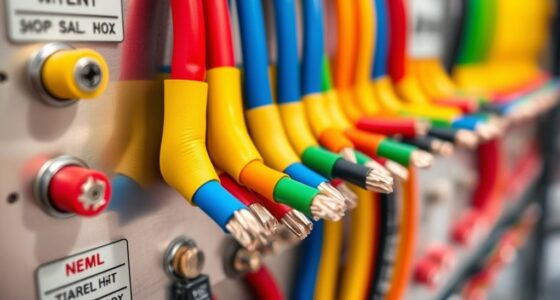
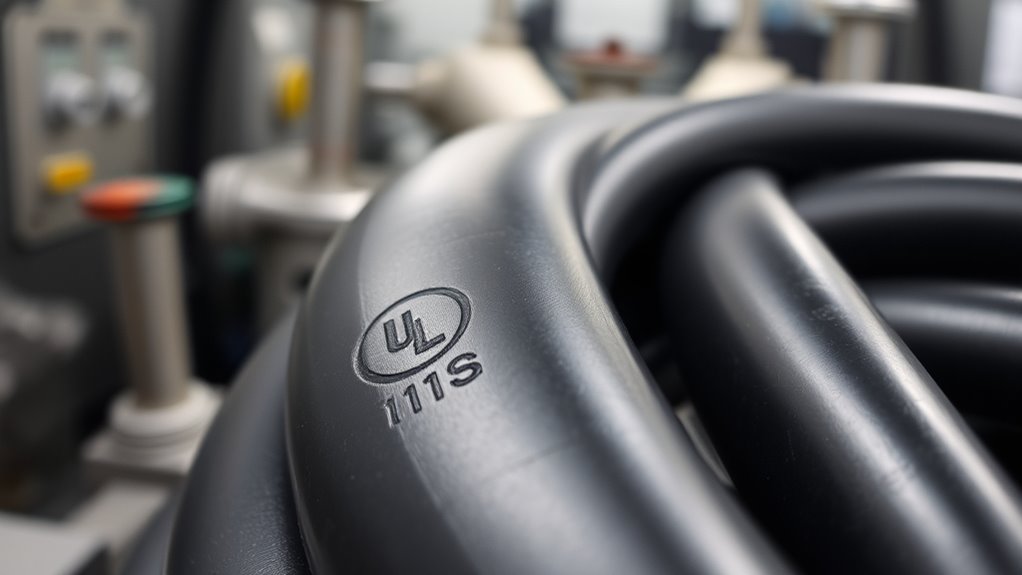
When it comes to ensuring your cables are safe and reliable, UL certification plays a essential role. This independent testing organization sets rigorous standards that manufacturers must meet to demonstrate their products’ safety and performance. By choosing UL-certified cables, you’re making a conscious decision to prioritize safety in your environment, whether at home, in the workplace, or in industrial settings. One of the primary aspects UL evaluates is fire resistance. Cables that earn UL certification are tested to withstand high temperatures and prevent the spread of flames if a fire occurs. This fire-resistant quality is indispensable for minimizing damage and protecting lives, especially in areas where fire hazards are significant.
Beyond fire resistance, material durability is another key factor in UL certification. Cables are subjected to tough testing to ensure their materials can withstand daily wear and tear, environmental conditions, and long-term use. Durable materials prevent issues like cracking, fraying, or corrosion, which can compromise safety and functionality. When your cables meet UL standards, you can trust that they won’t fail prematurely, saving you money and reducing the risk of accidents caused by material degradation. Additionally, UL certification often involves assessing the shelf life of products, ensuring that cables maintain safety and performance over time.
UL certification also involves thorough testing of electrical performance, ensuring that cables transmit power efficiently and safely. This reduces the likelihood of overheating or electrical faults that could lead to fires or equipment failure. When selecting cables, knowing they’ve passed such detailed evaluations gives you peace of mind that they will perform reliably under various conditions.
Another benefit of UL certification is compliance with national and international safety regulations. Many building codes and industry standards require UL-listed products, making it easier for you to meet legal requirements and avoid potential penalties. It’s a clear indication that the cables have been scrutinized and meet strict safety benchmarks, which is especially important in commercial or industrial applications where safety is paramount.

50 ft. 18AWG Low Voltage LED Cable 3 Conductor Black Sleeve in-Wall Speaker Wire UL Class 2 Certified
HIGHT QUALITY 3 Channel LED Cable with Black PVC Jacket
As an affiliate, we earn on qualifying purchases.
As an affiliate, we earn on qualifying purchases.
Frequently Asked Questions
How Long Does UL Certification Approval Typically Take?
The approval timeline for UL certification typically takes about 2 to 3 months, but it can vary depending on the complexity of your product and the completeness of your submission. During the certification process, UL conducts testing and reviews your documentation thoroughly. To expedite things up, guarantee your application is complete and meets all requirements. Keep in touch with UL representatives to stay updated on your certification status throughout the process.
Are There Regional Differences in UL Certification Requirements?
You might notice regional standards influence UL certification requirements, creating certification variations across different areas. These differences happen because local safety laws, industry needs, and market demands vary, so UL adapts to accommodate regional standards. As a result, what passes in one region might need extra testing or documentation elsewhere. Staying aware of these regional differences ensures your cables meet the specific safety criteria required in each market, avoiding delays or re-certification issues.
Can Existing Cables Be Re-Certified Under UL Standards?
Yes, existing cables can be re-certified under UL standards through cable refurbishment and certification renewal processes. You’ll need to have the cables undergo testing and inspection to confirm they meet current safety requirements. This process helps extend their usability while maintaining compliance. By renewing certification, you guarantee that the cables remain safe and reliable for continued use, aligning with the latest UL standards and industry best practices.
What Are the Costs Associated With UL Certification?
The cost implications of UL certification vary based on factors like cable complexity, testing requirements, and certification procedures. You should expect to pay for initial testing, inspection, and annual renewal fees. Additionally, there may be costs for modifying cables to meet standards. To get accurate estimates, contact UL directly or consult a certification expert. Planning for these expenses guarantees a smooth certification process and compliance with safety standards.
How Often Must Ul-Certified Cables Be Re-Evaluated or Tested?
Think of UL certification like maintaining a garden; regular care keeps it thriving. You need to conduct periodic inspections of your cables to make certain safety standards stay met. Typically, UL requires re-evaluation every 1 to 3 years, depending on the product and usage. Renewal procedures involve submitting updated testing reports and passing re-certification. Staying proactive prevents issues and keeps your cables compliant, just like tending your garden ensures it flourishes year-round.

TV Power Cord 2 Prong AC Wall Plug Compatible with Amazon Fire TV 43" 50" 55" 65" 75" 4-Series Omni Series 4K UHD TCL LG Insignia Soundbar (5FT)
Compatible with Amazon Fire TV Soundbar 43" 50" 55" 65" 75" 4-Series Omni Series 4K UHD Smart TV
As an affiliate, we earn on qualifying purchases.
As an affiliate, we earn on qualifying purchases.
Conclusion
Getting UL certified for your cables is like giving them a shield of armor, safeguarding your home or workspace from fire and failure. It’s your assurance that these cables have passed the toughest tests, standing resilient against heat, wear, and environmental challenges. With UL certification, you’re not just buying cable—you’re investing in peace of mind, knowing your setup is built to withstand the storm. Trust in UL, and let safety be your guiding star.
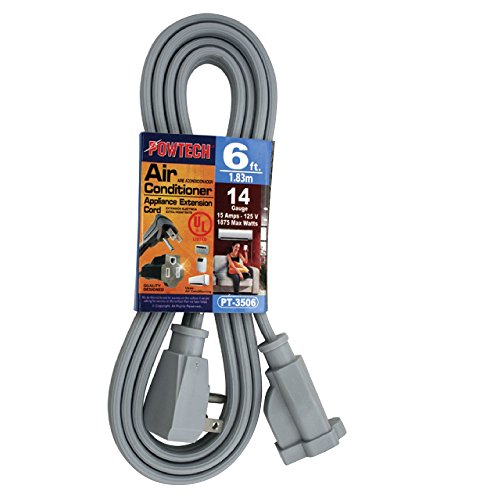
POWTECH Heavy duty 6 FT Air Conditioner and Major Appliance Extension Cord UL Listed 14 Gauge, 125V, 15 Amps, 1875 Watts GROUNDED 3-PRONGED CORD
Air Conditioner and Major Appliance Extension Cord UL Listed. Sturdy cord Ideal for plugging in large appliances such…
As an affiliate, we earn on qualifying purchases.
As an affiliate, we earn on qualifying purchases.

MONK CABLES | CAT6 Plenum Cable 1000ft | UTP, 23AWG, 550MHz | DSX-8000 Certified | Most Certified Cable of The Whole Market (Blue)
👌 𝗠𝗜𝗟𝗜𝗧𝗔𝗥𝗬-𝗚𝗥𝗔𝗗𝗘 𝗤𝗨𝗔𝗟𝗜𝗧𝗬 -> 𝟭𝟬𝟬% 𝗚𝗨𝗔𝗥𝗔𝗡𝗧𝗘𝗘𝗗!: Each & every of our cable is individually tested with a 𝐃𝐒𝐗-𝟖𝟎𝟎𝟎…
As an affiliate, we earn on qualifying purchases.
As an affiliate, we earn on qualifying purchases.