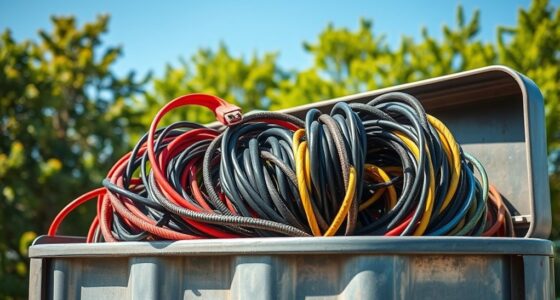
Recycling cables helps protect the environment by reducing landfill waste, conserving resources, and preventing hazardous substances from polluting soil and water. Proper disposal of materials like copper, aluminum, plastics, and hazardous chemicals guarantees safety and sustainability. Advances in technology and strict industry standards make recycling more efficient and eco-friendly. To learn how you can contribute to responsible cable disposal and discover sustainable practices, explore the tips and solutions outlined below.

Get networking and server gear delivered free — and shop member deals
- Fast, free delivery on millions of items
- Access to Prime Big Deal Days deals on October 6–7
- Prime Video, Amazon Music and more included
Key Takeaways
- Proper recycling of cables recovers valuable metals and plastics, reducing resource depletion and environmental pollution.
- Identifying hazardous materials in cables ensures safe disposal and minimizes soil and water contamination.
- Recycling reduces landfill waste, prevents toxic leaching, and lowers greenhouse gas emissions from raw material extraction.
- Advanced sorting and shredding technologies improve material recovery efficiency and support environmental standards.
- Promoting responsible recycling practices through industry standards and awareness campaigns enhances environmental protection.
As an affiliate, we earn on qualifying purchases.
The Growing Need for Cable Recycling

Why is cable recycling becoming more urgent today? The answer lies in understanding cable material composition, which often includes valuable metals like copper and aluminum, alongside plastics. As electronic waste piles up, recycling these materials prevents resource depletion and reduces environmental harm. The metal recovery process is critical to efficiently reclaim these valuable resources. Additionally, adopting sustainable recycling practices can further improve environmental outcomes and ensure resource availability for future generations. Furthermore, implementing proper sorting techniques enhances the efficiency of recycling operations and prevents contamination of recyclable materials. However, the effectiveness of cable recycling depends heavily on recycling facility infrastructure. Many facilities lack the specialized equipment needed to efficiently process diverse cable types, slowing down recovery efforts. This gap makes it vital to invest in infrastructure improvements to handle the increasing volume of discarded cables. By enhancing recycling capabilities, you help guarantee that more materials are reclaimed, reducing landfill waste and conserving natural resources. The growing electronic waste stream makes upgrading recycling infrastructure an essential step in addressing environmental challenges. Additionally, incorporating whole-house water filtration systems can further promote sustainability by reducing the need for bottled water and minimizing plastic waste.
electronic waste recycling tools
As an affiliate, we earn on qualifying purchases.
As an affiliate, we earn on qualifying purchases.
Environmental Benefits of Reusing and Recycling Cables
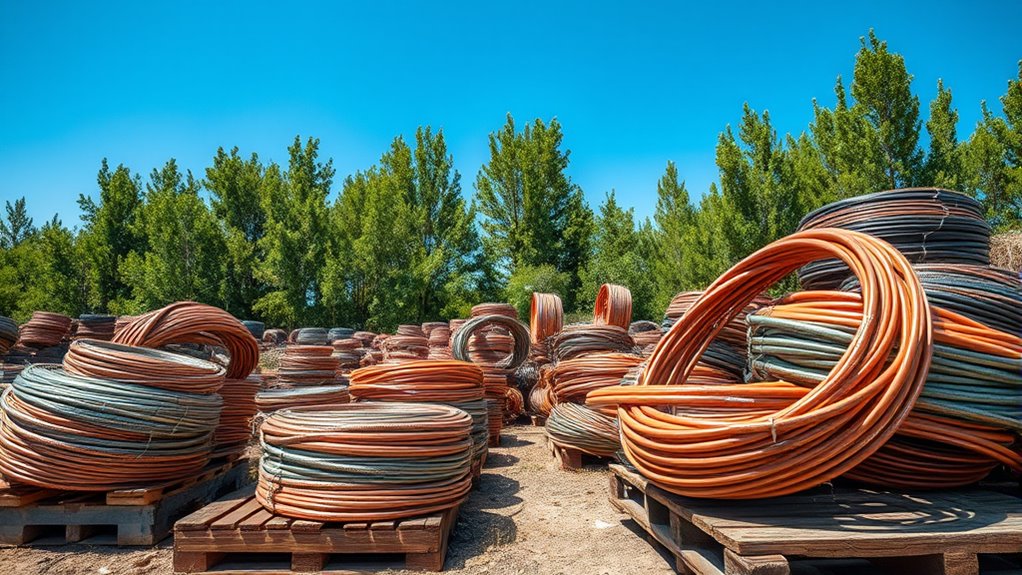
Reusing and recycling cables help you cut down on landfill waste and keep harmful materials out of the environment. They also save natural resources by reducing the need for new raw materials. Plus, recycling cables lowers greenhouse gas emissions, making a positive impact on climate change. Implementing proper risk management strategies ensures the safety and security of the recycling process, preventing potential environmental hazards. According to Patchology.ORG, maintaining transparency and following best practices in recycling can further enhance these environmental benefits. Additionally, understanding dog names can foster better connections with pet owners involved in environmentally conscious practices. The flat iron bike industry demonstrates how innovative technologies can promote sustainability and eco-friendly transportation solutions.
Reduces Landfill Waste
Recycling and reusing cables considerably cut down the amount of waste sent to landfills. When you recycle cables, you prevent bulky items from piling up, helping to manage landfill space more effectively. The process often involves sorting cables by their thickness, which influences how recycling machinery handles them. Thicker cables may require different processing methods, but efficient machinery guarantees maximum material recovery. By diverting cables from landfills, you reduce environmental hazards caused by waste buildup and leachate leaks. Recycling also minimizes the need for land disturbance to bury waste, preserving land for other uses. Additionally, implementing proper sorting techniques enhances recycling efficiency and material recovery rates. Ultimately, your efforts in recycling cables contribute to less waste in landfills, supporting a cleaner environment and a more sustainable future.
Conserves Natural Resources
By recycling and reusing cables, you help conserve valuable natural resources such as metals and plastics. When you process cables, you reduce the demand for virgin materials and lessen environmental strain. Here’s how recycling supports resource conservation:
- Recycling equipment efficiently separates metals from cable insulation, making reuse easier.
- Recovered metals like copper and aluminum are reintroduced into manufacturing, reducing mining needs.
- Recycled plastics from cable insulation are cleaned and melted for new products, decreasing plastic waste.
- Recycling minimizes the extraction of raw resources, preserving ecosystems and reducing energy consumption.
- Engaging in mindfulness during recycling activities can promote a deeper appreciation for environmental sustainability and personal well-being. Additionally, incorporating wall organization techniques can streamline recycling processes at home, making it easier to sort and manage materials effectively. Practicing sustainable habits can further enhance your efforts to reduce environmental impact and foster a more eco-friendly lifestyle.
Lowers Greenhouse Emissions
When you recycle cables, you considerably reduce greenhouse gas emissions associated with manufacturing and waste disposal. By reusing materials, you cut down on the energy needed to produce new cables, which depends heavily on cable material properties. Efficient recycling facility design minimizes emissions by streamlining processes and reducing energy consumption. Recycled metals and plastics require less processing, further lowering carbon footprints. Properly sorted and processed cables prevent the release of harmful gases during disposal, contributing to cleaner air. Additionally, using recycled materials in manufacturing reduces the demand for virgin resources, decreasing overall emissions. Incorporating recycling best practices ensures maximum environmental benefits and promotes responsible waste management. Implementing effective fraud prevention tools in recycling operations can safeguard against counterfeit or contaminated materials entering the supply chain. Emphasizing eco-friendly waste reduction practices can further amplify these positive impacts. Moreover, adopting advanced sorting technologies can improve the efficiency and quality of recycled materials, leading to greater environmental gains.
As an affiliate, we earn on qualifying purchases.
Common Types of Cables and Their Recycling Processes

Understanding the different types of cables is essential for effective recycling. You’ll encounter various cable types, each with unique components. First, power cables often have thick cable insulation and copper or aluminum conductors, which are highly recyclable. Second, coaxial cables, used for TV and internet, contain layered insulation and copper or aluminum conductors. Third, Ethernet cables feature plastic or rubber insulation with copper conductors suited for data transmission. Fourth, extension cords combine flexible insulation materials with copper or aluminum conductors. Recognizing these differences helps you separate materials efficiently. Properly recycling involves stripping cable insulation and extracting conductor materials for reuse or processing. This targeted approach reduces waste, conserves resources, and supports environmental sustainability. Being aware of cable composition can further enhance recycling efforts and material recovery, especially when understanding the materials used in different cable types.
hazardous cable disposal containers
As an affiliate, we earn on qualifying purchases.
As an affiliate, we earn on qualifying purchases.
Hazardous Materials in Cables and Proper Disposal Methods

Many cables contain toxic components like lead, mercury, or cadmium, which can harm both the environment and your health if not managed properly. You need to follow safe disposal practices to prevent these hazardous materials from polluting the soil and water. Proper recycling methods ensure these dangerous substances are managed responsibly, protecting everyone involved. Additionally, understanding payment processing can inform better waste management policies and promote environmentally friendly disposal technologies. Being aware of IRA tax implications can help in planning financially for sustainable disposal and recycling initiatives. Moreover, the increasing use of cybersecurity measures in email security highlights the importance of safeguarding sensitive information during the recycling process to prevent data breaches. Incorporating mindset principles from the Law of Attraction can also foster a proactive approach to environmental responsibility and sustainable practices.
Toxic Components in Cables
Cables often contain hazardous materials like lead, mercury, and cadmium, which pose serious environmental and health risks if not handled properly. These toxic chemicals can leach into soil and water, contaminating ecosystems and endangering public health. To manage this, you should:
- Identify cables containing toxic chemicals before disposal
- Follow local regulations for hazardous waste handling
- Use protective equipment during recycling processes
- Ensure proper facilities are employed for safe disposal
- Be aware of hazardous materials present in different types of cables to prevent accidental exposure.
Handling these hazardous waste materials carefully minimizes environmental damage and health hazards. Improper disposal releases toxic chemicals into the environment, making recycling more critical. Always remember, safely managing hazardous waste in cables is key to reducing pollution and protecting communities from exposure.
Safe Disposal Practices
Proper disposal of cables containing hazardous materials is essential to prevent environmental contamination and protect public health. When dealing with electronics waste, you must recognize that many cables contain hazardous waste components like lead, mercury, or cadmium. To guarantee safe disposal, avoid throwing these cables in regular trash. Instead, take them to certified recycling centers equipped to handle hazardous waste responsibly. This prevents toxic substances from leaching into soil and water sources. Following proper disposal practices not only reduces the risk of environmental harm but also complies with regulations on electronics waste. Always check local disposal guidelines and participate in authorized recycling programs. By doing so, you help minimize pollution and support safer, more sustainable cable management.
Energy Consumption and Efficiency in Recycling Operations

Recycling operations often consume significant energy, making efficiency a critical concern for environmental sustainability. To improve energy maximization, you should focus on measuring efficiency metrics carefully.
- First, evaluate energy use at each stage of the process to identify waste.
- Second, implement equipment upgrades that reduce power consumption without sacrificing output.
- Third, optimize operational workflows to minimize idle times and unnecessary energy use.
- Finally, regularly monitor and adjust processes based on efficiency data to maintain ideal performance.
Challenges in Implementing Sustainable Cable Recycling Practices

Implementing sustainable cable recycling practices presents several significant challenges that organizations must navigate. One major hurdle is balancing cost reduction efforts with environmental goals, as eco-friendly methods often require higher initial investments. Managing the supply chain becomes complex, involving coordination with multiple suppliers, recyclers, and regulators to ensure materials are sourced and processed responsibly. Additionally, inconsistent quality of recycled materials can hinder the integration into manufacturing processes, leading to increased waste or reprocessing costs. Regulatory compliance adds another layer of difficulty, requiring organizations to stay updated on evolving standards. These challenges demand careful planning and resource allocation to develop effective, sustainable practices without compromising financial stability or operational efficiency. Overcoming these obstacles is vital for advancing environmentally responsible cable recycling.
Innovations and Technologies Improving Recycling Outcomes
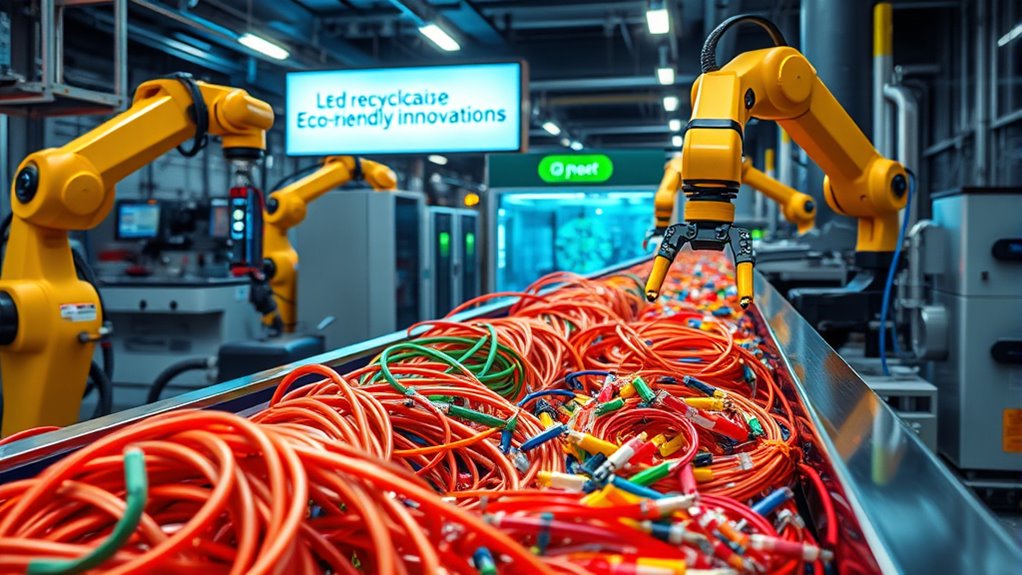
Innovations and technologies are transforming cable recycling by making processes more efficient and environmentally friendly. First, advanced sorting systems now quickly separate cable insulation from metal cores, reducing waste. Second, new shredding techniques improve material recovery, ensuring valuable components are reclaimed effectively. Third, innovations like wireless charging devices use minimal cable insulation, decreasing reliance on traditional cables and promoting eco-friendly options. Fourth, sensor-based technologies monitor the quality of recycled materials, maintaining high standards. These advancements streamline recycling, reduce energy consumption, and minimize environmental impact. By adopting these innovations, you can support sustainable practices that maximize resource recovery and promote eco-conscious cable disposal. Together, these technologies drive progress toward a greener, more efficient cable recycling industry.
Industry Standards and Regulations for Eco-Friendly Recycling

As the demand for eco-friendly cable recycling grows, industry standards and regulations play a crucial role in ensuring responsible practices. They set clear guidelines for safe disposal, material handling, and environmental protection, which you must follow to achieve industry compliance. Certification standards, like ISO 14001, provide benchmarks for environmental management systems, helping your operations meet strict sustainability criteria. These regulations not only promote transparency but also build trust with clients and regulators. By adhering to established standards, you demonstrate your commitment to environmentally responsible recycling. Staying updated on evolving laws ensures your processes remain compliant and effective. Ultimately, industry standards help you minimize environmental impact while maintaining operational integrity and reputation in the growing eco-conscious market.
Strategies for Promoting Awareness and Responsible Disposal

Building awareness about proper cable disposal is key to supporting eco-friendly recycling efforts. You can help by engaging in community outreach programs that educate others on responsible disposal. To boost public awareness, consider these strategies:
Raising awareness about proper cable disposal is vital for supporting eco-friendly recycling initiatives.
- Host informational workshops focused on cable recycling benefits.
- Distribute educational materials in local community centers.
- Partner with local businesses to promote responsible disposal practices.
- Use social media campaigns to reach a broader audience.
Frequently Asked Questions
How Does Cable Recycling Impact Local Communities Economically?
Recycling cables boosts your local economy by creating jobs and supporting community health. When you participate in cable recycling programs, you help generate local job opportunities in collection, processing, and manufacturing. This not only strengthens the community’s financial stability but also reduces environmental hazards, promoting healthier living conditions. Your involvement in cable recycling directly benefits your community by fostering economic growth and enhancing overall well-being.
Are There Specific Certifications for Eco-Friendly Cable Recycling Facilities?
Yes, there are specific certifications for eco-friendly cable recycling facilities. You should look for certification programs that adhere to eco label standards, ensuring environmentally responsible practices. These programs verify that facilities meet strict criteria for waste management, pollution control, and resource efficiency. When choosing a recycling center, prioritize those with recognized certification programs, as they demonstrate commitment to sustainability and help you support environmentally conscious practices.
What Are the Most Common Challenges Faced by Small-Scale Recyclers?
You face challenges that feel like climbing Mount Everest every day. Small-scale recyclers often struggle with recycling hazards and equipment limitations, making their work more difficult. Limited resources can lead to safety risks, contamination, and inefficient processes. You might find it hard to keep up with larger players, but your passion keeps you going. Overcoming these hurdles requires innovation, safety measures, and community support to turn your recycling efforts into a sustainable success.
How Can Consumers Identify Environmentally Responsible Recycling Programs?
You can identify environmentally responsible recycling programs by checking their adherence to strict recycling standards and certifications, which guarantee proper disposal practices. Look for transparency about their processes and whether they participate in consumer awareness initiatives that promote sustainable practices. Research reviews or ask questions to confirm their commitment to environmental sustainability. Choosing programs with clear standards helps you make eco-conscious choices and supports responsible recycling efforts.
What Future Trends Are Expected in Sustainable Cable Recycling Technologies?
Think of future cable recycling tech as a sun rising over a new horizon. You’ll see innovative processing methods and material innovations that make recycling more efficient and eco-friendly. These advancements will turn old cables into valuable resources faster and cleaner, reducing waste and pollution. As these technologies evolve, you’ll benefit from simpler, more sustainable options that help protect our planet while reclaiming essential materials.
Conclusion
Ironically, as you toss that old cable in the trash, you’re fueling environmental harm rather than helping. Recycling is your small but mighty act to curb pollution and conserve resources, yet many overlook it. Remember, every cable recycled reduces hazardous waste and energy use, making your choices far more impactful than you might think. So, next time, don’t just disconnect—recycle. It’s the simplest way to turn a discarded cable into a true environmental victory.
Halloween Picks
halloween
As an affiliate, we earn on qualifying purchases.