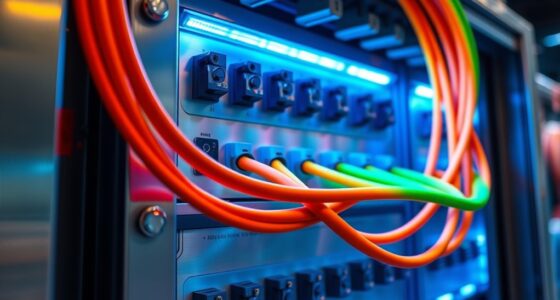

Effective cabling management plays a vital role in controlling heat loads within your data center. When cables are organized properly and separated from airflow pathways, you can prevent hot spots and improve cooling efficiency. Small adjustments, like elevating cables and using quality materials, can make a significant difference. Understanding these strategies helps you maintain peak performance and extend equipment lifespan, but there’s more to take into account if you want to truly enhance your cooling system.
Key Takeaways
- Use cable trays, ties, and labeling to organize cables and promote airflow.
- Elevate or mount cables along designated pathways to prevent airflow blockages.
- Separate power and data cables to reduce heat buildup and improve dissipation.
- Regularly inspect and replace damaged cables to prevent overheating and thermal issues.
- Conduct airflow audits and implement organized routing standards to optimize cooling efficiency.
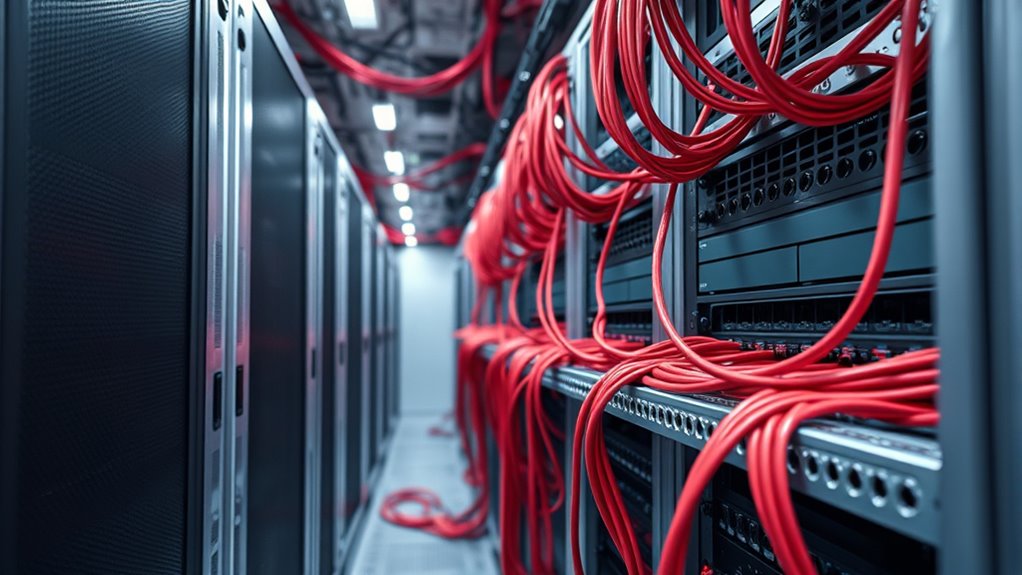
Have you ever considered how the cables running through your data center impact its overall heat load? Cables may seem like a minor component, but poorly managed wiring can considerably contribute to temperature issues. Effective cable management isn’t just about keeping things tidy; it’s an essential step toward optimizing heat dissipation and maintaining a stable environment. When cables are tangled or disorganized, airflow gets blocked, causing hot spots and forcing your cooling systems to work harder. This not only wastes energy but also increases the risk of equipment failure. By implementing disciplined cable management, you guarantee that airflow pathways remain clear, allowing heat to escape more efficiently and reducing the overall heat load within your data center.
Organized cables improve airflow, reduce hot spots, and lower your data center’s heat load.
Heat dissipation techniques are fundamental in this process. Properly arranging cables, using cable trays, ties, and labeling systems, helps create a structured environment where air can circulate freely. For instance, elevating cables off the floor or mounting them along designated pathways prevents obstructions that trap heat. Separating power cables from data cables minimizes electromagnetic interference and also reduces heat buildup caused by electrical resistance. Utilizing ventilated cable management systems with open designs encourages better airflow compared to enclosed conduits, further aiding heat dissipation. Additionally, strategic placement of cables near cooling vents or exhaust points helps carry heat away from sensitive equipment faster. Ensuring that cable materials have appropriate thermal properties can further improve heat management.
It’s equally important to contemplate the materials used in your cabling infrastructure. Choosing cables with lower thermal resistance and better insulation properties can decrease heat transfer to surrounding components. Regular maintenance, such as inspecting for damaged or overheating cables, plays an indispensable role in preventing unnecessary heat generation. When cables are damaged or overloaded, they generate excess heat, which can quickly cascade into larger cooling problems. Keeping cables organized and in good condition reduces this risk and contributes to a more thermally efficient environment.
Incorporating these techniques isn’t complicated, but it requires a proactive approach. Start by auditing your current cabling setup and identifying areas where airflow is restricted. Invest in quality cable management tools and develop standards for cable routing and labeling. These measures might seem small, but they have a measurable impact on your data center’s heat load. The goal is to create a cohesive environment where cables are neatly managed, heat naturally dissipates, and your cooling systems operate at peak efficiency. Proper cable management and heat dissipation techniques are investments that pay off by extending equipment lifespan, reducing energy costs, and ensuring your data center runs smoothly and reliably.

Tripp Lite Wire Mesh Cable Tray Management Organization, Ideal for Industrial & Data Centers, 10 Pack, 6 inches x 4 inches x 10 Feet / 150 x 100 x 3000 millimeters, 5-Year Warranty (SRWB6410STR10)
ELIMINATE CABLE STRESS: Easy to install along the wall, floor or ceiling of your data center. Straight section…
As an affiliate, we earn on qualifying purchases.
As an affiliate, we earn on qualifying purchases.
Frequently Asked Questions
How Does Cable Material Affect Heat Dissipation?
Cable material greatly impacts heat dissipation because of its thermal conductivity and insulation properties. You’ll find that materials with high thermal conductivity, like copper, allow heat to transfer away efficiently, keeping cables cooler. Conversely, cable insulation can trap heat, so using insulation with good thermal properties helps prevent overheating. By choosing the right cable material, you guarantee better heat dissipation, which improves performance and extends the lifespan of your electrical system.
What Is the Optimal Cable Length to Reduce Heat?
You should keep cable lengths as short as possible to reduce heat. Studies show that every additional meter can increase heat dissipation by up to 15%. Using proper cable insulation and heat shielding helps further minimize heat buildup. By trimming cable length and choosing quality insulation, you guarantee better heat management, improving performance and lifespan. Shorter cables with effective insulation are your best bet for keeping heat loads low.
Can Cable Color Influence Heat Absorption?
Yes, cable color choices can influence heat absorption impact. Darker cables tend to absorb more heat from their surroundings, which can lead to increased temperatures and potential overheating. Lighter-colored cables reflect more sunlight and heat, helping keep their temperature lower. When selecting cable colors, consider the environment and how much heat absorption could affect performance and longevity. Choosing the right color helps manage heat and maintains suitable cable operation.
How Often Should Cable Pathways Be Inspected for Heat Issues?
You should inspect cable pathways regularly—ideally quarterly—to catch heat issues early. Focus on cable routing, ensuring cables are properly organized and not overcrowded. Check ventilation strategies to maintain airflow and prevent heat buildup. By consistently monitoring these areas, you can identify potential problems before they escalate, maintaining ideal system performance and avoiding costly repairs. Regular inspections help keep your cabling efficient, safe, and cool.
Are There Industry Standards for Heat Management in Cabling?
Yes, industry standards for heat management in cabling emphasize proper cable insulation and airflow management. You should follow guidelines set by organizations like TIA-942 and ISO/IEC 11801, which recommend maintaining adequate spacing, using cable bundles wisely, and guaranteeing proper ventilation. These standards help prevent overheating, improve performance, and extend cable life. By adhering to them, you ensure your cabling system remains efficient and safe under operational loads.
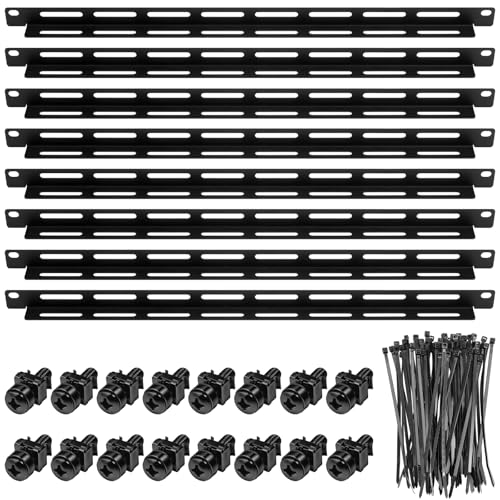
Zonon 8 Sets 1u 19 Inch Server Rack Cable Management Tie Bar Kit Includes 8 Pack 1u Tie Bars, 50 Zip Ties, 16 Cage Nuts & 16 Screws Work with Open Frame Enclosure Network Cabinet Mount Wire Management
What You Will Get: the server rack cable management package contains 8 pieces tie bars, 50 cable ties,…
As an affiliate, we earn on qualifying purchases.
As an affiliate, we earn on qualifying purchases.
Conclusion
By organizing your cabling effectively, you can reduce your data center’s heat load considerably. For example, properly managed cables can improve airflow up to 30%, helping prevent hot spots and extending equipment life. Implementing simple techniques like elevating cables and separating power from data lines not only boosts cooling efficiency but also cuts energy costs. Take action today—better cabling means a cooler, more reliable, and cost-effective data center environment.

Mzmaxy Cable Management, 25'' Cable Management Under Desk No Drill, Metal Cord Organizer with Clamp for Standing Desk, Cable Organizer for Home Office, Black
【25'' Large Size】The 25'' cable management under desk provides enough space for all your cables. Desk cable management…
As an affiliate, we earn on qualifying purchases.
As an affiliate, we earn on qualifying purchases.

TV Cord Hider for Wall Mounted TV – Dual Outlet in-Wall Cable Management Kit for Power & Low Voltage Cables – Includes 9.84”L x 7.87”H x 3.94”D Module, Wall Template, Saw (2 Data Cable Jacks)
Flawless Cord Organization: Conceal power cables and low-voltage wires (HDMI, Ethernet) in dual isolated compartments—prevents interference and eliminates…
As an affiliate, we earn on qualifying purchases.
As an affiliate, we earn on qualifying purchases.