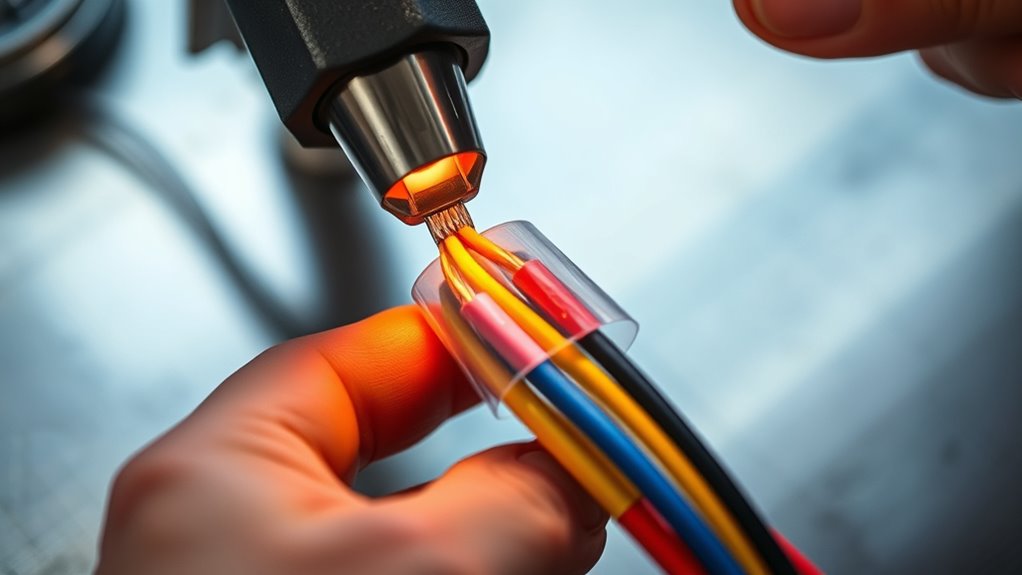

Imagine a shield that silently guards your connections from the elements—that’s what heat guns and shrink tubing do for cables. With the right application, they create a tight seal that keeps moisture, dust, and chemicals at bay, ensuring longevity and safety. But mastering their use requires precision and knowledge. Are you ready to explore how these tools can enhance your wiring projects and prevent costly mistakes?
Key Takeaways
- Heat guns provide controlled heat to evenly shrink tubing tightly around cables for secure insulation.
- Shrink tubing protects wiring from moisture, dust, chemicals, and UV rays, enhancing durability.
- Proper application ensures a neat, professional seal that prevents air pockets and maintains electrical safety.
- Selecting high-quality, resistant tubing prolongs connection life and meets safety standards.
- Using heat guns with appropriate techniques improves efficiency, reduces installation time, and ensures long-term cable protection.
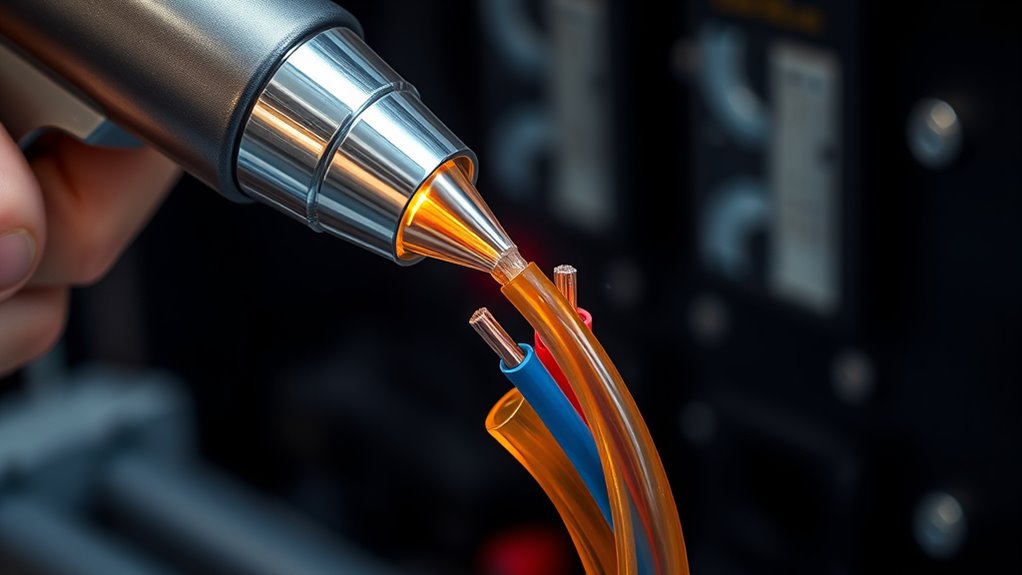
Have you ever wondered how to protect your electrical connections effectively? One of the best methods is using heat guns and shrink tubing, which work together to provide reliable insulation and safeguard your wiring. When you apply heat to shrink tubing, it contracts tightly around the cable, creating a snug fit that shields the connection from environmental hazards. This process not only enhances the durability of your wiring but also guarantees electrical safety by preventing accidental shorts, corrosion, or damage from moisture and dust. Proper application of shrink tubing with a heat gun is essential for maintaining the integrity of electrical systems, especially in demanding environments.
Thermal insulation plays a pivotal role in this process. When you choose the right shrink tubing, you’re adding an extra layer of thermal protection that helps keep your electrical connections stable under temperature fluctuations. This insulation minimizes the risk of heat buildup, which can cause deterioration of the wiring or even fire hazards if left unchecked. By effectively managing heat, you’re not just protecting the wires but also extending their lifespan. Using a heat gun allows you to control the temperature precisely, ensuring the tubing shrinks evenly without damaging the cable or insulation. This careful application is imperative for maintaining electrical safety standards and preventing potential mishaps caused by poorly insulated connections.
Furthermore, selecting the appropriate shrink tubing for your project depends on understanding the specific electrical safety requirements. For instance, in outdoor or high-moisture environments, you should opt for tubing with high resistance to water, chemicals, and UV rays. When you apply the tubing with a heat gun, you’re creating a sealed environment around your wire, which acts as a barrier against contaminants. This not only improves the electrical safety of your setup but also reduces maintenance needs over time. Properly insulated connections are less likely to suffer from corrosion or degradation, saving you time and money in the long run.
In addition, using heat guns gives you the advantage of quick, efficient work. You can quickly heat the tubing evenly, ensuring a tight seal that adheres perfectly to the cable. This process minimizes the risk of air pockets or gaps that could compromise insulation. With the right technique, you can achieve a professional finish that maximizes both thermal insulation and electrical safety. Remember, safety should always come first, so make sure you wear proper protective gear and follow manufacturer instructions to avoid burns or damage to your cables. To conclude, combining a heat gun with shrink tubing is an effective way to protect your electrical connections, enhance thermal insulation, and guarantee electrical safety in your projects.
Adding high-quality insulation materials can further improve the durability and safety of your electrical connections.

SEEKONE Heat Gun 1800W 122℉-1202℉(50℃- 650℃)Fast Heating Heavy Duty Hot Air Gun Kit Variable Temperature Control Overheat Protection with 4 Nozzles for Crafts, Shrinking PVC, Stripping Paint(5.2FT)
▶ 【Strong Power With 2 Modes】 SEEKONE 1800W heat gun provides strong power quickly heat up to 1202℉(650℃)…
As an affiliate, we earn on qualifying purchases.
As an affiliate, we earn on qualifying purchases.
Frequently Asked Questions
What Safety Precautions Should I Take When Using a Heat Gun?
When using a heat gun, you should prioritize heat gun safety by wearing protective gear like gloves and safety glasses to prevent burns and eye injuries. Keep the gun moving constantly to avoid overheating surfaces and always work in a well-ventilated area to avoid inhaling fumes. Never point the heat gun at yourself or others, and unplug it when not in use. Following these precautions keeps you safe during your project.
Can Shrink Tubing Be Reused After Application?
Like a vintage radio, shrink tubing isn’t really designed to be reused after initial application. Reusability concerns mean it often won’t shrink back to its original size or provide the same insulation quality. While you might peel it off, it could compromise safety and effectiveness. Reusing shrink tubing can also increase environmental impact, as it adds to waste and may compromise cable protection. It’s best to use new tubing for each project.
What Is the Maximum Temperature Tolerance for Different Shrink Tubing Types?
You should verify the material compatibility and maximum temperature tolerance for each shrink tubing type. Generally, most polyolefin tubing withstands up to 135°C (275°F), while PVC types handle around 80°C (176°F). Some specialty tubings, like fluoropolymer, tolerate temperatures over 200°C (392°F). Keep in mind, excessive heat can cause thermal expansion and damage, so always follow the manufacturer’s guidelines to ensure proper insulation and safety.
How Do I Select the Right Size of Shrink Tubing for My Cables?
To select the right size of shrink tubing for your cables, start with precise measurements of the cable’s diameter and the connector’s size. Use measurement tips like measuring the widest part of the cable and adding a small margin for fit. Choose a tubing size that snugly fits over the cable and shrinks appropriately without being too tight or loose. Proper size selection guarantees a secure, professional finish.
Are There Eco-Friendly Options for Heat Shrink Tubing?
Sure, eco-friendly heat shrink tubing exists—who knew? You can opt for biodegradable materials that break down faster than your old tech, or recycled plastics that give new life to what was once discarded. It’s like saving the planet one cable at a time, without sacrificing durability. So, go green and shrink responsibly, because the environment deserves a little love—and less plastic waste.
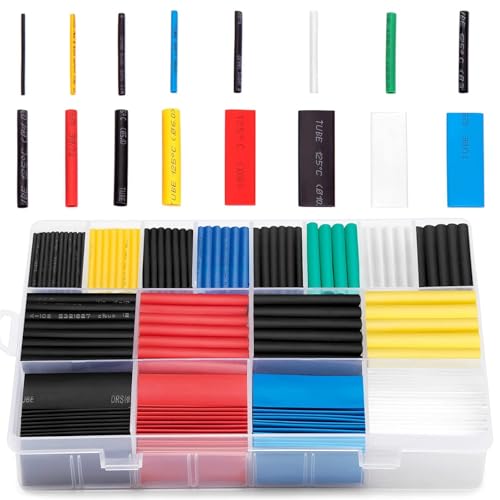
Ginsco 580 pcs 2:1 Heat Shrink Tubing Kit 6 Colors 11 Sizes Assorted Sleeving Tube Wrap Cable Wire Kit for DIY
BIG COLLECTION – Totally 580pcs,11 specifications: 1/24"(80pcs),1/16"(80pcs),1/12"(100pcs),3/64"(30pcs),1/8"(60pcs),9/64"(30pcs),5/32"(70pcs),1/5"(30pcs),15/64"(20pcs),5/16"(20pcs),25/64"(60pcs).
As an affiliate, we earn on qualifying purchases.
As an affiliate, we earn on qualifying purchases.
Conclusion
Think of your cables as a fortress, and heat guns with shrink tubing as its sturdy walls. When you apply them correctly, you’re fortifying your connections against the storms of moisture and dust. Like a skilled builder, your attention to detail guarantees lasting strength and safety. Remember, a well-shielded fortress stands tall through time—just as your wiring will, when you use quality materials and proper techniques.
SEEKONE Heat Gun 1800W 122℉-1202℉(50℃- 650℃)Fast Heating Heavy Duty Hot Air Gun Kit Variable Temperature Control Overheat Protection with 4 Nozzles for Crafts, Shrinking PVC, Stripping Paint(5.2FT)
▶ 【Strong Power With 2 Modes】 SEEKONE 1800W heat gun provides strong power quickly heat up to 1202℉(650℃)…
As an affiliate, we earn on qualifying purchases.
As an affiliate, we earn on qualifying purchases.

900 Pcs Wire Heat Shrink Tubing Kit, Industrial Heat-Shrink Tubing for Wires, 2:1 Marine Grade Heat Shrink Wrap, Premium Large Electrical Waterproof Heat Shrink Tape,12 Sizes 6Colored Assorted, DHOOZ
900 PCS WIRE HEAT SHRINK TUBING KIT LINED: 2:1 Industrial heat-shrink tubing for wires include: 1/24 (1.0mm) 200…
As an affiliate, we earn on qualifying purchases.
As an affiliate, we earn on qualifying purchases.