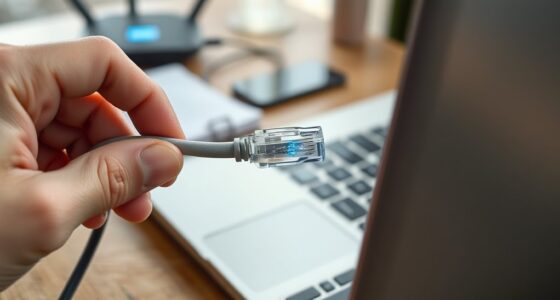
Knowing when to replace old cables can prevent safety hazards and device failures. If you notice visible damage like cracks, fraying, or exposed wires, it’s time to act. But even if cables seem fine, aging or environmental stress might cause internal deterioration that isn’t obvious. Understanding the signs and proper maintenance helps keep your equipment safe and reliable, yet many overlook these warning signals until it’s too late.
Key Takeaways
- Replace cables with visible damage, such as cracks, frayed insulation, or exposed wires, to prevent safety hazards.
- Upgrade cables showing performance issues like intermittent power or slow data transfer to ensure reliable operation.
- Discard cables that are several years old, as aging insulation and wear increase risk of electrical faults.
- Replace cables damaged by environmental factors like heat, moisture, or physical stress to avoid short circuits or hazards.
- Use high-quality, standards-compliant cables and replace them proactively during routine inspections for ongoing safety.
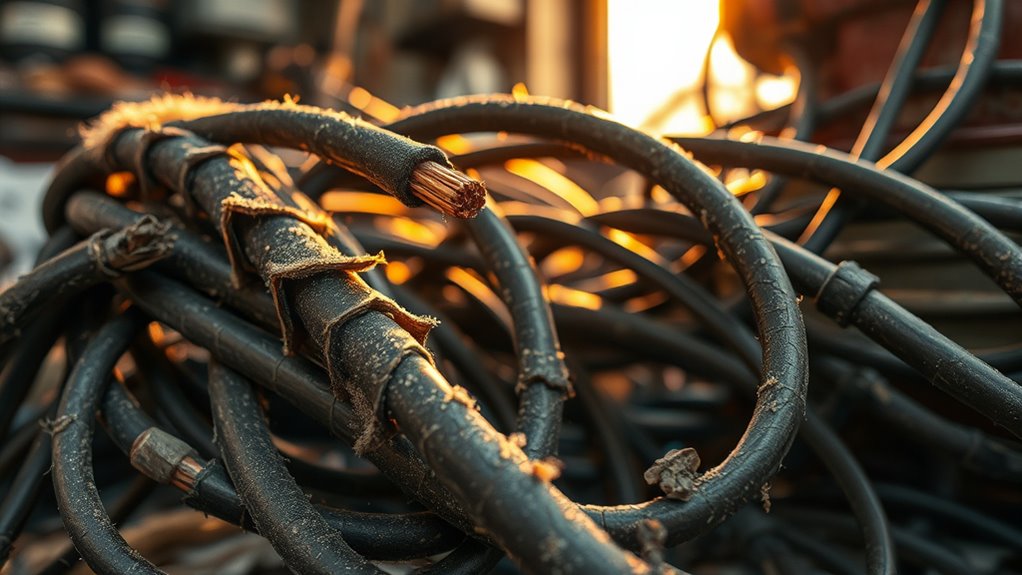
Over time, old cables can become worn, frayed, or less dependable, which can lead to connectivity issues or safety hazards. Recognizing when to replace these cables is vital for maintaining a safe environment and guaranteeing your devices function properly. One of the key signs is visible damage; if you notice cracked, exposed, or frayed insulation, it’s a clear indication that the cable is compromised. Damaged cables not only threaten cable safety but also pose serious electrical hazards, such as short circuits or sparks that could ignite fires. Never ignore such signs—prompt replacement reduces risk and protects both your property and personal safety.
Visible damage like cracks or frayed insulation signals a cable needs replacing for safety and reliability.
Another indicator to contemplate is inconsistent performance. If your devices intermittently lose power, experience slow data transfer, or fail to connect altogether, the cable may be nearing the end of its lifespan. Over time, internal wires can degrade or break, leading to unreliable connections. Continuing to use a faulty cable increases the chance of electrical hazards, especially if the internal wiring becomes exposed or damaged. Upgrading to a new cable ensures stable performance and reduces the chance of electrical accidents caused by faulty wiring.
Age is also a significant factor. Even if a cable appears intact, older cables—particularly those over several years—are more prone to deterioration. Insulation naturally degrades over time, and repeated bending or stress can accelerate wear. For safety reasons, it’s wise to replace cables that are outdated, especially when dealing with high-voltage or critical electronic equipment. Modern cables often meet improved safety standards, providing better insulation and protection against electrical hazards. Regularly updating your cables keeps your setup current with present safety regulations and standards.
Environmental factors can also influence the need for replacement. Excessive heat, moisture, or exposure to sunlight can weaken cable insulation, making it brittle or prone to cracking. If your cables are exposed to such conditions, inspect them regularly. When deterioration is evident, replacing them becomes necessary to prevent electrical hazards, such as short circuits or fires. Additionally, cables that have been subjected to physical stress—bending sharply or pinching—may develop internal damage even if the exterior looks fine. Routine checks and replacements as needed help maintain cable safety and prevent potential electrical hazards.
Furthermore, using high-quality cables designed for your specific devices can significantly extend their lifespan and safety. In short, paying attention to visible damage, performance issues, age, environmental wear, and quality ensures you replace old cables before they become a safety concern. Doing so not only improves the reliability of your devices but also safeguards you from electrical hazards. When in doubt, err on the side of caution—upgrading your cables proactively is a smart move to keep your space safe and functioning smoothly.
Frequently Asked Questions
Can Old Cables Cause Damage to Connected Devices?
Old cables can definitely cause damage to your connected devices. As the cable insulation deteriorates, it may expose wires, leading to short circuits or power surges. Connector corrosion can also develop over time, causing poor connectivity or electrical faults. These issues increase the risk of damaging your devices. It’s best to replace old cables before they become a hazard, ensuring your equipment stays safe and functions properly.
How Can I Test if My Cables Are Still Safe to Use?
You can test if your cables are still safe by inspecting the cable insulation for cracks or fraying, which could cause sparks or shorts. Check for connector corrosion, which can disrupt signals or cause overheating. Gently wiggle the cable while connected—if it feels loose or sparks, it’s time to replace. Use a multimeter to test continuity. Anything suspicious means your cables are more dangerous than a tornado in a glass factory!
Are There Specific Signs Indicating a Cable’s Internal Damage?
If your cable shows signs like frayed or cracked insulation, or if you notice connector corrosion, it’s a clear sign of internal damage. These issues can compromise safety and performance. You should replace the cable immediately to prevent electrical hazards. Regularly inspect your cables for damaged insulation and corrosion, especially in areas exposed to moisture or wear, ensuring your setup stays safe and reliable.
Do Different Cable Types Age Differently Over Time?
Think of cables as aging like fine wine—they don’t all deteriorate at the same pace. Different cable types have varying durability, influenced by their materials and usage. Rubber-insulated cables may crack faster, while metal ones resist wear longer. Over time, material degradation weakens their performance. So, consider the cable type and its environment; some age gracefully, but all will eventually need replacing to guarantee safety and efficiency.
Is It Better to Replace Cables Proactively or Wait for Failure?
You should opt for preventive maintenance by replacing cables before they fail, rather than waiting for issues to occur. This approach reduces downtime and prevents costly repairs. Conduct a cost analysis to compare the expenses of proactive replacement against potential damages from cable failure. Staying ahead with regular inspections and timely replacements guarantees safety, reliability, and long-term savings, making preventive maintenance the smarter choice.
Conclusion
Remember, old cables are like fragile threads holding your safety and devices together. When cracks, fraying, or exposed wires appear, don’t hesitate—replace them before they become a ticking time bomb. Regular inspections act as your sentinels, guarding against unseen dangers lurking beneath the surface. By staying vigilant and swapping out aging cables, you’re weaving a sturdy safety net, ensuring your tech stays reliable and your environment remains secure—a symphony of trust and protection.