
Choosing among enterprise network monitoring tools comes down to a fundamental tradeoff: turnkey visibility versus control over your own stack. The Dualcomm Gigabit Ethernet TAP stands out as the best overall pick for teams building reliable visibility infrastructure, because passive traffic capture is the foundation every monitoring tool depends on. For readers who want tool mastery instead of hardware, Mastering SolarWinds offers the most direct path to commercial-grade enterprise monitoring, while Mastering Python Networking wins on flexibility for automation-heavy teams. The main tension in this category is between polished commercial platforms with licensing costs and open-source stacks that demand more expertise but scale without per-node fees. Keep reading for the full breakdown, including who each option suits and who should skip it.

Get business pricing on networking and server gear
- Business-only prices and quantity discounts
- Tax-exempt purchasing
- Multiple users, one account, clear invoices
Key Takeaways
- This roundup mixes one hardware visibility component (the Dualcomm TAP) with seven learning resources for major platforms, so the ‘best’ pick depends on whether you need infrastructure or expertise first.
- Commercial platform guides (SolarWinds) and open-source guides (Zabbix, Prometheus, Wazuh) split cleanly along the licensing-versus-labor tradeoff, with no single option winning both sides.
- Security-focused titles (Applied Network Security Monitoring, The Practice of NSM, Wazuh) increasingly overlap with performance monitoring, reflecting the convergence of NetOps and SecOps in enterprise environments.
- The Dualcomm TAP delivers the lowest cost per gigabit of trustworthy packet visibility but requires existing software to make the captured data useful — it is a component, not a solution.
- Mastering Python Networking earned a top-three spot because automation skills transfer across every platform in this lineup, making it the longest-lived investment despite not covering any single tool exhaustively.
| Dualcomm 10/100/1000Base-T Gigabit Ethernet TAP |  | Best Physical Monitoring Hardware | Network Standards: 10/100/1000Base-T | Maximum Cable Length: 200 meters | Data Throughput: 1 Gbps, no packet loss | VIEW LATEST PRICE | See Our Full Breakdown |
| Security Monitoring with Wazuh |  | Best for Open-Source SIEM Deployment | Format: Print / ebook technical guide | Subject: Wazuh security monitoring | Focus: Enterprise threat detection and monitoring | VIEW LATEST PRICE | See Our Full Breakdown |
| Zabbix 4 Network Monitoring |  | Best for Infrastructure Monitoring Platforms | Format: Print / ebook, 3rd Edition | Software Version: Zabbix 4.0 | Focus: Network device and application monitoring | VIEW LATEST PRICE | See Our Full Breakdown |
| Applied Network Security Monitoring: Collection, Detection, and Analysis |  | Best for Building Detection Skills | Format: Print / ebook | Subject: Network security monitoring (NSM) | Core Topics: Collection, detection, analysis | VIEW LATEST PRICE | See Our Full Breakdown |
| Mastering Python Networking | 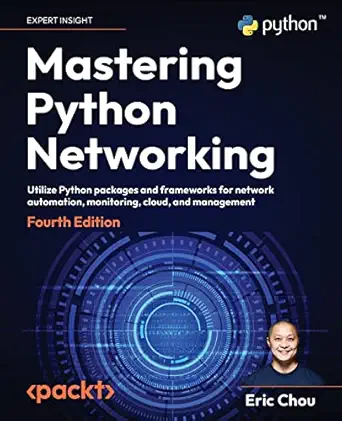 | Best for Monitoring Automation | Format: Print / ebook technical guide | Language: Python | Focus Areas: Network automation, monitoring, cloud, management | VIEW LATEST PRICE | See Our Full Breakdown |
| Prometheus: Up & Running: Infrastructure and Application Performance Monitoring |  | Best for Cloud-Native Monitoring Teams | Format: Paperback / eBook (O’Reilly) | Publisher: O’Reilly Media | Edition: 2nd Edition | VIEW LATEST PRICE | See Our Full Breakdown |
| Mastering SolarWinds: The Complete Guide to Enterprise Network Monitoring |  | Best for Enterprise Platform Administrators | Format: Digital / Print guide | Focus: SolarWinds enterprise network monitoring and management | Audience Level: Beginner to advanced network administrators | VIEW LATEST PRICE | See Our Full Breakdown |
| The Practice of Network Security Monitoring: Understanding Incident Detection and Response |  | Best for Security-Focused Monitoring | Format: Paperback / eBook (No Starch Press) | Author: Richard Bejtlich | Focus: Network security monitoring, incident detection and response | VIEW LATEST PRICE | See Our Full Breakdown |
| enterprise network monitoring tool | Format | Focus | Approach | Audience |
|---|---|---|---|---|
| Dualcomm 10/100/1000Base-T Gig | — | — | — | — |
| Security Monitoring with Wazuh | Print / ebook technical guide | Enterprise threat detection and monitoring | Hands-on with real-life use cases | Security professionals |
| Zabbix 4 Network Monitoring | Print / ebook, 3rd Edition | Network device and application monitoring | Configuration examples and practical walkthroughs | Network and systems administrators |
| Applied Network Security Monit | Print / ebook | — | Technique-driven with detection guidance | Cybersecurity professionals |
| Mastering Python Networking | Print / ebook technical guide | — | Package and framework-based examples | Network engineers and developers |
| Prometheus: Up & Running: Infr | Paperback / eBook (O’Reilly) | Prometheus metrics, alerting, and application performance monitoring | — | — |
| Mastering SolarWinds: The Comp | Digital / Print guide | SolarWinds enterprise network monitoring and management | — | — |
| The Practice of Network Securi | Paperback / eBook (No Starch Press) | Network security monitoring, incident detection and response | — | — |
More Details on Our Top Picks
Dualcomm 10/100/1000Base-T Gigabit Ethernet TAP
Every other pick in this roundup is a book or software guide — this is the physical layer piece that makes the rest possible. A network TAP lets your monitoring stack, whether that’s Wazuh sensors or a Wireshark capture feeding the workflows described in Applied Network Security Monitoring, see full-duplex traffic without adding an inline point of failure. This model handles full 1Gbps throughput with no packet loss and supports cable runs up to 200 meters, which matters when your monitoring closet sits far from the SPAN destination. USB power keeps it deployable anywhere, and PoE pass-through compatibility means it won’t break powered-device links.
The tradeoff is scope: a TAP captures, it doesn’t analyze. Compared with Mastering SolarWinds, which teaches dashboard-driven monitoring, this is a single-purpose instrument — no filtering, no alerting, no reporting. Buy it as infrastructure for your monitoring stack, not as the stack itself.
Pros:- Zero packet loss at full 1Gbps line rate
- Supports cable runs up to 200 meters for flexible monitor placement
- USB-powered, so it works in closets without spare outlets
- PoE compatibility keeps powered links intact
Cons:- Single-purpose hardware with no filtering, analysis, or alerting built in
- Only covers a single 10/100/1000Base-T link, so large deployments need many units
Best for: Network engineers building permanent packet-capture points for IDS, Wireshark, or out-of-band monitoring in enterprise closets
Not ideal for: Teams wanting an all-in-one visibility solution — a TAP only mirrors traffic and requires separate analysis software
- Network Standards:10/100/1000Base-T
- Maximum Cable Length:200 meters
- Data Throughput:1 Gbps, no packet loss
- Power Source:USB
- PoE Compatibility:Yes
- Form Factor:Small portable design
- Function:Passive traffic mirroring (TAP)
Our verdict“A must-have capture accessory for teams that already run analysis software and need a reliable, passive way to feed it full traffic.”
Security Monitoring with Wazuh
Most titles here teach broad principles; this one is deeply practical for a single platform. Wazuh is the open-source SIEM many enterprises turn to when SolarWinds-style licensing gets painful, and this guide walks through real-life use cases rather than abstract theory. Compared with Applied Network Security Monitoring, which teaches the detection mindset across any toolchain, this book answers a narrower question: how do I actually configure Wazuh rules, decoders, and agents in a production enterprise? That specificity is its value — and its limit.
The tradeoff is portability. If your shop standardizes on a different SIEM, most configuration chapters won’t transfer, whereas the concepts in The Practice of Network Security Monitoring apply anywhere. But for teams committed to Wazuh, this is the fastest path from install to real detections.
Pros:- Grounded in real-world enterprise use cases, not theory
- Directly applicable to production Wazuh deployments
- Strong fit for teams avoiding commercial SIEM licensing costs
- Written for working security professionals
Cons:- Tool-locked to Wazuh; little transferable content for other SIEMs
- Sparse technical spec detail means you may still need official documentation
Best for: Security engineers deploying or extending Wazuh as a cost-conscious enterprise SIEM and intrusion detection layer
Not ideal for: Teams evaluating multiple SIEM platforms — this book assumes Wazuh is already the choice
- Format:Print / ebook technical guide
- Subject:Wazuh security monitoring
- Focus:Enterprise threat detection and monitoring
- Approach:Hands-on with real-life use cases
- Audience:Security professionals
- Tool Coverage:Wazuh SIEM/XDR platform
Our verdict“The definitive hands-on companion if Wazuh is your monitoring platform — skip it if you’re still choosing one.”
Zabbix 4 Network Monitoring
Where Security Monitoring with Wazuh leans toward threat detection, this book targets the other half of enterprise monitoring: device uptime, availability, and performance. Zabbix is the workhorse open-source platform for tracking switches, servers, and applications, and this third edition walks through the practical configuration work — hosts, triggers, templates, and dashboards — that turns a fresh install into a working NOC tool. Compared with Prometheus: Up & Running, which centers on cloud-native metrics, this guide is stronger for traditional network device monitoring with SNMP and agent-based checks.
Two caveats shape the buying decision. Zabbix 4.0 is no longer the current major version, so some UI and feature walkthroughs lag behind what you’ll deploy today. And the writing assumes you’re already comfortable with Linux and networking fundamentals — beginners will struggle where Mastering Python Networking readers would feel at home.
Pros:- Step-by-step configuration guidance that maps to real infrastructure
- Covers both network devices and application monitoring
- Practical templates and examples save setup time
- Third edition refines earlier versions’ material
Cons:- Based on Zabbix 4.0, now several major versions behind
- Dense and technical for readers new to monitoring platforms
Best for: Ops and NOC teams running Zabbix to monitor switches, servers, and application health across an enterprise network
Not ideal for: Beginners without Linux and SNMP experience, or teams on the latest Zabbix 6.x/7.x needing current UI guidance
- Format:Print / ebook, 3rd Edition
- Software Version:Zabbix 4.0
- Focus:Network device and application monitoring
- Approach:Configuration examples and practical walkthroughs
- Audience:Network and systems administrators
- Prerequisites:Linux and networking fundamentals
Our verdict“Still the most practical Zabbix-focused training text for device-level monitoring, provided you can mentally bridge the version gap.”
Applied Network Security Monitoring: Collection, Detection, and Analysis
This is the conceptual backbone of the roundup. Rather than teaching one platform, it breaks NSM into its three functional stages — collection, detection, and analysis — so readers understand why tools behave the way they do. Compared with Security Monitoring with Wazuh, which shows button-by-button configuration, this book builds the judgment that separates an analyst who follows alerts from one who hunts threats. It pairs naturally with the Dualcomm TAP: the hardware gets packets to your sensors, and this text explains what to do with them once they arrive.
The tradeoff is time and abstraction. There’s no dashboard to stand up on day one, and content predates modern cloud-native telemetry, so readers who need immediate tool coverage — like Zabbix admins — will find it slower to pay off. But for career-level detection skills, it’s the strongest foundation in this batch.
Pros:- Tool-agnostic framework covering collection, detection, and analysis
- Deep, practical guidance for real detection workflows
- Written by practitioners for working cybersecurity professionals
- Skills transfer across any monitoring stack you later adopt
Cons:- Older material with limited coverage of cloud-native telemetry
- No hands-on platform labs — heavier on methodology than configuration
Best for: SOC analysts and security engineers who want durable, tool-agnostic skills in traffic collection, detection engineering, and incident analysis
Not ideal for: Readers seeking a quick platform-specific setup guide — this is a practitioner’s methodology text, not a tutorial
- Format:Print / ebook
- Subject:Network security monitoring (NSM)
- Core Topics:Collection, detection, analysis
- Audience:Cybersecurity professionals
- Approach:Technique-driven with detection guidance
- Tool Dependency:Tool-agnostic methodology
Our verdict“The best pick for analysts who want to think like detection engineers rather than just operate a tool.”
Mastering Python Networking
The other books teach you to run monitoring; this one teaches you to scale it with code. For enterprises where thousands of devices make manual configuration and checks impossible, Python automation is the multiplier, and this guide covers the key libraries and frameworks for network automation, monitoring, and cloud management. Compared with Zabbix 4 Network Monitoring, which works within one platform’s UI, this book lets you script device provisioning, pull metrics programmatically, and integrate monitoring into CI/CD pipelines — skills that outlast any single vendor.
Be realistic about the entry bar: this assumes working Python knowledge and networking fundamentals, so it’s a poor first book compared with more platform-focused titles. And while the coverage is broad — automation, cloud, monitoring, management — it’s a mile wide and sometimes an inch deep, with fewer end-to-end project tutorials than a dedicated automation course would provide.
Pros:- Covers the full modern networking stack: automation, monitoring, cloud, and management
- Practical examples using established Python packages and frameworks
- Skills apply across vendors rather than one platform
- Strong fit for teams adopting infrastructure-as-code practices
Cons:- Assumes existing Python proficiency — steep for beginners
- Broad scope means fewer deep, end-to-end project walkthroughs
Best for: Network engineers and developers who already know Python basics and want to automate monitoring, provisioning, and cloud integration at scale
Not ideal for: Scripting newcomers or teams needing a single-platform manual — the breadth assumes comfort across multiple technologies
- Format:Print / ebook technical guide
- Language:Python
- Focus Areas:Network automation, monitoring, cloud, management
- Approach:Package and framework-based examples
- Audience:Network engineers and developers
- Prerequisites:Working Python and networking knowledge
Our verdict“The right choice once your monitoring platform works and you need automation to scale it beyond what any UI allows.”
Prometheus: Up & Running: Infrastructure and Application Performance Monitoring
Among the software-focused titles in this lineup, Prometheus: Up & Running stands out for teams whose infrastructure lives in containers and Kubernetes rather than traditional switches and routers. Where Zabbix 4 Network Monitoring leans toward classic SNMP-based device monitoring, this book teaches a metrics-first, pull-based model that scales naturally across dynamic, ephemeral workloads. The author translates PromQL querying and alerting rules into concrete outcomes — the reader leaves knowing how to build dashboards that actually catch degradations before users notice. Compared with Mastering SolarWinds, this pick demands more hands-on assembly since Prometheus is open source with no vendor console, but that same openness means no licensing math at enterprise scale.
The tradeoff is scope: this is a deep single-tool book, not a broad monitoring strategy guide, and it assumes comfort with Linux and YAML configuration. Shops still running mostly physical networks may find the container-era framing less applicable.
Pros:- Written by Prometheus creator Julien Pivotto-adjacent O’Reilly authors with authoritative technical depth
- Practical PromQL examples that translate directly into working alerts and dashboards
- Covers the full lifecycle from setup through scaling and long-term storage patterns
- Open-source stack means no per-node licensing costs at enterprise scale
Cons:- Single-tool focus — offers little guidance for integrating with broader enterprise monitoring suites
- Assumes prior Linux and container familiarity, leaving true beginners behind
- Content ages quickly as the Prometheus ecosystem releases new features
Best for: DevOps and SRE teams running Kubernetes or microservices who need to instrument cloud-native infrastructure with an open-source metrics stack
Not ideal for: Network teams managing mostly physical switching and routing — a tool like SolarWinds or Zabbix, covered by other titles here, maps better to that environment
- Format:Paperback / eBook (O’Reilly)
- Publisher:O’Reilly Media
- Edition:2nd Edition
- Focus:Prometheus metrics, alerting, and application performance monitoring
- Audience Level:Intermediate to advanced DevOps/SRE
- Key Topics:PromQL, exporters, Alertmanager, Kubernetes integration
- Prerequisites:Linux, YAML, basic container knowledge
Our verdict“This is the pick for cloud-native teams that want to master Prometheus properly rather than piece together documentation from the web.”
Mastering SolarWinds: The Complete Guide to Enterprise Network Monitoring
This title occupies a different niche than the open-source books in this roundup: it is written for the administrator of a commercial, all-in-one monitoring platform. SolarWinds is common in mid-size and large enterprises precisely because it bundles discovery, mapping, alerting, and reporting into one supported product, and this guide walks through both fundamentals and advanced configuration. Compared with Prometheus: Up & Running, the buyer outcome is inverted — less assembly required, but the reader is locked into a licensed ecosystem the book cannot work around.
The structure suits mixed-skill teams: early chapters onboard junior admins while later sections cover customization that veterans will appreciate. The honest tradeoff is currency and credibility — without edition or version details, readers risk learning workflows that SolarWinds has since redesigned, and the lack of community ratings makes quality harder to verify than established O’Reilly or No Starch titles in this lineup.
Pros:- Covers both foundational setup and advanced SolarWinds techniques in one volume
- Directly relevant to the licensed platform many enterprises already run
- Practical examples tied to real administrative workflows
- Accessible entry point for admins new to enterprise monitoring platforms
Cons:- No edition or version details, so content may not match current SolarWinds releases
- Lacks reviews or community validation compared with established publisher titles here
- Vendor lock-in focus — skills don’t transfer to open-source stacks
Best for: Network administrators inside organizations already standardized on SolarWinds who need a structured reference beyond vendor documentation
Not ideal for: Budget-conscious or open-source-leaning teams — the book’s value collapses if you don’t own SolarWinds licenses, making Zabbix or Prometheus guides far more practical
- Format:Digital / Print guide
- Focus:SolarWinds enterprise network monitoring and management
- Audience Level:Beginner to advanced network administrators
- Coverage:Fundamentals through advanced configuration techniques
- Includes:Practical examples and optimization guidance
- Platform Dependency:Requires SolarWinds product access
Our verdict“Worth it if your employer pays for SolarWinds and you need a single structured guide; everyone else should choose an open-platform book from this list.”
The Practice of Network Security Monitoring: Understanding Incident Detection and Response
Every other title in this roundup is about availability and performance; this one is about detection and response — a different mission entirely. Richard Bejtlich’s book, built around the NSM cycle of collection, detection, and analysis, teaches readers how to instrument networks so intrusions surface quickly. It pairs naturally with the Dualcomm Ethernet TAP elsewhere in this lineup, since traffic access is the physical foundation of everything the book teaches. Compared with Applied Network Security Monitoring, this is the more conceptual and strategic volume — stronger on doctrine and analyst mindset, lighter on exhaustive tooling walkthroughs.
The tradeoff: published in 2013 around Security Onion-era tooling, some specific tools have aged, and readers purely chasing uptime dashboards will find nothing here about SNMP thresholds or capacity planning. But for teams whose monitoring mandate includes adversaries, not just outages, this remains the foundational text — and the thinking it teaches outlasts any single tool version.
Pros:- Established, widely respected text from a recognized authority in network defense
- Teaches a durable analytical framework that survives tool churn
- Concrete guidance on sensor placement, collection, and detection stacks
- Pairs directly with passive traffic-capture hardware like the Dualcomm TAP in this guide
Cons:- Tool-specific examples are dated relative to current NSM platforms
- Security focus means no coverage of capacity, uptime, or performance monitoring
- Assumes networking fundamentals, making it rough going for junior generalists
Best for: SOC analysts and network defenders who need to build or mature intrusion detection capabilities rather than just uptime dashboards
Not ideal for: Ops teams focused purely on performance and availability monitoring — a Zabbix or SolarWinds guide addresses that job without the security-analysis detour
- Format:Paperback / eBook (No Starch Press)
- Author:Richard Bejtlich
- Focus:Network security monitoring, incident detection and response
- Framework:Collection, detection, and analysis NSM cycle
- Audience Level:Intermediate security professionals
- Tooling Context:Security Onion, Suricata, Zeek-era stacks
- Prerequisites:TCP/IP and networking fundamentals
Our verdict“The clear choice when your monitoring goal is catching attackers rather than preventing outages, provided you accept its older tool references.”

How We Picked
I evaluated each option through the lens of what an enterprise network team actually needs: scalability of the approach, depth of coverage, cost trajectory over time, and how quickly a team can go from purchase to actionable visibility. For the hardware pick, the criteria centered on reliability, passive fail-safe behavior, and price per monitored link. For the books, I weighed whether the material matches current platform versions, whether it teaches transferable concepts or just menu clicks, and whether the underlying tool justifies the learning investment in 2026.
The ranking order reflects a simple logic: foundational visibility infrastructure first, then the resources with the broadest enterprise applicability, followed by specialized titles that serve narrower buyer types. Options that lock buyers into aging platforms or assume unrealistic expertise landed lower — not because they are poor, but because the tradeoffs are steeper for most enterprise teams.
| enterprise network monitoring tool | Format | Focus | Approach | Audience |
|---|---|---|---|---|
| Dualcomm 10/100/1000Base-T Gig | — | — | — | — |
| Security Monitoring with Wazuh | Print / ebook technical guide | Enterprise threat detection and monitoring | Hands-on with real-life use cases | Security professionals |
| Zabbix 4 Network Monitoring | Print / ebook, 3rd Edition | Network device and application monitoring | Configuration examples and practical walkthroughs | Network and systems administrators |
| Applied Network Security Monit | Print / ebook | — | Technique-driven with detection guidance | Cybersecurity professionals |
| Mastering Python Networking | Print / ebook technical guide | — | Package and framework-based examples | Network engineers and developers |
| Prometheus: Up & Running: Infr | Paperback / eBook (O’Reilly) | Prometheus metrics, alerting, and application performance monitoring | — | — |
| Mastering SolarWinds: The Comp | Digital / Print guide | SolarWinds enterprise network monitoring and management | — | — |
| The Practice of Network Securi | Paperback / eBook (No Starch Press) | Network security monitoring, incident detection and response | — | — |
Factors to Consider When Choosing Enterprise Network Monitoring Tools
Before committing to any tool or platform in this space, step back and look at the full cost picture and the skills your team already has. These are the factors that most often decide whether a monitoring investment pays off or becomes shelfware.Visibility Architecture Comes Before Software
The most common mistake I see is teams buying monitoring software before solving how packets actually reach it. Agent-based and SNMP polling approaches miss traffic that never hits the endpoint you query, which is why passive capture via a TAP or SPAN port remains the gold standard for ground truth. If your switches are oversubscribed or your SPAN ports drop packets under load, your expensive monitoring platform is analyzing incomplete data. Budget for visibility hardware alongside software licenses, and treat the two as one line item rather than separate purchases. Teams that skip this step often spend months chasing false anomalies caused by gaps in collection rather than real network problems.
Total Cost of Ownership Beyond the License
Enterprise monitoring costs rarely end at the purchase price. Commercial platforms like SolarWinds charge by node, interface, or volume tier, and those fees compound as your network grows. Open-source options such as Zabbix and Prometheus eliminate license fees but shift cost into staffing, integration time, and ongoing maintenance — a tradeoff that only favors open source when you have engineers who can own the platform. A useful exercise: project your monitored-device count three years out and price both paths honestly, including the salary hours the open-source route will consume. Many mid-size enterprises discover the two paths converge in cost, and the real differentiator becomes support accountability rather than price.
Team Skills Determine Platform Success More Than Features
Feature checklists matter far less than whether your team can actually operate the platform on a Tuesday night during an outage. A Python-automated stack gives engineers enormous leverage, but only if scripting skills exist in-house or are being actively developed. Likewise, a powerful SIEM-adjacent tool like Wazuh provides little value if nobody on staff can interpret its detections and tune false positives. When evaluating options, run a small proof of concept with the exact people who will run it daily, not the architect who selected it. The platforms that fail in production almost always fail on operational complexity, not on missing features.
Convergence of Performance Monitoring and Security Monitoring
The historical split between NetOps and SecOps tools is collapsing, and buying decisions should account for it. Network security monitoring frameworks detect incidents that pure performance tools miss entirely — lateral movement, beaconing, exfiltration — while performance baselines give security teams the context to distinguish anomalies from normal load patterns. Enterprises that buy these capabilities separately often pay twice for overlapping collection infrastructure. Ask vendors and open-source communities how their data feeds into the other discipline, whether through shared dashboards, common export formats, or native integrations. A monitoring platform that cannot inform security investigations, or vice versa, will eventually need to be supplemented or replaced.
Scalability Ceilings and Data Retention Planning
Every monitoring approach hits a wall: polling intervals that cannot shrink further, time-series databases that degrade past a certain cardinality, or storage costs that balloon as retention grows. Prometheus in particular was designed around a pull model with local storage, and enterprises deploying it at scale need to plan for federated setups or long-term storage layers from day one. Retention policy is the hidden budget killer — full-packet capture at enterprise scale can consume terabytes per day, while flow data and metrics are orders of magnitude cheaper. Decide upfront what granularity you need for detection versus what you need for forensics, because those two requirements justify very different architectures and budgets.
Frequently Asked Questions
Do I need a hardware TAP like the Dualcomm if I already have SPAN ports on my switches?
SPAN ports work for casual troubleshooting, but they are not guaranteed to deliver complete traffic under load. Switch CPUs prioritize forwarding packets over mirroring them, so when you need visibility most — during congestion or an attack — a SPAN port may silently drop frames and give your monitoring tools an incomplete picture. A passive TAP like the Dualcomm forwards traffic even if it loses power, and it copies every frame including layer 1 and 2 errors that switches strip out. If you are doing security monitoring, compliance capture, or forensic analysis where a missed packet undermines the whole effort, a TAP is the trustworthy choice. For lightweight performance trending on a tight budget, a SPAN port is often good enough.
Is it better to standardize on one commercial platform like SolarWinds or build an open-source stack with Zabbix and Prometheus?
Standardizing on one commercial platform gives you a single pane of glass, vendor support contracts, and faster onboarding for new staff — but it creates per-node costs that grow with your network and a dependency on one vendor’s roadmap. An open-source stack eliminates license fees and offers unmatched flexibility, yet it demands engineering ownership: someone must maintain it, upgrade it, and build the integrations that commercial products ship out of the box. The deciding factor is usually team composition. If you have two or more engineers who enjoy infrastructure work, the open-source path pays off within a couple of years. If your team is small or operations-focused, the commercial license is effectively buying back engineering hours you do not have.
Are books still a worthwhile investment for monitoring tools when documentation is free online?
Vendor documentation tells you what a feature does; a good book tells you how practitioners combine features to solve real problems, which is the knowledge that actually shortens deployments. The titles on network security monitoring in particular teach detection methodology and analyst workflow — concepts that outlast any single tool version and transfer when you inevitably migrate platforms. That said, check the edition date before buying, because a guide tied to an old release can waste time on deprecated interfaces. Books earn their price when they cover architecture decisions and tradeoffs rather than rehashing menus. If a title is mostly screenshots, free documentation will serve you just as well.
How much Python or scripting skill does an enterprise network team realistically need in 2026?
The bar keeps rising, and teams without scripting capability increasingly depend on vendor professional services for work that automated shops handle in minutes. Even modest Python skills pay off immediately: batch-configuring monitoring across hundreds of devices, customizing alert logic, and pulling data from APIs into the dashboards your leadership actually reads. You do not need developers — you need one or two network engineers comfortable with the ecosystem covered in Mastering Python Networking, including libraries like Netmiko and NAPALM. That investment compounds because automation skills apply across every platform in this roundup, unlike platform-specific certifications. Teams that postpone this generally end up paying for it as consultant hours instead.
Can a free SIEM like Wazuh replace a dedicated network monitoring platform?
Not cleanly, and trying to force it usually disappoints both the security and network sides of the house. Wazuh is strong at log analysis, file integrity monitoring, and detecting suspicious activity across endpoints, but it is not designed for network performance baselining, bandwidth trending, or interface-level troubleshooting. The strongest enterprise setups run them side by side: a performance platform like Zabbix or SolarWinds for availability and throughput, Wazuh for detection and compliance, with correlated timestamps so incidents can be investigated across both views. Budget-wise this pairing is attractive because Wazuh carries no license fee. The mistake to avoid is treating security alerts as a proxy for network health — the two answer different questions.
Conclusion
The right pick here depends entirely on what gap you are filling. For best overall, the Dualcomm Gigabit TAP earns the top spot because trustworthy packet visibility benefits every tool in this lineup, regardless of platform choice. For best value, the Zabbix 4 guide unlocks a genuinely free, enterprise-capable platform for the price of a paperback. Mastering SolarWinds is the best premium route for organizations willing to pay licensing for a polished, supported commercial ecosystem. Beginners should start with Prometheus: Up & Running, which teaches monitoring fundamentals alongside the tool and builds skills that transfer anywhere. For specific needs, the security-minded will get the most from The Practice of Network Security Monitoring or the Wazuh guide, while automation-focused teams should put Mastering Python Networking first. Whatever you choose, pair the tool with the skills to run it — that combination, not the purchase itself, is what delivers visibility.