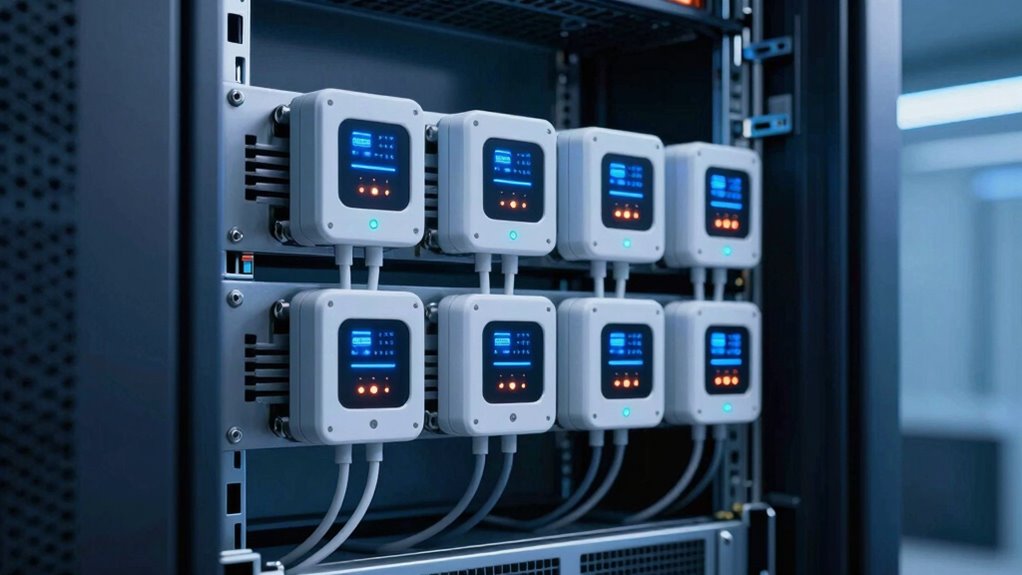

Choosing the right environmental sensors for server rooms is essential for maintaining optimal conditions and preventing costly equipment failures. The best options balance accuracy, ease of use, and integration with existing systems. The APC NBWS100T Wireless Temperature & Humidity Sensor stands out as the overall top pick because of its reliable wireless connectivity and compatibility with NetBotz monitors. Meanwhile, the Ubiquiti UniFi Environmental Sensor offers excellent network integration for those already using Ubiquiti gear, while the APC NetBotz Room Monitor 355 provides comprehensive environmental oversight for larger setups. Each choice involves tradeoffs between price, complexity, and feature set. Continue reading for a detailed breakdown of these options and how to choose the best sensor for your server room needs.

Get business pricing on networking and server gear
- Business-only prices and quantity discounts
- Tax-exempt purchasing
- Multiple users, one account, clear invoices
Key Takeaways
- Top-performing sensors combine reliable wireless connectivity with broad compatibility to simplify installation.
- The most advanced models offer comprehensive environmental monitoring, but often come at a higher price point.
- Ease of setup and integration is critical for non-technical users, making some sensors more suitable for beginners.
- Durability and IP ratings matter for sensors placed in harsh environments or with exposure to dust and moisture.
- Price varies widely, so balancing features with budget is key — premium models often include more detailed alerts and data logging.
| APC NBWS100T Wireless Temperature & Humidity Sensor – Gray for NetBotz Rack Monitor 450 & 570 |  | Best Overall for Rack Environment Monitoring | Color: Gray | Compatibility: NetBotz Rack Monitor 450, 570 | Type: Temperature & Humidity Sensor | VIEW ON AMAZON | See Our Full Breakdown |
| 32S Proactive Environment Monitor |  | Best for Large-Scale, Multi-Factor Monitoring | Sensor Capacity: up to 32 sensors | Digital Ports: 8 | Switch Sensor Ports: 16 | VIEW ON AMAZON | See Our Full Breakdown |
| Ubiquiti UniFi Environmental Sensor (USL-Environmental) |  | Best for Long-Range Wireless Monitoring | Power Source: Battery | Maximum Range: 2 km | Mounting Type: Wall | VIEW ON AMAZON | See Our Full Breakdown |
| APC NetBotz Room Monitor 355 |  | Best for Security and Environmental Threats | Security Focus: Unauthorized access & motion detection | Alerts: Real-time notifications | Customization: Thresholds & scheduling | VIEW ON AMAZON | See Our Full Breakdown |
| pp-Code WiFi Temperature and Humidity Sensor, Thermometer, Monitor with Alerts |  | Best for Remote Indoor Monitoring | Temperature Range: -40 to 170°F | Humidity Range: 0 to 100% | Connectivity: WiFi 2.4GHz | VIEW ON AMAZON | See Our Full Breakdown |
| TEMPIQ WiFi Temperature & Humidity Sensor with App Alerts |  | Best for Versatile Indoor/Outdoor Monitoring | Battery Description: Lithium | Mounting Type: Tabletop, Wall Mount | Upper Temperature Range: 140 °F | VIEW ON AMAZON | See Our Full Breakdown |
| GS1-A Smart WiFi Thermometer Hygrometer with IP65 Protection | 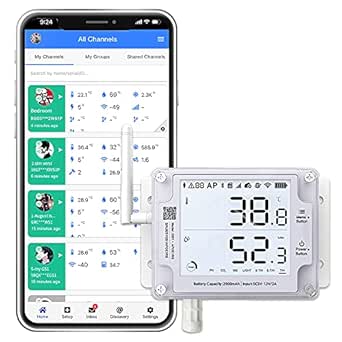 | Best for High-Accuracy Demanding Environments | Temperature Range: -4°F to 140°F | Humidity Range: 0% to 100% RH | Temperature Accuracy: ±0.2°C | VIEW ON AMAZON | See Our Full Breakdown |
| Schneider Electric Netbotz Wireless Temperature Sensor – Gray |  | Best for Compact, Wireless Monitoring in Data Centers | Item Package Dimension: 9.29L x 6.46W x 1.97H inches | Item Package Weight: 0.40 Pounds | Product Type: Electronic Sensor | VIEW ON AMAZON | See Our Full Breakdown |
More Details on Our Top Picks
APC NBWS100T Wireless Temperature & Humidity Sensor – Gray for NetBotz Rack Monitor 450 & 570
This wireless sensor excels in integrating seamlessly with NetBotz Rack Monitors, making it ideal for those already invested in APC’s ecosystem. Unlike the more comprehensive 32S Monitor, it focuses solely on temperature and humidity, which simplifies setup but limits broader environmental insights. Its wireless design dramatically reduces installation effort, but it requires a compatible NetBotz device to function, which could be a barrier for new users. Compared to wired sensors, the convenience of wireless operation makes this the best choice for quick deployment in existing rack setups.
Pros:- Wireless setup for easy installation
- Compatible with multiple NetBotz models
- Provides real-time temperature and humidity data
Cons:- Limited to APC NetBotz ecosystem
- Lacks detailed specifications and advanced features
Best for: IT managers with APC NetBotz systems seeking easy, wireless rack monitoring.
Not ideal for: Beginners or those without compatible NetBotz hardware, as it won’t operate standalone or with non-APC systems.
- Color:Gray
- Compatibility:NetBotz Rack Monitor 450, 570
- Type:Temperature & Humidity Sensor
- Wireless:Yes
Our verdict“This sensor is perfect for existing APC NetBotz users who want seamless, wireless environmental monitoring in their server racks.”
32S Proactive Environment Monitor
The 32S Proactive Environment Monitor stands out for tracking over 30 environmental factors, providing a comprehensive view that surpasses simpler sensors like the Ubiquiti or pp-Code options. Its support for up to 32 sensors and secure data transmission makes it suitable for complex data centers or large server rooms where detailed oversight is critical. However, its setup can be technically demanding, and the 15-minute battery backup may be insufficient during power outages, which is a concern for continuous monitoring. Compared to the Ubiquiti sensor, it offers far more environmental insights but requires more effort to configure.
Pros:- Supports extensive sensor coverage (up to 32 sensors)
- Secure, encrypted data communication
- Flexible installation options for diverse environments
- Monitors over 30 environmental factors
Cons:- Requires technical knowledge for setup
- Battery backup duration may be inadequate during outages
Best for: Data centers or large server rooms needing detailed, multi-factor environmental oversight.
Not ideal for: Small offices or environments with limited technical support, due to complexity and setup requirements.
- Sensor Capacity:up to 32 sensors
- Digital Ports:8
- Switch Sensor Ports:16
- Battery Backup:15 minutes
- Included Sensors:Temperature & Humidity, Digital Temperature
- Connectivity:2048-bit encryption
Our verdict“Ideal for organizations prioritizing comprehensive environmental data with secure, flexible deployment options.”
Ubiquiti UniFi Environmental Sensor (USL-Environmental)
The Ubiquiti USL-Environmental sensor shines in scenarios requiring long-range wireless coverage, with a range of up to 2 km. Its compact, weather-resistant design suits both indoor and outdoor installations, making it versatile but not specifically tailored for server room environments. Unlike the APC or 32S models, it lacks detailed environmental metrics but compensates with extended connectivity and battery life of up to six years. It’s best suited for larger facilities where environmental data needs to be gathered across broad areas rather than detailed point monitoring.
Pros:- Long-range wireless up to 2 km
- Weather-resistant IPX5 design
- Long battery life (up to 6 years)
- Versatile mounting options
Cons:- Requires batteries, which need replacement over time
- Limited to specific ecosystems like UniFi or compatible systems
Best for: Large facilities or campus environments needing long-distance, wireless environmental sensing.
Not ideal for: Small or enclosed server rooms where short-range, detailed monitoring is sufficient; this sensor’s long-range focus may be overkill.
- Power Source:Battery
- Maximum Range:2 km
- Mounting Type:Wall
- Batteries:1
- Item Weight:3.36 ounces
- Dimensions:2.1″D x 0.9″W x 1.9″H
Our verdict“This sensor suits expansive environments where broad wireless coverage outweighs detailed environmental metrics.”
APC NetBotz Room Monitor 355
The NetBotz 355 emphasizes security alongside environmental monitoring, capable of detecting unauthorized access and recording motion events. It’s less focused on detailed environmental parameters like temperature or humidity but offers valuable security alerts and customizable thresholds. Compared with dedicated environmental sensors, it provides a broader security scope, making it suitable for sensitive server rooms. Its main tradeoff is the limited detail on environmental specifics, which might not suffice for precise climate control needs.
Pros:- Detects unauthorized access and environmental threats
- Records motion events for forensic review
- Real-time alerts and customizable thresholds
Cons:- Limited environmental parameter data
- No detailed specs available
Best for: Server rooms that require integrated security and environmental threat detection in one device.
Not ideal for: Spaces needing precise climate management or extensive environmental data, due to its limited environmental sensing capabilities.
- Security Focus:Unauthorized access & motion detection
- Alerts:Real-time notifications
- Customization:Thresholds & scheduling
Our verdict“This monitor is best for environments where security threats are as critical as environmental conditions.”
pp-Code WiFi Temperature and Humidity Sensor, Thermometer, Monitor with Alerts
The pp-Code WiFi sensor offers a straightforward solution for remote temperature and humidity monitoring, making it well-suited for small server rooms or labs. Its ability to send alerts via email or SMS with customizable thresholds enhances control over environmental conditions. However, its reliance on a 2.4GHz WiFi network and subscription fees for extended logs and alerts present ongoing costs. While it lacks the advanced sensor capacity of the 32S, it provides a user-friendly option for those needing simple, remote oversight without technical complexity.
Pros:- Remote monitoring via WiFi from anywhere
- Customizable email and SMS alerts
- Compact, portable design
- Logs environmental data for review
Cons:- Requires 2.4GHz WiFi network
- Subscription needed for extended logs and SMS alerts
- Limited to indoor environments
Best for: Small server rooms or laboratories requiring easy remote environmental monitoring with alert notifications.
Not ideal for: Large data centers or environments needing extensive sensor networks, due to its limited sensor capacity and indoor focus.
- Temperature Range:-40 to 170°F
- Humidity Range:0 to 100%
- Connectivity:WiFi 2.4GHz
- Log History:6 days (28 days with subscription)
- Alerts:Email & SMS
- Subscription Cost:$2.49/month or $19.99/year
Our verdict“This sensor suits small, indoor spaces where simple remote monitoring and alerting are sufficient without complex setup.”
TEMPIQ WiFi Temperature & Humidity Sensor with App Alerts
The TEMPIQ WiFi Temperature & Humidity Sensor stands out for its ease of setup and flexibility, supporting both indoor and outdoor environments without subscription fees. Compared with the GS1-A, it offers simpler installation but less granular accuracy and fewer integration options. Its real-time alerts via push, text, and email make it ideal for those needing immediate notifications, yet it relies on USB power for full functionality, which could be limiting in certain server room setups. The support for only 2.4GHz WiFi limits compatibility in some networks. Overall, this model suits buyers seeking straightforward monitoring without complex integrations but may fall short in environments requiring high precision or extensive automation.
Pros:- Easy setup with quick WiFi connection and app alerts
- Supports both indoor and outdoor environments
- No subscription fees and unlimited data storage
- Real-time alerts for temperature and humidity changes
Cons:- Requires USB power for full alert functionality
- Supports only 2.4GHz WiFi (not 5GHz)
- Battery mode provides less frequent updates
Best for: Small to medium-sized server rooms or home setups where quick setup and multi-environment use matter most
Not ideal for: Large data centers needing high-precision, wired, or integrated monitoring systems
- Battery Description:Lithium
- Mounting Type:Tabletop, Wall Mount
- Upper Temperature Range:140 °F
- Temperature Accuracy:+/- 1 °F
- Temperature Reading Accuracy:±1°C
- Connectivity:WiFi 2.4GHz
Our verdict“This sensor is best for users who prioritize simplicity and versatility over high-precision data or extensive automation.”
GS1-A Smart WiFi Thermometer Hygrometer with IP65 Protection
The UbiBot GS1-A excels in delivering precise temperature and humidity measurements, making it ideal for environments where accuracy is critical. Its IP65-rated enclosure allows it to operate reliably in demanding conditions, outperforming the Schneider Netbotz in durability and remote data access. While it offers advanced features like cloud storage and integration with Alexa and IFTTT, it lacks external sensor expansion, which may limit its scalability in complex setups. The requirement for WiFi for remote access aligns well with server rooms that have stable networks. This device suits users who need high-accuracy readings paired with remote management but might not be suitable for those seeking extensive sensor customization or wired solutions.
Pros:- High accuracy temperature and humidity measurements
- IP65-rated enclosure for tough environments
- Remote monitoring with cloud storage and customizable alerts
- Supports integration with Alexa and IFTTT
Cons:- No support for external sensor expansion
- Limited to internal sensors only
- Requires stable WiFi connection for remote features
Best for: Environmentally sensitive server rooms requiring precise monitoring and remote control
Not ideal for: Small offices or setups where external sensor expansion is needed or wired connections are preferred
- Temperature Range:-4°F to 140°F
- Humidity Range:0% to 100% RH
- Temperature Accuracy:±0.2°C
- Humidity Accuracy:±2% RH
- Protection Rating:IP65
- Power:12 volts
Our verdict“This pick makes the most sense for users who need accurate, durable sensors with remote control capabilities in tougher environments.”
Schneider Electric Netbotz Wireless Temperature Sensor – Gray
The Netbotz Wireless Temperature Sensor offers quick and easy installation with its wireless design, making it suitable for tight spaces in data centers and sensitive environments. Compared to the TEMPIQ, it lacks detailed specs on accuracy and integration, which might be a concern for precise monitoring needs. Its compact size is a major advantage in confined server racks, but the absence of specific accuracy figures and battery life details leaves some uncertainty about long-term reliability. Designed to work with compatible Schneider monitoring systems, it is ideal for environments that already operate within this ecosystem. This sensor is best for those needing straightforward, wire-free temperature monitoring but not for users requiring detailed data or extensive automation features.
Pros:- Wireless connectivity for simple installation
- Compact size fits in limited spaces
- Suitable for monitoring environmental conditions in tight areas
Cons:- Limited details on sensor accuracy and reliability
- No info on battery life or power source
- Requires compatible monitoring system for full functionality
Best for: Data centers or server rooms with existing Schneider monitoring infrastructure needing simple wireless sensors
Not ideal for: Environments requiring precise data logging or independent monitoring without proprietary systems
- Item Package Dimension:9.29L x 6.46W x 1.97H inches
- Item Package Weight:0.40 Pounds
- Product Type:Electronic Sensor
- Wireless Connectivity:Yes
- Application:Monitoring environmental conditions
Our verdict“This sensor suits environments where ease of wireless installation takes precedence over detailed data or standalone operation.”

How We Picked
These products were evaluated based on their accuracy, ease of installation, integration capabilities, build quality, and overall value. Preference was given to sensors that seamlessly connect with common network infrastructure and offer reliable data transmission. Additionally, we considered user-friendly features like app alerts and straightforward setup, which are vital for both experienced and novice users. The ranking reflects a balance between cost and functionality, with the best overall picks excelling across multiple criteria while budget options focus on core monitoring features.Factors to Consider When Choosing Environmental Sensors For Server Rooms
Selecting the right environmental sensor for a server room involves considering several key factors. Beyond basic temperature and humidity readings, it’s important to think about integration, durability, and ease of use. Understanding these factors can prevent overpaying for features you don’t need or missing critical environmental changes that could threaten your equipment.Compatibility and Integration
Choosing a sensor that integrates well with your existing infrastructure reduces setup time and ensures reliable alerts. Consider whether the sensor supports common protocols like Wi-Fi, Z-Wave, or Ethernet, and if it can connect to your network management systems. Sensors that work with popular platforms like Ubiquiti or APC provide smoother integration, especially in larger or complex setups.
Accuracy and Reliability
Since server room conditions can change rapidly, sensors with high accuracy and fast response times are essential. Look for models with good sensor reputations and data logging features, which help in identifying trends over time. Remember, a cheaper sensor might save money upfront but could lead to false alarms or missed alerts, costing more in the long run.
Durability and Environmental Resistance
Depending on your server room environment, you may need sensors with IP ratings or rugged enclosures. Sensors exposed to dust, moisture, or temperature fluctuations should have protective features to maintain their performance. This avoids frequent replacements and ensures consistent monitoring over time.
Ease of Use and Alerts
User-friendly interfaces, mobile app support, and customizable alerts make ongoing monitoring more manageable. If you prefer a set-it-and-forget-it approach, prioritize sensors with straightforward setup and reliable notification systems. Complex configurations can lead to setup errors or missed alerts, especially in critical environments.
Cost and Total Value
While investing in premium sensors offers advanced features, budget options can suffice for basic monitoring needs. Consider the total cost, including installation, maintenance, and potential upgrades. Sometimes, opting for a more affordable sensor with essential features provides better value, especially if your environment is not highly volatile.
Frequently Asked Questions
How accurate do environmental sensors need to be in a server room?
Accuracy in environmental sensors for server rooms is critical to prevent overheating or humidity issues that could damage equipment. Ideally, sensors should have a precision of at least ±1°C for temperature and ±5% for humidity. Higher accuracy sensors help detect subtle changes early, but for most setups, a tolerance within this range is sufficient to trigger timely alerts without false alarms.
Can I use consumer-grade sensors for server room monitoring?
While some consumer-grade sensors can provide basic temperature and humidity readings, they often lack the reliability and integration features needed for server room environments. These sensors may have limited durability, inconsistent data transmission, or inadequate alerting options. For critical environments, investing in purpose-built professional sensors offers better accuracy, durability, and peace of mind.
What’s the benefit of wireless sensors over wired options?
Wireless sensors simplify installation, especially in existing server rooms where running cables can be disruptive. They also enable flexible placement for optimal coverage. However, wireless sensors depend on stable Wi-Fi or network connections and might be slightly more vulnerable to interference. Wired sensors, while more complex to install initially, tend to provide more consistent data transmission in stable environments.
How often should environmental sensors record data?
The frequency of data recording depends on your environment’s stability and the criticality of the data. Most sensors record at intervals between 1 and 5 minutes, which balances timely alerts with manageable data logs. For highly sensitive setups, more frequent sampling ensures quick detection of changes, but it can generate larger data sets that require more storage and analysis.
Are IP-rated sensors necessary for all server room applications?
IP-rated sensors are essential if the sensor will be exposed to dust, moisture, or harsh conditions. For typical indoor server rooms with controlled environments, standard sensors usually suffice. However, in environments where dust or humidity levels fluctuate or where sensors might be exposed to accidental spills, IP-rated models provide added durability and reliability, reducing maintenance needs over time.
Conclusion
For most small to medium server rooms, the APC NBWS100T Wireless Temperature & Humidity Sensor offers an excellent balance of ease of use, reliability, and integration. Those seeking the most comprehensive monitoring should consider the APC NetBotz Room Monitor 355, which provides extensive environmental oversight at a higher price. Budget-conscious buyers will find the pp-Code WiFi Temperature and Humidity Sensor a capable option for basic needs. Beginners or less technical users should prioritize sensors with straightforward setup and app alerts, while larger facilities with complex needs may benefit from sensors with IP ratings and advanced data logging. Ultimately, choosing the right sensor depends on your specific environment, budget, and monitoring priorities.Halloween Picks
halloween
As an affiliate, we earn on qualifying purchases.