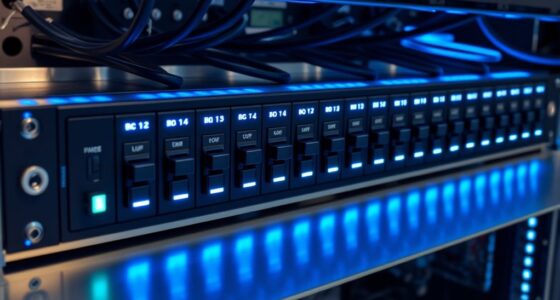
An MPO fiber breakout cassette connects a high-density MPO trunk to individual LC or SC ports, but the right choice depends on fiber type, port layout, and connector gender. My best overall pick is the FHD MPO-LC OM4 Type A cassette, which pairs 24-fiber capacity with a clearly specified 2-MPO-to-12-duplex-LC layout. The OS2 FHD cassette stands out for singlemode links, while RiteAV’s pre-terminated LGX models suit buyers who want included hydra cables and adapters. The main tradeoffs are 12- versus 24-fiber capacity, multimode versus singlemode compatibility, and a ready-to-install kit versus a simpler cassette. Read on for the full breakdown and guidance on matching the cassette to your cabling plan.

Get business pricing on networking and server gear
- Business-only prices and quantity discounts
- Tax-exempt purchasing
- Multiple users, one account, clear invoices
Key Takeaways
- The 24-fiber FHD OM4 Type A cassette is the strongest all-around fit in this lineup because its two MPO-12 inputs map to 12 LC duplex ports, giving buyers a defined high-density layout.
- The OM4 FHD and OM4 FHD-labeled alternatives share nearly identical stated capacity and loss figures; confirm part number, gender, polarity, and adapter details before treating either as a direct substitute.
- RiteAV’s LGX models stand apart through included 30 cm hydra cables and MTP adapters, which can simplify assembly but may add parts a buyer does not need.
- 12-fiber options serve smaller links and simpler port counts, while 24-fiber models expand the breakout density; selecting by fiber count alone can still produce a mismatch if the trunk or switch optics use another mapping.
- The lineup spans OM2, OM3, OM4, and OS2, as well as MPO-to-SC and MPO-to-LC designs, so connector type, fiber standard, and polarity matter more than a product name that simply says MPO cassette.


More Details on Our Top Picks
ICC MPO to SC Plug-and-Play Fiber Optic Cassette, OM2, 12-Fiber, Beige
I’d choose this cassette when the existing installation is built around ICC fiber patch panels and needs a straightforward MPO-to-SC fan-out. Its 12 SC front ports give each connection a familiar interface, while the single rear MPO connection keeps the trunk side organized. Compared with the FHD MPO-LC OM4 cassette, this ICC model uses SC rather than LC and is limited to OM2, making it a better match for compatible legacy multimode infrastructure than a higher-density data-center refresh. The plastic body with a metal enclosure helps protect and arrange the assembly, but panel compatibility narrows where it fits. I’d also skip it for longer-reach links or deployments requiring OM3 or OM4 performance.
Pros:- Converts one rear MPO connection to 12 front SC ports.
- Plug-and-play format simplifies installation.
- Metal enclosure helps protect and organize the cassette.
- Compact 4.59-inch length suits panel-based layouts.
Cons:- Compatibility is limited to ICC fiber patch panels.
- OM2 multimode is not suited to long-distance applications.
- SC connectivity may be a poor fit for LC-based high-density systems.
Best for: Network teams extending an existing ICC panel installation with OM2 multimode trunks and SC patch leads.
Not ideal for: Buyers building a new high-density LC-based data-center layout, or anyone needing non-ICC panel compatibility or longer-distance fiber.
- Fiber type:OM2 multimode
- Front ports:12 SC
- Rear port:1 MPO
- Housing:Plastic with metal enclosure
- Color:Beige
- Length:4.59 inches
- Weight:6.4 ounces
Our verdict“Choose this for an ICC panel already using OM2 and SC; otherwise, the LC-focused FHD or RiteAV options offer a closer match for many modern layouts.”
RiteAV LGX Footprint Pre-terminated MTP Cassette – MTP Male, 24 Fiber to LC Quad Multimode Adapters, 6 Ports, Includes 12 LC Multimode Hydra Cable (30cm, OFNR) + 2 MTP Adapter
This RiteAV cassette is the lineup’s fit for buyers who need a 24-fiber MTP-to-LC quad arrangement and want the hydra cable and MTP adapters included. Its pre-terminated, splice-free design can reduce field work compared with building a breakout from separate components. The six-port quad layout differs from the FHD MPO-LC OM4 cassette, which presents 12 LC duplex ports in a cassette body; the RiteAV format may suit a particular LGX setup, but its adapter arrangement should be matched carefully to the intended panel and cabling plan. Vertical or horizontal mounting adds installation flexibility. The tradeoff is that the supplied data does not specify a fiber grade or broad compatibility, so I wouldn’t choose it without confirming the system requirements.
Pros:- Splice-free pre-terminated assembly can reduce field termination work.
- 24-fiber MTP connection serves a higher-count trunk.
- Includes a 30 cm LC multimode hydra cable and two MTP adapters.
- Supports vertical or horizontal installation.
Cons:- Fiber grade and compatibility across systems are not specified in the supplied data.
- Quad LC arrangement may not match standard duplex-port expectations.
- The multiple components and configuration can be challenging for inexperienced installers.
Best for: Installers needing a pre-terminated 24-fiber MTP-to-LC quad breakout with its short hydra cable and adapters supplied.
Not ideal for: Beginners or buyers who need a clearly specified OM3 or OM4 grade, or who cannot verify fit with their LGX panel and fiber system.
- Connector type:MPO/MTP
- Fiber configuration:24 fiber to LC quad adapters
- Ports:6
- Included hydra cable:12 LC multimode, 30 cm, OFNR
- Included adapters:2 MTP adapters
- Mounting orientation:Vertical or horizontal
- Stated usage:Indoor and outdoor
Our verdict“Pick this when a confirmed LGX design calls for a 24-fiber LC quad breakout and included cable, but choose the FHD cassette for a better-specified OM4 LC duplex layout.”
FHD MPO-LC Cassette, OM4 Multimode, Type A, 24 Fibers, 2 x MPO-12 (Female) to 12 x LC Duplex (Aqua), 0.35dB Max
Among these five, I’d put the FHD first for buyers who want a clearly specified 24-fiber OM4 MPO-to-LC duplex cassette. Two MPO-12 female rear ports feed 12 LC duplex ports, giving a defined layout for structured patching; its stated MPO insertion-loss ceiling of 0.35 dB also helps planners compare link components. The aluminium body and tool-less installation suit a panel-based data-center build, while Type A polarity must match the rest of the channel. Compared with the ICC OM2-to-SC cassette, this is a higher-grade LC-oriented option, but it is not a universal replacement: it is listed for FHD Series enclosures, and its 10Gbps data-rate specification does not by itself establish every application’s performance. Handle the fiber connections carefully.
Pros:- Two MPO-12 rear ports break out to 12 LC duplex ports.
- OM4 multimode and Type A polarity are specified.
- Aluminium cassette body supports a sturdy enclosure-based installation.
- Stated maximum MPO insertion loss is 0.35 dB.
Cons:- Designed to match FHD Series enclosures, limiting fit elsewhere.
- Type A polarity must align with the connected trunk and channel.
- Fiber components require careful handling during installation.
Best for: Data-center installers building an FHD Series enclosure with OM4 trunks, LC duplex patching, and a 24-fiber cassette layout.
Not ideal for: Teams using ICC panels, SC connectivity, singlemode fiber, or a cassette system whose polarity and enclosure requirements differ.
- Fiber mode:OM4 50/125 μm multimode
- Fiber count:24 fibers
- Rear connectors:2 MPO-12 female
- Front connectors:12 LC UPC duplex ports
- Polarity:Type A
- Maximum MPO insertion loss:0.35 dB
- Cassette body:Aluminium AL5052
- Dimensions:1.38 × 4.29 × 4.64 inches (35 × 109 × 118 mm)
- Application:FHD Series enclosures
Our verdict“Choose this for a compatible FHD enclosure needing a specified OM4, 24-fiber LC duplex breakout; skip it if your panel or polarity differs.”
RiteAV LGX Footprint Pre-terminated MTP Cassette – 12 Fiber to 6 LC OM3 10Gig Duplex Adapters, Includes 12 LC OM3 Hydra Cable (30cm, OFNR) +1 MTP Adapter
I’d pick this RiteAV model when the target is a 12-fiber OM3 link presented as six LC duplex connections. The included 30 cm LC OM3 hydra cable and MTP adapter make it a ready-made splice-free assembly, which can simplify a small switch or server connection compared with sourcing each breakout component separately. Its stated 10Gbps rate and named OM3 grade are more specific than the RiteAV 24-fiber quad cassette, whose fiber grade is not given in the supplied data. By contrast, the FHD OM4 cassette doubles the fiber count and provides 12 LC duplex ports, so it suits denser or higher-grade builds better. This six-port design is the more focused choice, but it is tied to OM3 and one included unit.
Pros:- Clearly specified for OM3 multimode and 10Gbps.
- Provides six LC duplex connections from a 12-fiber MPO/MTP arrangement.
- Includes a 30 cm LC OM3 hydra cable and one MTP adapter.
- Plug-and-play, splice-free setup supports vertical or horizontal mounting.
Cons:- OM3-specific configuration does not suit every fiber grade or link plan.
- Six duplex ports provide less breakout capacity than the FHD 24-fiber cassette.
- Only one cassette is included, so larger builds need additional units.
Best for: Installers connecting OM3 10Gig multimode trunks to six LC duplex endpoints in an LGX-compatible layout.
Not ideal for: Buyers needing 24 fibers, 12 LC duplex ports, OM4 or singlemode fiber, or several cassettes from one included unit.
- Fiber configuration:12 fiber to 6 LC duplex adapters
- Fiber type:OM3 multimode
- Data rate:10 gigabits per second
- Included hydra cable:12 LC OM3, 30 cm, OFNR
- Included MTP adapters:1
- Mounting:Vertical or horizontal
- Compatible devices:Network switch, router, server
- Part number:RAV-MTP-PCAS-LCDX-OM3-6PORT
Our verdict“Choose this for a compact, specified OM3 10Gig breakout with six LC duplex links; choose the FHD model when you need 24 fibers and 12 LC duplex ports.”
RiteAV LGX Footprint Pre-terminated MTP Cassette – MTP Male, 12 Fiber to 6 LC Duplex Multimode Adapters, Includes 12 LC Multimode Hydra Cable (30cm, OFNR) +1 MTP Adapter
This RiteAV is a straightforward choice for an installer who values LGX-format mounting flexibility and a pre-terminated 12-fiber-to-six-LC-duplex arrangement. Its 30 cm multimode hydra cable and included MTP adapter keep the breakout components together, while vertical or horizontal installation can help fit different panel layouts. Compared with the OM3-specific RiteAV cassette, this listing describes the fiber as multimode without specifying a grade, so I’d treat it as less certain rather than assume it matches an OM3 link budget. The FHD OM4 option provides more detail on fiber grade, polarity, and loss, and offers twice the fiber count; this RiteAV pick instead keeps the configuration simple. Confirm connector and fiber compatibility before ordering.
Pros:- Splice-free 12-fiber breakout to six LC duplex adapters.
- Includes a 30 cm multimode hydra cable and one MTP adapter.
- LGX footprint supports vertical or horizontal installation.
- Plug-and-play format can simplify fiber management.
Cons:- Multimode fiber grade is not specified in the supplied data.
- Six LC duplex ports offer less capacity than the FHD 24-fiber cassette.
- Requires LGX-compatible equipment and a matching MTP connection.
Best for: Installers seeking a pre-terminated 12-fiber multimode breakout for an LGX footprint with flexible mounting orientation.
Not ideal for: Buyers who need a confirmed OM3 or OM4 grade, a 24-fiber trunk, or documented insertion-loss and polarity specifications.
- Connector type:MTP
- Fiber configuration:12 fiber to 6 LC duplex adapters
- Fiber mode:Multimode
- Included hydra cable:12 LC multimode, 30 cm, OFNR
- Included MTP adapters:1
- Footprint:LGX
- Mounting:Vertical or horizontal
- Part number:RAV-MTP-PCAS-LCDX-MM-6PORT
Our verdict“Choose this for a flexible LGX installation when the multimode grade is confirmed separately; pick the OM3 RiteAV or FHD cassette when a specified grade matters.”
OM4 Multimode Fiber Cassette, Type A, 24 Fibers, 2 x MPO-12 to 12 x LC Duplex, 0.35dB Max, FHD MPO-LC
I’d put this FHD cassette first for buyers building an OM4 multimode breakout around a clear 24-fiber layout: two rear MPO-12 connections fan out to 12 front LC duplex ports. That arrangement helps consolidate rack cabling while keeping individual LC links accessible. The listing also states a 0.35 dB maximum and pre-terminated, tested assembly, useful when installation time and consistent connections matter. Compared with the OS2 FHD cassette in this lineup, this model suits multimode links rather than singlemode runs; compared with the RiteAV OM3 option, it offers OM4 fiber for buyers specifying that mode. The tradeoff is less flexibility across fiber types: it is indoor-only and requires compatible rack hardware. I’d choose it for a planned OM4 deployment, not as a universal replacement cassette.
Pros:- 24-fiber layout connects two MPO-12 trunks to 12 LC duplex ports
- OM4 50/125 μm fiber fits multimode network builds
- Pre-terminated and tested for a more direct installation
- Listed maximum insertion loss of 0.35 dB
Cons:- Indoor-only construction limits placement
- Requires compatible rack units for mounting
- Not suited to OS2 singlemode infrastructure
Best for: Data-center teams standardizing on OM4 who need 24 fibers broken out into individually accessible LC duplex ports.
Not ideal for: Installers working with OS2 singlemode links, outdoor enclosures, or rack systems that cannot accept the cassette.
- Fiber count:24 fibers
- Fiber mode:OM4 50/125 μm multimode
- Rear connections:2 MPO UPC ports
- Front connections:12 LC UPC duplex ports
- Maximum insertion loss:0.35 dB
- Sleeve material:Zirconia ceramic
- Use environment:Indoor
Our verdict“Choose this cassette for a rack-compatible OM4 build that needs a tested, 24-fiber MPO-to-LC breakout.”
OS2 Singlemode Fiber Cassette, 24 Fibers, Type A, 2 x MPO-12 (Male) to 12 x LC Duplex (Blue), 0.35dB Max FHD MPO-LC
For a singlemode plant, this FHD cassette keeps the same useful 24-fiber, two-MPO-to-12-LC layout as the OM4 model above but changes the fiber to OS2 9/125 μm. That distinction is the buying decision: choose this one when your trunks and connected equipment call for singlemode, rather than selecting by port count alone. Its stated 0.35 dB maximum, aluminium body, and zirconia ceramic sleeves suit a dense indoor installation where connector handling and fit matter. The RiteAV singlemode cassette also targets singlemode breakout, but this FHD listing gives a clear LC duplex port count and fiber specification. The tradeoff is narrow application: it is not an OM4 substitute, and the delicate connectors call for careful handling. I’d skip it for multimode networks or outdoor deployment.
Pros:- OS2 9/125 μm fiber is specified for singlemode applications
- Two MPO-12 inputs break out to 12 LC duplex ports
- Aluminium cassette body with zirconia ceramic sleeves
- Pre-terminated and pre-tested for installation convenience
Cons:- Specific to OS2 singlemode infrastructure
- Indoor-only use limits installation locations
- Fiber connectors need careful handling during installation
Best for: Network installers extending an OS2 singlemode system who need 24 fibers presented as 12 LC duplex ports.
Not ideal for: Buyers with OM3 or OM4 cabling, or teams needing a cassette rated for outdoor installation.
- Fiber count:24 fibers
- Fiber mode:OS2 9/125 μm singlemode
- Polarity:Type A
- Rear connections:2 MPO UPC ports, male
- Front connections:12 LC UPC duplex ports
- Maximum insertion loss:0.35 dB
- Cassette body:AL5052 aluminium
- Use environment:Indoor
Our verdict“Pick this FHD cassette when your existing trunks are OS2 and you want a defined 24-fiber MPO-to-LC breakout.”
RiteAV LGX Footprint Pre-terminated MTP Cassette – MTP Male, 24 Fiber to LC Quad OM3 10Gig Adapters, 6 Ports, Includes 12 LC Multimode Hydra Cable (30cm, OFNR) + 2 MTP Adapter
This RiteAV option stands apart from the FHD cassettes because it includes a 30 cm LC multimode Hydra cable and is built around an LGX footprint, rather than presenting only the cassette and its front/rear port specifications. Its splice-free, plug-and-play design can simplify a short, organized connection between MTP trunking and LC equipment, while vertical or horizontal mounting gives installers more choice in a rack layout. It is an OM3 10Gig-focused pick, so I’d favor it for a matching multimode system over the OM4 FHD cassette when the installed fiber standard is OM3. The tradeoff is that the listing’s connector and adapter description is more specialized, and its data-transfer specification is 10 gigabits per second. Confirm connector and polarity compatibility before ordering; it is not a general-purpose cassette for every MPO network.
Pros:- Includes a 30 cm LC multimode Hydra cable
- Splice-free, plug-and-play format can simplify installation
- LGX footprint supports vertical or horizontal mounting
- OM3 10Gig configuration suits matching multimode infrastructure
Cons:- Specific OM3 configuration is not an OS2 or OM4 replacement
- Listed 10 Gbps transfer rate may not fit faster link requirements
- Connector and adapter details call for compatibility checks
Best for: Installers building an OM3 multimode link who want an LGX-format cassette supplied with a short Hydra cable.
Not ideal for: Teams standardizing on OS2 or OM4, or buyers who need a clearly specified 12-port LC duplex cassette rather than this OM3 configuration.
- Fiber configuration:24 fiber to LC quad OM3 10Gig adapters
- MTP connector:Male
- Ports:6 ports
- Included cable:12 LC multimode Hydra cable, 30 cm, OFNR
- Included adapters:2 MTP adapters
- Installation:Vertical or horizontal
- Listed data rate:10 gigabits per second
Our verdict“Choose this RiteAV model for an OM3 installation where the included Hydra cable and LGX mounting format suit the rack plan.”
RiteAV LGX Footprint Pre-terminated MTP Cassette – MTP Male, 24 Fiber to LC Quad Singlemode Adapters, Includes 12 LC Singlemode Hydra Cable (30cm, OFNR) + 2 MTP Adapter
Among these five, this RiteAV model is the clearest choice for a buyer who wants a singlemode cassette bundled with its Hydra cable. The 24-fiber configuration, LGX footprint, and splice-free plug-and-play approach support a tidy MPO/MTP-to-LC installation, with vertical or horizontal mounting to suit the enclosure. Compared with the FHD OS2 cassette, this model emphasizes the included 30 cm cable and flexible mounting rather than listing a specific 12-port LC duplex count or a maximum insertion-loss figure. That makes it attractive for preplanned assemblies, but less straightforward if you need those performance details spelled out before purchase. Its singlemode focus also rules it out for the OM3 RiteAV cassette and the OM4 FHD model. I’d verify equipment and connector compatibility before committing, especially where the installed network has a fixed polarity scheme.
Pros:- Singlemode adapters and Hydra cable are specified
- Includes a 30 cm LC singlemode Hydra cable
- LGX footprint supports vertical or horizontal mounting
- Splice-free, plug-and-play design reduces field assembly steps
Cons:- Limited to singlemode applications
- Listing does not provide a maximum insertion-loss figure
- Equipment and connector compatibility need checking
Best for: Installers of singlemode network links who want an LGX-format, splice-free cassette supplied with a short LC Hydra cable.
Not ideal for: Buyers needing multimode fiber, a stated insertion-loss limit, or a fully specified LC duplex port count.
- Fiber configuration:24 fiber to LC quad singlemode adapters
- MTP connector:Male
- Included cable:12 LC singlemode Hydra cable, 30 cm, OFNR
- Included adapters:2 MTP adapters
- Footprint:LGX
- Installation:Vertical or horizontal
- Features:Plug and play, splice-free
- Listed use:Indoor and outdoor
Our verdict“Choose this RiteAV cassette for a singlemode build when its included Hydra cable and LGX mounting suit your installation.”
MTP/MPO to LC Breakout Cassette
This is the most basic, compact-sounding option in the group: a black, 150 g MTP/MPO-to-LC cassette aimed at indoor data-center and enterprise links. It may suit a buyer who values a small unit and broad compatibility with network switches, routers, and other network equipment over detailed fiber-mode or port-count information. That simplicity is also its main limitation. Unlike the FHD OM4 and OS2 cassettes, the listing does not specify fiber mode, fiber count, LC port count, polarity, or insertion loss. Its stated 10 Gbps rate also offers less guidance for a buyer planning higher-speed breakout than the RiteAV OM3 configuration’s 10Gig focus or the FHD listings’ migration claims. I’d treat this as a fit-first option only after confirming its connector layout and fiber compatibility with the system it will join.
Pros:- Compact listed weight of 150 g
- MPO-to-LC format suits fiber breakout applications
- Compatible device examples include switches, routers, and network equipment
- Black housing fits a straightforward indoor network installation
Cons:- Fiber mode and fiber count are not specified
- LC port layout and insertion loss are not listed
- Indoor-only use and stated 10 Gbps rate narrow its application
Best for: Network technicians seeking a compact indoor MPO-to-LC cassette for an existing system whose connector and fiber requirements are already confirmed.
Not ideal for: Buyers designing a new high-speed link who need documented fiber mode, fiber count, port layout, or insertion-loss limits.
- Connector format:MPO to LC
- Cable type:Fiber optic
- Listed data rate:10 Gbps
- Compatible devices:Network switches, routers, and network equipment
- Weight:150 g
- Color:Black
- Use environment:Indoor
Our verdict“Consider this cassette only when its compact format fits and you can confirm its unlisted fiber and port specifications with the seller.”
RiteAV MTP Cassette – 12 Fiber to 6 LC Duplex Singlemode Adapters, 30cm Hydra Cable, LGX Footprint, Vertical/Horizontal Installation
This RiteAV cassette is a focused choice for buyers who need a 12-fiber singlemode MPO-to-LC breakout in an LGX-compatible enclosure. Its splice-free design and included 30cm hydra cable simplify connection between the MTP/MPO trunk and six LC duplex adapters, without requiring field splicing. Compared with the 24-fiber OS2 FHD MPO-LC cassette, this model serves a smaller breakout and specifies flexible vertical or horizontal installation rather than a 24-fiber layout. That compact scope is useful when the link count matches, but it leaves less room for higher-density expansion. The tradeoff is compatibility: it is singlemode only and built around the LGX footprint, so buyers with multimode links or another enclosure format should choose a different cassette. Connector-option details are also limited in the supplied specifications.
Pros:- Splice-free MTP/MPO-to-LC breakout supports plug-and-play installation.
- Singlemode configuration suits OS2-oriented link designs.
- 30cm hydra cable is included for connection to the LC adapters.
- Vertical or horizontal installation provides orientation flexibility in compatible enclosures.
Cons:- Limited to singlemode fiber, unlike the lineup’s OM3 and OM4 alternatives.
- LGX footprint may not fit non-LGX enclosures.
- The 12-fiber capacity offers less density than 24-fiber cassette options.
Best for: Network installers building a 12-fiber singlemode link with six LC duplex connections in an LGX-compatible enclosure.
Not ideal for: Teams deploying multimode cabling, needing a 24-fiber breakout, or using enclosures that do not accept the LGX footprint.
- Fiber count:12 fiber
- Connector types:MTP/MPO to LC duplex
- Mode:Singlemode
- Hydra cable length:30cm
- Footprint:LGX
- Installation orientation:Vertical or horizontal
Our verdict“Choose this cassette for a straightforward 12-fiber singlemode breakout when your enclosure accepts LGX modules.”

How We Picked
I ranked these MPO fiber breakout cassettes by how clearly their specifications support a real installation decision: fiber type, fiber count, MPO/MTP connector details, breakout port layout, stated insertion loss, and physical format. I also weighed whether the product includes useful installation components, such as hydra cables and adapters, and whether its description gives enough information to match it with existing trunks and equipment.
The highest-ranked choices offer a clearly described layout and a useful fit for common network designs. Products with bundled cabling rank well for buyers who want a coordinated assembly, but lower for readers who need only a cassette or require different cable lengths. I placed specialized 12-fiber, SC, and singlemode options according to their narrower use cases, and treated vague listings cautiously because missing details can make compatibility harder to verify. Where two listings share similar stated specs, I distinguish them by the information provided rather than assuming unlisted performance differences.
Factors to Consider When Choosing Mpo Fiber Breakout Cassette
Before choosing a cassette, match its breakout pattern to the complete link, not just the rack panel. A compatible module must line up with the trunk, transceivers, fiber standard, connector gender, and the intended polarity scheme.
Match the fiber standard to the full link
Choose OM2, OM3, or OM4 for multimode systems, and OS2 for singlemode links; the cassette cannot upgrade the capabilities of the trunk or optics attached to it. A common mistake is matching only the connector while overlooking the fiber grade, which can leave the link inconsistent with the planned reach or transceiver specification. Check the cable markings and equipment documentation at both ends before ordering. Where a network mixes existing cable grades, confirm the design with the responsible network engineer rather than assuming the highest grade in one component sets the whole link’s performance. Pay more for a higher-grade cassette only when the rest of the channel supports it or the installation plan calls for that standard.
Calculate fiber count and breakout ports together
A 12-fiber MPO-12 breakout and a 24-fiber assembly do not offer interchangeable port maps. Count the fibers required by the application, then compare that number with the MPO inputs and the LC or SC outputs shown in the product specification. Duplex LC ports carry two fibers each, so 12 LC duplex ports typically correspond to 24 fibers; a listing with six duplex ports serves a smaller breakout. Leave room for planned growth, but avoid buying more capacity if the panel, trunk, or active equipment cannot use it. Confirm whether the advertised port count describes duplex adapters, individual connectors, or another arrangement.
Verify gender, polarity, and keying before ordering
MPO and MTP connections depend on connector gender, alignment features, and polarity, not just a matching connector shape. Check whether the cassette has male or female MPO/MTP ports and compare that with the trunk cable’s connector ends; two components with the same gender may not mate directly. Confirm the polarity method required by the transceivers and the rest of the channel, since an incorrect mapping can prevent a link from working as intended. Do not infer polarity from Type A alone without reviewing the manufacturer’s full wiring map. This verification is especially important when combining parts from different vendors.
Decide whether an included hydra cable is useful
Pre-terminated kits can reduce field termination work by supplying the short breakout leads and adapters alongside the cassette. That convenience is valuable when the included connector type, fiber grade, cable rating, and length match the rack layout. A 30 cm hydra may be tidy in a compact enclosure but too short for a deeper or differently arranged panel. Bundled parts can also create waste if your installation already has compatible adapters or needs a different cable route. Compare the kit contents against your bill of materials before choosing a bundled model over a cassette-only option.
Check panel format, density, and access
LGX footprint cassettes are intended for compatible modular enclosures, but the enclosure’s available slots, mounting orientation, and front access still need checking. A high-density 24-fiber cassette can save panel space, yet tightly packed adapters may make labeling, cleaning, and patching more demanding. Consider how technicians will identify each channel and reach the connectors during routine work. For a small installation, a lower-density cassette may be easier to manage than filling unused ports. Confirm the physical format with the panel documentation rather than relying on the word LGX in a listing.
Interpret insertion-loss figures in context
A stated maximum insertion loss, such as 0.35 dB, offers a useful specification to compare, but it is only one part of the channel loss budget. The trunk connectors, adapter interfaces, patch leads, and every additional connection also contribute loss. Check whether the listed figure applies to the cassette assembly and whether it is a maximum per path or another measurement basis. For demanding links, request the manufacturer’s test documentation and compare it with the system’s permitted budget. Do not choose a module on a single loss number while leaving connector quality and total path length unverified.
Frequently Asked Questions
Can I use an MPO-12 cassette with a 24-fiber trunk?
Not as a direct one-to-one replacement without checking the trunk’s design and intended channel mapping. A 24-fiber trunk may carry two 12-fiber groups, while an MPO-12 cassette is designed around a 12-fiber interface. Confirm the trunk connector count, fiber positions, polarity, and the cassette’s wiring map before connecting them. If the design needs all 24 fibers broken out, a cassette with two MPO-12 inputs and a 24-fiber breakout is a more direct match. Ask the supplier for a connection diagram if the product listing does not show the mapping.
How do I know whether I need male or female MPO/MTP connectors?
Check the connector at the end of the trunk cable and the cassette port specification: MPO/MTP gender must be compatible for the parts to mate. Product listings may state male or female, but they may not describe keying or polarity in enough detail for a safe assumption. Confirm all three items—gender, key orientation, and polarity—against the equipment and cabling plan. If the existing trunk is not labeled, have it inspected before placing an order. A matching connector family by itself does not guarantee a working connection.
Should I choose a cassette with hydra cables included?
Choose a bundled kit when its fiber grade, connector type, cable length, and rating match your installation and you want fewer components to source separately. A short included hydra can make a clean connection inside a compact rack, but it may not reach comfortably in a larger enclosure. A cassette-only product can be a better fit if you already have suitable leads or need custom lengths. Compare the kit’s stated contents with your panel design rather than assuming every adapter or lead is included. Also verify that the breakout connectors match the equipment ports.
Is an OM4 cassette compatible with OM3 cabling?
Physical connector compatibility does not by itself confirm that an OM4 cassette is the right choice for an OM3 channel. The complete link should follow the specifications for its installed fiber, optics, and required reach; mixing grades may affect the channel’s performance assumptions. Check the transceiver requirements and the cable manufacturer’s guidance before combining standards. If an existing link is OM3, selecting a cassette specified for that channel can make documentation and troubleshooting clearer. Do not assume a newer fiber grade automatically improves a channel built around older components.
When is a 24-fiber cassette worth choosing over a 12-fiber model?
A 24-fiber model makes sense when the trunk, panel space, and equipment plan all call for more breakout capacity, such as two MPO-12 inputs feeding a larger set of LC duplex ports. It can consolidate more connections into a defined cassette footprint, but it may leave ports unused in a small installation. A 12-fiber model can be simpler when only six LC duplex links are needed or the upstream trunk carries one 12-fiber group. Compare current port requirements with likely growth and available enclosure space. The right choice is the one that matches the channel map, not simply the larger fiber count.
Conclusion
For most buyers building a defined, high-density multimode link, I recommend the FHD MPO-LC OM4 Type A, 24-fiber cassette as the best overall choice, with its clearly stated two-MPO-12 to 12-LC-duplex layout. For value, I would shortlist the RiteAV 12-fiber LGX kits when their included hydra cables and adapters fit the job, while comparing the OM3 10Gig and general multimode versions against the actual cable grade. Buyers seeking a more complete pre-terminated assembly should consider the RiteAV 24-fiber LGX options as the premium-style pick, provided their included parts match the installation. For beginners, a clearly mapped kit with the right connectors is easier to specify than a generic cassette listing. Choose the OS2 FHD model for singlemode links, the ICC MPO-to-SC cassette when SC is required, and a 12-fiber option when a smaller breakout is the real need; check gender, polarity, and panel fit before ordering.