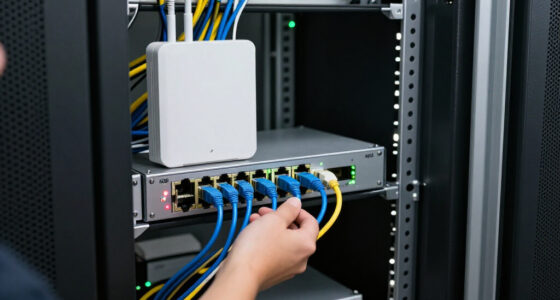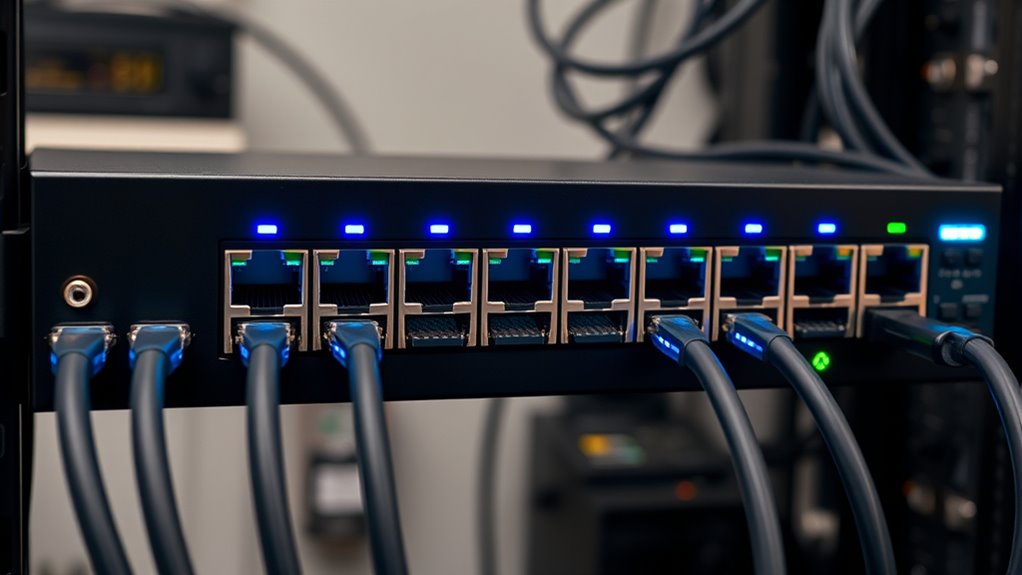

Finding the right multigigabit Ethernet switch for your home lab can significantly boost your network’s speed and flexibility. The NETGEAR MS308 stands out as the best overall choice for its balanced performance and ease of use. For those seeking a budget-friendly upgrade, the TP-Link TL-SG105S-M2 offers reliable 2.5G ports without breaking the bank. Meanwhile, the VunLink 6-Port 10G/2.5G Switch provides high-speed options for advanced setups. Buyers often face tradeoffs between port count, manageability, and price. Continue reading for a detailed breakdown of the top options and what to consider before buying.

Get business pricing on networking and server gear
- Business-only prices and quantity discounts
- Tax-exempt purchasing
- Multiple users, one account, clear invoices
Key Takeaways
- Top picks balance port count, manageability, and speed, with the NETGEAR MS308 leading for overall performance.
- Managed switches like the NETGEAR MS308E offer more control but come at a higher cost and complexity, suited for serious home labs.
- Unmanaged switches such as the TP-Link TL-SG105S-M2 provide simplicity and affordability, ideal for beginners or small setups.
- High-speed options like 10G SFP+ ports are available but often increase price and complexity, best for users with demanding data transfer needs.
- Build quality and cooling matter; fanless designs reduce noise but may impact thermal management in dense setups.
| D-Link DMS-105 5-Port 2.5G Unmanaged Ethernet Switch |  | Best Overall for Simple Multi-Gig Home Networks | Model: DMS-105 | Ports: 5 x 2.5G Ethernet | Switching Capacity: 25Gbps | VIEW ON AMAZON | See Our Full Breakdown |
| 6-Port 2.5Gb Ethernet Switch with 10G SFP+ Uplink (5 x 2.5G RJ45 + 1 x 10G SFP+) |  | Best for High-Speed Uplink Flexibility in Home Labs | Ports: 5 x 2.5G RJ45 + 1 x 10G SFP+ | Switching Capacity: 45Gbps | Packet Forwarding Rate: 33.48 Mpps | VIEW ON AMAZON | See Our Full Breakdown |
| BrosTrend 8-Port 2.5Gbps Unmanaged Network Switch, Fanless |  | Best Value for Multiple 2.5G Connections in Home Labs | Number of Ports: 8 | Port Speed: 2.5 Gbps | Switching Capacity: 40 Gbps | VIEW ON AMAZON | See Our Full Breakdown |
| NUBASA 8-Port 2.5Gb Unmanaged Ethernet Switch with 10G SFP+ |  | Best for High-Speed Multi-Gig Needs with Future Scalability | Ports: 8 x 2.5Gbps RJ45, 1 x 10G SFP+ | Switching Capacity: 40Gbps | Auto-Negotiation: Yes | VIEW ON AMAZON | See Our Full Breakdown |
| NETGEAR MS305 5-Port 2.5G Multi-Gigabit Ethernet Unmanaged Network Switch |  | Best for Compact, Energy-Efficient Home Labs | Number of Ports: 5 | Port Speed: 2.5 Gbps | Switching Capacity: 12.5Gbps | VIEW ON AMAZON | See Our Full Breakdown |
| NETGEAR MS308E 8-Port 2.5G Multi-Gig Ethernet Easy Smart Managed Switch |  | Best Overall for Small Business and Advanced Home Networks | Ports: 8 x 2.5Gbps Multi-Gig Ethernet | Port Speeds: 100Mbps / 1G / 2.5G auto-negotiating | Switching Bandwidth: 40Gbps non-blocking | VIEW ON AMAZON | See Our Full Breakdown |
| TP-Link TL-SG105S-M2 5-Port Multi-Gigabit 2.5G Unmanaged Ethernet Switch |  | Best Value for Basic High-Speed Home and Office Networking | Ports: 5 x 2.5Gbps | Switching Capacity: 25Gbps | Design: Fanless metal case | VIEW ON AMAZON | See Our Full Breakdown |
| VunLink 6-Port 10G/2.5G Multi-Gigabit Unmanaged Ethernet Switch |  | Best for High-Speed NAS and PC Connectivity with 10GbE Options | Ports: 4 x 2.5GbE, 2 x 10GbE | Switching Capacity: 60 Gbps | Design: Fanless metal case | VIEW ON AMAZON | See Our Full Breakdown |
| NETGEAR 8-Port 2.5G Multi-Gigabit Ethernet Unmanaged Network Switch (MS308) |  | Best for Basic High-Speed Expansion in Home and Small Office | Ports: 8 x 2.5Gbps | Switching Capacity: 40Gbps | Design: Fanless metal case | VIEW ON AMAZON | See Our Full Breakdown |
| 6-Port 2.5Gb Managed Switch: 4 x 2.5G RJ45 + 2 x 10G SFP+, Metal Housing |  | Best Managed Multi-Gig Switch for Home Labs | Number of Ports: 6 | Ethernet Ports: 4 x 2.5G RJ45 | SFP+ Ports: 2 x 10G | VIEW ON AMAZON | See Our Full Breakdown |
| multigigabit ethernet switch for home lab | Switching Capacity | Ports | Housing |
|---|---|---|---|
| D-Link DMS-105 5-Port 2.5G Unm | 25Gbps | 5 x 2.5G Ethernet | Metal, fanless |
| 6-Port 2.5Gb Ethernet Switch w | 45Gbps | 5 x 2.5G RJ45 + 1 x 10G SFP+ | Fanless aluminum |
| BrosTrend 8-Port 2.5Gbps Unman | 40 Gbps | — | Plastic, fanless |
| NUBASA 8-Port 2.5Gb Unmanaged | 40Gbps | 8 x 2.5Gbps RJ45, 1 x 10G SFP+ | Aluminum, fanless |
| NETGEAR MS305 5-Port 2.5G Mult | 12.5Gbps | — | Metal, fanless |
| NETGEAR MS308E 8-Port 2.5G Mul | — | 8 x 2.5Gbps Multi-Gig Ethernet | — |
| TP-Link TL-SG105S-M2 5-Port Mu | 25Gbps | 5 x 2.5Gbps | — |
| VunLink 6-Port 10G/2.5G Multi- | 60 Gbps | 4 x 2.5GbE, 2 x 10GbE | — |
| NETGEAR 8-Port 2.5G Multi-Giga | 40Gbps | 8 x 2.5Gbps | — |
| 6-Port 2.5Gb Managed Switch: 4 | — | — | — |
More Details on Our Top Picks
D-Link DMS-105 5-Port 2.5G Unmanaged Ethernet Switch
The D-Link DMS-105 stands out for its straightforward, plug-and-play design combined with multi-gig support, making it ideal for expanding Wi-Fi 6 setups or NAS connections without complexity. Compared with the NETGEAR MS305, it offers similar speeds but with a slightly more compact form and a focus on auto-negotiation and traffic prioritization, though it lacks advanced management features. Its fanless, metal housing ensures silent operation and durability, suitable for home environments. The absence of 10G or SFP ports limits future scalability, but for most home labs requiring reliable 2.5G connections, this model hits the sweet spot of simplicity and performance. This switch is perfect for users who want a reliable, unmanaged device that just works out of the box.
Pros:- Supports multi-gig 2.5G speeds suitable for Wi-Fi 6 and NAS traffic
- Fanless metal design for quiet, durable operation
- Plug-and-play setup with no configuration required
Cons:- Limited to unmanaged operation, no traffic monitoring or VLAN support
- No 10G or fiber uplink options for future scalability
Best for: Home lab enthusiasts seeking a reliable, easy-to-use switch for Wi-Fi 6 and NAS connections.
Not ideal for: Advanced users needing VLAN, QoS, or higher uplink speeds like 10G or fiber options.
- Model:DMS-105
- Ports:5 x 2.5G Ethernet
- Switching Capacity:25Gbps
- Speed Support:100Mb/1G/2.5G auto-negotiation
- QoS:802.1p, 8 priority levels
- Housing:Metal, fanless
Our verdict“Ideal for users who prioritize simplicity and reliable 2.5G connectivity in a home lab setting.”
6-Port 2.5Gb Ethernet Switch with 10G SFP+ Uplink (5 x 2.5G RJ45 + 1 x 10G SFP+)
This unmanaged switch shines by combining five 2.5G ports with a 10G SFP+ uplink, making it a strong choice for those needing a flexible, high-capacity connection point. Unlike the BrosTrend 8-Port 2.5Gbps, which provides more ports but lacks 10G uplink support, this model prioritizes high-speed backbone connectivity for NAS or server setups. Its fanless aluminum case ensures silent operation, yet the presence of a separate SFP+ port means expansion beyond basic multi-gigabit is straightforward. The main tradeoff is that, like the BrosTrend, it remains unmanaged, which limits advanced configuration. It’s best suited for home labs where high-speed uplinks are necessary without the complexity of managed switches.
Pros:- Supports five 2.5G ports plus a 10G SFP+ uplink for high-capacity backbone
- Fanless aluminum case ensures quiet operation
- Plug-and-play, no configuration needed
Cons:- Requires separate SFP+ modules for fiber or DAC connections
- Unmanaged design limits advanced network control
Best for: Home lab users needing a straightforward switch with a 10G uplink for future expansion.
Not ideal for: Users seeking managed switches with VLAN or traffic prioritization features.
- Ports:5 x 2.5G RJ45 + 1 x 10G SFP+
- Switching Capacity:45Gbps
- Packet Forwarding Rate:33.48 Mpps
- Housing:Fanless aluminum
- Power:12V
Our verdict“A strong choice for home labs that need high-speed uplink options without added complexity.”
BrosTrend 8-Port 2.5Gbps Unmanaged Network Switch, Fanless
The BrosTrend 8-Port 2.5Gbps switch offers a cost-effective way to upgrade multiple devices to multi-gigabit speeds, making it ideal for connecting gaming PCs, NAS, and workstations in a home lab. Its eight ports support full 2.5G speeds, which is a step up from standard Gigabit switches. However, as an unmanaged device, it lacks features like VLANs or traffic prioritization found in managed switches like the NETGEAR MS305. Its plastic housing and fanless design make it lightweight and quiet, but less durable than metal alternatives. This model makes the most sense for users who want straightforward high-speed connectivity without needing network management tools.
Pros:- Supports eight 2.5G ports for high-speed wired connections
- Fanless, silent operation with lightweight plastic housing
- Plug-and-play installation with no configuration
Cons:- Lacks management features like VLAN or QoS
- Plastic case may feel less durable than metal options
Best for: Users seeking a simple, multi-port 2.5G switch for home lab or entertainment setups on a budget.
Not ideal for: Advanced users who need VLANs, QoS, or network monitoring capabilities.
- Number of Ports:8
- Port Speed:2.5 Gbps
- Switching Capacity:40 Gbps
- Housing:Plastic, fanless
- Mounting:Desktop / Wall Mount
Our verdict“A practical, budget-friendly choice for expanding multiple 2.5G connections in a home environment.”
NUBASA 8-Port 2.5Gb Unmanaged Ethernet Switch with 10G SFP+
The NUBASA 8-Port 2.5Gb switch with a 10G SFP+ uplink offers a versatile upgrade path for home labs that demand both immediate multi-gigabit connectivity and future-proofing. Its aluminum case supports quiet operation and heat dissipation, similar to the 6-Port 2.5Gb Switch with 10G SFP+. While both are unmanaged, the NUBASA’s broader port options and auto-negotiation support make it ideal for connecting various devices, from gaming rigs to storage servers. The tradeoff is the SFP+ port is sold separately, adding to overall cost, and it shares the unmanaged limitation. This product is best for those who want high-speed, multi-device connectivity with room to grow.
Pros:- Supports eight 2.5G ports plus a 10G SFP+ uplink for scalable networking
- Aluminum case for quiet operation and heat management
- Plug-and-play setup with auto-negotiation
Cons:- SFP+ modules sold separately, increasing setup cost
- No management features for traffic control or VLANs
Best for: Home lab builders needing flexible, high-speed connections with an eye on future expansion.
Not ideal for: Those requiring managed switches with VLAN or traffic management features.
- Ports:8 x 2.5Gbps RJ45, 1 x 10G SFP+
- Switching Capacity:40Gbps
- Auto-Negotiation:Yes
- Housing:Aluminum, fanless
- Power:12V
Our verdict“Suitable for users who want a high-capacity, future-ready switch without management complexity.”
NETGEAR MS305 5-Port 2.5G Multi-Gigabit Ethernet Unmanaged Network Switch
The NETGEAR MS305 offers a solid, space-efficient solution for home labs that need reliable multi-gigabit links on a budget. Its five 2.5G ports support existing Cat5e or Cat6 cabling, making it compatible with most setups. As an unmanaged switch, it lacks VLAN and QoS features found in managed options like the NETGEAR MS308E, but its sturdy metal case and fanless design ensure quiet, energy-efficient operation. Its compact size makes it ideal for desktop or wall-mount installations in small spaces. Its main limitation lies in the lack of advanced features, so it works best for straightforward network expansion without complex traffic control or monitoring needs.
Pros:- Supports 2.5G speeds over existing cabling
- Fanless, silent operation with a durable metal case
- Small form factor suitable for limited spaces
Cons:- Unmanaged, no VLAN or QoS support
- Limited to U.S. & Canada only due to region-specific power supply
Best for: Small home labs or entertainment setups requiring reliable 2.5G connections with minimal fuss.
Not ideal for: Users needing managed features or extensive network customization.
- Number of Ports:5
- Port Speed:2.5 Gbps
- Switching Capacity:12.5Gbps
- Housing:Metal, fanless
- Mounting:Desktop or Wall Mount
Our verdict“Perfect for simple, reliable multi-gig connections in small home lab environments that don’t require management features.”
NETGEAR MS308E 8-Port 2.5G Multi-Gig Ethernet Easy Smart Managed Switch
The NETGEAR MS308E stands out for its blend of high-speed 2.5G ports and comprehensive Layer 2 management features, making it ideal for those who want more control than unmanaged switches like the TP-Link TL-SG105S-M2 offer. Its 8 ports support up to 40Gbps non-blocking bandwidth, ensuring smooth traffic flow, while the fanless design keeps noise levels minimal—perfect for quiet office or home environments. The web-based management interface facilitates VLANs, QoS, and link aggregation, but it stops short of Layer 3 routing, meaning it won’t handle inter-VLAN traffic on its own. Compared to unmanaged options, this switch provides a clear upgrade path but requires a separate router or Layer 3 device for routing. It supports existing Cat5e/Cat6 cabling and can be mounted on a wall or placed on a desk, adding flexibility.
Pros:- 8 multi-gig ports supporting 2.5Gbps speeds with 40Gbps non-blocking bandwidth
- Silent, fanless operation ideal for noise-sensitive environments
- Layer 2 managed features like VLANs, QoS, and link aggregation via intuitive web interface
- Supports existing Cat5e or Cat6 cabling and flexible mounting options
Cons:- Limited to Layer 2; no inter-VLAN routing or advanced Layer 3 features
- Region-specific (U.S. & Canada only), restricting international use
Best for: Small business owners or advanced home lab enthusiasts who need managed, multi-gigabit connectivity with VLAN and QoS support.
Not ideal for: Purely casual users or those seeking plug-and-play simplicity without management features, since setup and configuration are required.
- Ports:8 x 2.5Gbps Multi-Gig Ethernet
- Port Speeds:100Mbps / 1G / 2.5G auto-negotiating
- Switching Bandwidth:40Gbps non-blocking
- Management:Web-based, Layer 2 features
- Design:Fanless metal case
- Mounting:Desktop or wall-mount
Our verdict“This switch is perfect for small networks needing managed multi-gig connectivity without complex routing requirements.”
TP-Link TL-SG105S-M2 5-Port Multi-Gigabit 2.5G Unmanaged Ethernet Switch
The TP-Link TL-SG105S-M2 offers a straightforward, no-frills solution for users who need reliable 2.5G connectivity on a budget. Its 5 ports auto-negotiate between 100 Mbps, 1 Gbps, and 2.5 Gbps, making it compatible with a variety of devices, much like the NETGEAR MS308 but with fewer ports and no management. The fanless, metal case ensures quiet operation, suitable for desktop use, yet it lacks any management interface or VLAN support—something the NETGEAR MS308E provides if advanced control is desired. While its 25Gbps switching capacity is less than the 40Gbps available in the MS308E, it suffices for small, less complex networks. It’s a good pick for those who prioritize simplicity and affordability over advanced features.
Pros:- Five 2.5G ports support high-speed data transfer
- Auto-negotiation ensures compatibility with various devices
- Fanless, durable metal design supports silent operation
- Easy to install on desktop or wall
Cons:- Unmanaged, offering no configuration or monitoring capabilities
- Limited to basic connectivity, not suitable for complex network setups
Best for: Home users or small offices needing simple, reliable 2.5G connectivity with minimal setup.
Not ideal for: Network professionals or labs requiring VLAN segmentation or managed features, as this switch has no configuration options.
- Ports:5 x 2.5Gbps
- Switching Capacity:25Gbps
- Design:Fanless metal case
- Mounting:Desktop / Wall Mount
- Region Compatibility:Global
- Power:9V DC
Our verdict“Ideal for users who want simple, high-speed connectivity without the need for management or VLAN features.”
VunLink 6-Port 10G/2.5G Multi-Gigabit Unmanaged Ethernet Switch
The VunLink 6-Port switch provides a flexible solution for users needing both 2.5G and 10GbE ports in a compact, unmanaged package. Its 4 x 2.5GbE ports are suitable for connecting NAS devices or workstations, while the 2 x 10GbE ports can handle high-bandwidth tasks like large file transfers or server connections. Compared with the NETGEAR MS308, this switch offers 10GbE options, making it more suitable for power users with demanding data transfer needs, though at the expense of management features. The fanless design keeps noise minimal, but the lack of VLAN or QoS limits its use in more complex setups. It’s an excellent choice for those who want high-speed ports without extra configuration fuss.
Pros:- Two 10GbE ports support ultra-fast data transfers
- Flexible mix of 2.5GbE and 10GbE ports for diverse needs
- Plug-and-play, unmanaged design simplifies setup
- Fanless metal housing supports quiet operation
Cons:- No managed features, limiting control over traffic prioritization
- Limited port count may restrict larger network expansion
Best for: Home labs or small offices needing high-bandwidth connections for NAS or PCs, especially with 10GbE requirements.
Not ideal for: Users seeking managed features or network segmentation, as this switch does not support VLANs or QoS controls.
- Ports:4 x 2.5GbE, 2 x 10GbE
- Switching Capacity:60 Gbps
- Design:Fanless metal case
- Installation:Desktop or wall-mount
- Forwarding Rate:44.64 Mpps
- Region Compatibility:Global
Our verdict“Best suited for those needing high-speed NAS or workstation connections with minimal network management complexity.”
NETGEAR 8-Port 2.5G Multi-Gigabit Ethernet Unmanaged Network Switch (MS308)
The NETGEAR MS308 offers a straightforward way to expand a network with eight 2.5Gbps ports, similar to the TP-Link TL-SG108S-M2, but with a slightly larger footprint and support for VLAN tagging and traffic prioritization. Its 40Gbps switching capacity ensures ample bandwidth for typical home or small office tasks, while the unmanaged design keeps setup simple. However, as an unmanaged switch, it lacks the advanced features of the NETGEAR MS308E or managed options, making it less suitable for labs requiring segmentation or QoS policies. Its fanless metal case supports quiet operation and wall-mounting, providing flexible placement options for various environments.
Pros:- Eight 2.5G ports provide high-speed wired connectivity
- Simple plug-and-play setup with no configuration needed
- Fanless, durable metal case for silent operation
- Supports VLAN tagging and traffic prioritization
Cons:- Unmanaged, so no network control or monitoring features
- Lacks advanced management capabilities for complex network setups
Best for: Home labs or small offices needing reliable, high-speed expansion without management complexity.
Not ideal for: Network professionals or advanced users who require VLANs, QoS, or monitoring capabilities for their setups.
- Ports:8 x 2.5Gbps
- Switching Capacity:40Gbps
- Design:Fanless metal case
- Management:Unmanaged
- Region Compatibility:Global
- VLAN Support:Yes (tagging)
Our verdict“This switch suits users who want straightforward high-speed expansion without the need for management features.”
6-Port 2.5Gb Managed Switch: 4 x 2.5G RJ45 + 2 x 10G SFP+, Metal Housing
This switch stands out for its balanced combination of managed capabilities and versatile connectivity, making it ideal for users who want more control over their network setup. Compared to unmanaged options like the D-Link DMS-105, this model offers VLAN, QoS, and link aggregation, giving more flexibility for complex home labs. The inclusion of two 10G SFP+ ports supports high-speed uplinks, which is a major advantage over simpler switches. However, the management interface is basic, requiring some familiarity with network configuration, and the switch’s power consumption around 12W can generate slight heat under full load. Its fanless, metal housing ensures silent operation and durable build quality, suitable for quiet home environments. Still, it may be overkill for users with minimal networking needs or those seeking plug-and-play simplicity. Overall, this switch makes the most sense for home lab enthusiasts who want manageable, multi-gig connectivity without noise or excessive complexity.
Pros:- Managed features like VLAN, QoS, and link aggregation for better network control
- Dual 10G SFP+ ports support high-speed uplinks and future expansion
- Fanless design ensures silent operation and low noise levels
- Compact metal housing provides durability and flexible mounting options
Cons:- Basic management interface may be challenging for novices
- Higher power consumption (~12W) could lead to slight heat generation under full load
- Limited port count might not suffice for larger home labs
Best for: advanced home lab users who need managed, multi-gigabit switching with high-speed uplinks
Not ideal for: beginners or users seeking a simple, unmanaged plug-and-play switch
- Number of Ports:6
- Ethernet Ports:4 x 2.5G RJ45
- SFP+ Ports:2 x 10G
- Power Consumption:around 12W
- Housing Material:Metal
- Switch Type:Managed
- Operating Temperature:0~40°C
- Dimensions:4.47″L x 3.54″W x 0.98″H
Our verdict“This switch is ideal for tech-savvy home lab builders who need managed, multi-gig connectivity in a compact, silent package.”
How We Picked
These switches were evaluated primarily on performance, build quality, usability, and value for home lab environments. Priority was given to devices that offer reliable multi-gigabit speeds, ease of setup, and long-term durability. Managed switches were included for users needing advanced control, while unmanaged models were assessed for simplicity and affordability. Price-to-feature ratio was a key factor, ensuring options suit different budgets. The ranking reflects a balance of these criteria, favoring models that deliver real-world performance improvements without unnecessary complexity or cost.| multigigabit ethernet switch for home lab | Housing |
|---|---|
| D-Link DMS-105 5-Port 2.5G Unm | Metal, fanless |
| 6-Port 2.5Gb Ethernet Switch w | Fanless aluminum |
| BrosTrend 8-Port 2.5Gbps Unman | Plastic, fanless |
| NUBASA 8-Port 2.5Gb Unmanaged | Aluminum, fanless |
| NETGEAR MS305 5-Port 2.5G Mult | Metal, fanless |
| NETGEAR MS308E 8-Port 2.5G Mul | — |
| TP-Link TL-SG105S-M2 5-Port Mu | — |
| VunLink 6-Port 10G/2.5G Multi- | — |
| NETGEAR 8-Port 2.5G Multi-Giga | — |
| 6-Port 2.5Gb Managed Switch: 4 | — |
Factors to Consider When Choosing Multigigabit Ethernet Switch For Home Labs
Choosing the right multigigabit Ethernet switch for your home lab involves understanding several key factors. Beyond raw speed, consider how much control you need, the number of ports, and future expandability. Properly matching the switch’s features to your setup can save money and reduce frustration. Here are the main considerations to keep in mind:Port Count and Speed
Determine how many devices you plan to connect and whether future expansion is likely. While 5-port switches may suffice for small setups, more extensive labs benefit from 8 or 10 ports. Multi-gig ports (2.5G, 5G, 10G) enable faster data transfers, but higher speeds generally come with increased cost and complexity. Consider your current needs and potential growth to avoid buying a switch that quickly becomes obsolete.
Managed vs. Unmanaged
Managed switches offer advanced features like VLANs, QoS, and traffic monitoring, which can improve network performance and segmentation. Unmanaged switches are plug-and-play, easier to set up, and usually less expensive, making them suitable for straightforward home labs. Think about whether you need granular control or prefer simplicity, balancing your technical comfort with your network’s demands.
Build Quality and Cooling
Durability and thermal management impact long-term reliability. Metal housings tend to be more robust and dissipate heat better, especially in dense or enclosed setups. Fanless designs operate silently but might overheat if used continuously under heavy loads. Assess your environment and noise preferences to choose a switch that will perform reliably over time.
Future-Proofing
Investing in switches with 10G SFP+ ports or higher multi-gigabit capabilities can extend the lifespan of your network. However, these features come at a premium and are mainly beneficial if you have high-bandwidth devices or plan to upgrade your hardware soon. Consider your current equipment and whether the added cost aligns with your long-term goals.
Ease of Use and Management
For most home labs, ease of setup is key. Unmanaged switches excel here, but if you want to fine-tune your network, managed options provide valuable control. Web interfaces, CLI access, and firmware updates are important features to look for. Ensure that the switch’s management tools match your technical comfort level to avoid frustration.
Frequently Asked Questions
Should I choose a managed or unmanaged switch for my home lab?
If you prefer a straightforward setup with minimal configuration, an unmanaged switch like the TP-Link TL-SG105S-M2 will work well. However, if you want to optimize network performance, segment traffic, or plan for future expansion, a managed switch such as the NETGEAR MS308E provides greater control. The decision hinges on your technical comfort and the complexity of your network needs.
Is it worth investing in 10G SFP+ ports for a home lab?
Adding 10G SFP+ ports can future-proof your network, especially if you handle large data transfers or run multiple high-speed devices. However, these ports tend to increase the overall cost and require compatible equipment. If your current setup doesn’t demand this bandwidth, focusing on 2.5G ports might provide a better balance of performance and affordability.
How important is build quality in a home lab switch?
Build quality directly impacts the switch’s longevity and reliability. Metal housing and good thermal management help prevent overheating and physical damage, especially in dense or cluttered environments. While fanless models operate silently, they may need good airflow to prevent overheating during extended use. Investing in a well-built switch can save money and hassle long-term.
Can I use a consumer switch for my home lab?
Many consumer switches are limited to 1G speeds and lack multi-gigabit support, which can bottleneck high-speed devices. Multigigabit switches designed for home labs are more suitable, offering higher speeds and features tailored for complex setups. While consumer models may suffice for basic needs, they often fall short when speed and future expandability are priorities.
What’s the best way to future-proof my home lab network?
Investing in switches with 10G SFP+ ports and higher port counts provides room for growth. Additionally, choosing managed switches with firmware upgrade options and durable build quality helps adapt to evolving needs. Pairing your switch with compatible high-speed devices ensures you maximize your network’s potential over time, minimizing the need for early upgrades.
Conclusion
For most users, the NETGEAR MS308 offers a solid mix of performance, manageability, and value, making it the best overall pick. Beginners or those on a budget will appreciate the simplicity of the TP-Link TL-SG105S-M2. For those seeking ultimate control and expandability, the NETGEAR MS308E is the ideal premium choice. If your setup demands high-speed transfers and future growth, consider models with 10G SFP+ ports like the 6-Port 2.5Gb with 10G SFP+. Match your choice to your current needs and future plans to build a reliable, fast home lab network.
As an affiliate, we earn on qualifying purchases.Halloween Picks
halloween