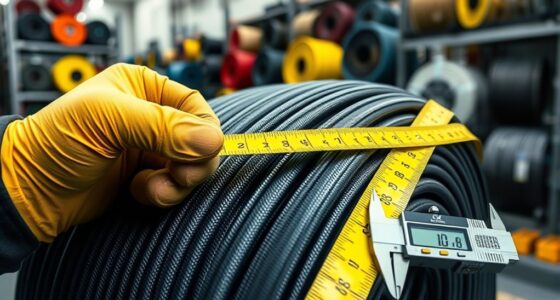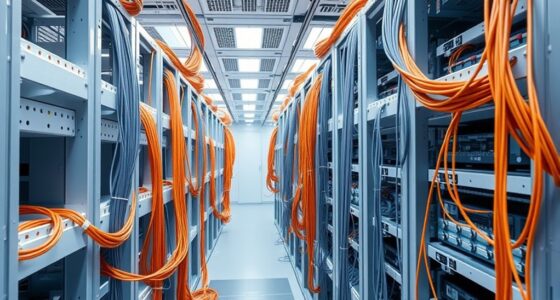
Think of cabling as the arteries of your network—hidden yet essential to its health. When you install new fiber optic lines, ensuring they’re properly tested and certified is like giving your infrastructure a thorough check-up. Skipping this step can lead to unseen issues that surface later, disrupting your service. So, how do you guarantee your cabling will perform reliably now and in the future?
Key Takeaways
- Conduct comprehensive tests to verify fiber optic cables meet industry standards like TIA/EIA and ISO/IEC.
- Use specialized certification equipment to measure parameters such as insertion loss and reflection.
- Perform testing by connecting equipment to both ends of the cabling to ensure proper performance.
- Generate detailed documentation and certificates confirming compliance for future reference.
- Ensure installed cabling supports high-speed, reliable data transfer, especially vital for remote work and modern connectivity needs.
Ensuring the integrity of installed cabling is a critical step in delivering reliable network performance. When you’re working with fiber optic cabling, this process becomes even more essential, given the sensitivity and precision required for ideal data transmission. Proper testing and certification ensure that your fiber optic infrastructure meets industry benchmarks and functions at peak efficiency. Certification standards set the benchmark for quality, performance, and safety, guiding you through the necessary procedures to verify that your cabling installation aligns with recognized benchmarks like TIA/EIA and ISO/IEC standards. These standards aren’t just bureaucratic requirements; they’re essential measures that guarantee your network’s reliability and longevity.
To start, you need to understand that testing fiber optic cables involves specialized equipment designed to assess parameters such as insertion loss, reflection (or return loss), and bandwidth. These measurements tell you whether the cable can support the intended data rates over the required distances. If your cabling doesn’t meet certification standards, it might cause network issues like slow data transfer, dropped connections, or complete failure. That’s why thorough testing is non-negotiable. By adhering to certification standards, you ensure that your fiber optic links are capable of supporting high-speed data, voice, and video services without interruption.
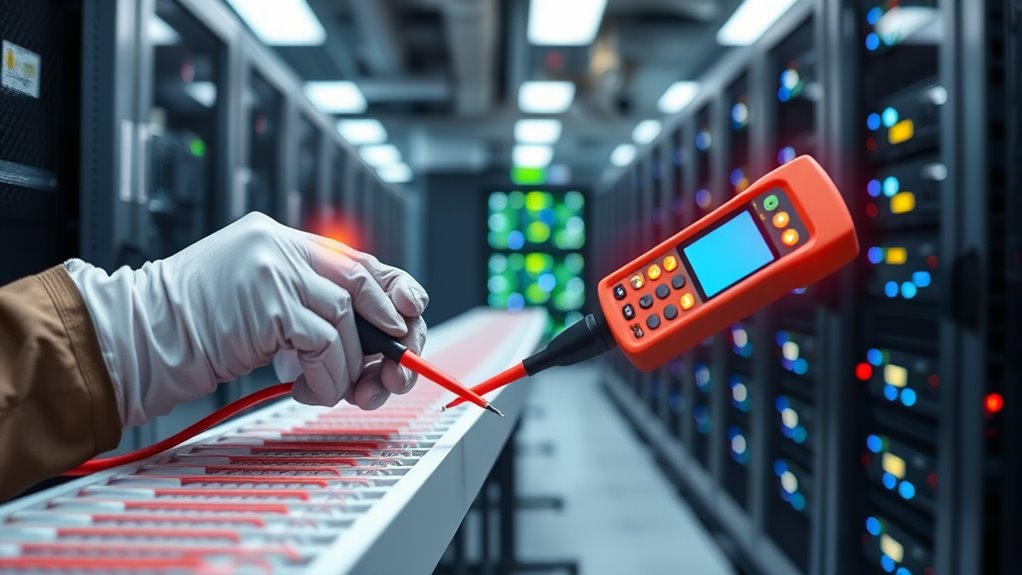
When you’re certifying your installed cabling, you’ll use a certification tester that’s compatible with fiber optic cables. The process involves connecting the tester to both ends of the cable, then running a series of tests to verify compliance with the relevant standards. A certificate of compliance is generated, confirming that the installation meets the required certification standards. This documentation isn’t just a formality; it’s proof that your network installation has been validated and is ready for operational deployment. It also provides a record that can be referenced in future troubleshooting or upgrades, ensuring ongoing compliance with industry best practices.
Additionally, understanding remote work trends highlights the importance of a dependable network infrastructure, emphasizing why proper cabling certification is crucial for supporting increased connectivity demands.

D YEDEMC Fiber Optic Cable Tester Portable Optical Fiber Power Meter FC/SC/ST Universal Interface Integrated OPM, VFL, and RJ45 Functions (OPM-VFL-1)
Function: can measure 8 standdard wavelengths 850/980/1300/1310/1490/ 1550/1625/1650nm , test range: -70dBm~+6dBm, Integrated OPM, VFL, and RJ45 Functions.
As an affiliate, we earn on qualifying purchases.
As an affiliate, we earn on qualifying purchases.
Frequently Asked Questions
How Often Should Installed Cabling Be Retested for Certification?
You should retest your installed cabling every 3 to 5 years to guarantee it maintains its certification. The cabling lifespan can vary, but regular testing helps detect issues early. If your certification expires or if there are significant changes to your network, you’ll need to renew it. Consistent retesting and certification renewal keep your system reliable, compliant, and ready to support your current and future networking needs.
What Are the Costs Associated With Certification for Large Networks?
Think of certification costs for large networks like a big pie—you need to slice it carefully. You’ll face expenses such as professional testing fees, equipment calibration, and documentation, which can add up quickly. Conducting a thorough cost assessment helps you plan your budget effectively, ensuring you’re prepared for these costs. Remember, investing in proper certification safeguards your network’s performance and compliance, ultimately saving you money in the long run.
Can Certification Testing Identify Future Cabling Failures?
Yes, certification testing can identify potential future cabling failures by evaluating cabling durability and testing accuracy. When you conduct thorough tests, you spot issues like weak points, high interference, or poor connections that could lead to failures down the line. This proactive approach helps you address problems early, ensuring your network remains reliable and reducing costly repairs or replacements caused by unseen issues.
What Training Is Required for Technicians to Perform Testing and Certification?
You need to complete training on cabling standards and testing procedures to perform testing and certification. This training covers essential skills like proper testing methods, interpreting results, and understanding industry standards such as TIA or ISO. By gaining this knowledge, you’ll guarantee the cabling system meets quality and safety requirements, helping prevent future failures. Certification programs often include hands-on practice and assessments to verify your competency in these critical tasks.
How Does Environmental Change Affect the Certification Status of Cabling?
Environmental factors like temperature fluctuations, humidity, and physical stress can impact the certification status of your cabling. Imagine a cable exposed to rising heat or moisture—its performance may degrade, causing it to fail certification tests. These environmental changes can compromise cabling integrity, requiring re-testing and potential re-certification. Staying vigilant about environmental conditions ensures your cabling remains certified, maintaining ideal performance and avoiding costly rework or system failures.
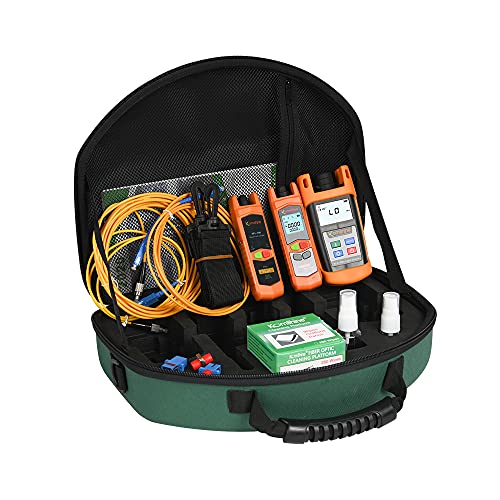
Optical Fiber FTTH Loss Tester Kit Komshine KLT-12E Fiber Toolkit with Optic Power Meter KPM-11 OPM+Optical Light Source SM 1310/1550nm OLS+Visual Fault Locator VFL +Jump Cable 1m
Optical Fiber FTTH Loss Tester Kit Komshine KLT-12E Fiber Toolkit With Optic Power Meter KPM-11 OPM+Optical Light Source…
As an affiliate, we earn on qualifying purchases.
As an affiliate, we earn on qualifying purchases.
Conclusion
By testing and certifying your installed cabling, you guarantee performance, safety, and reliability. You verify standards, confirm quality, and prevent future issues. You protect investments, support connectivity, and build trust. You create a network that’s resilient, efficient, and ready for tomorrow. In doing so, you not only meet industry requirements but also guarantee peace of mind, long-lasting performance, and a foundation for success. You secure your network’s future, today and always.
D YEDEMC Fiber Optic Cable Tester Portable Optical Fiber Power Meter FC/SC/ST Universal Interface Integrated OPM, VFL, and RJ45 Functions (OPM-VFL-1)
Function: can measure 8 standdard wavelengths 850/980/1300/1310/1490/ 1550/1625/1650nm , test range: -70dBm~+6dBm, Integrated OPM, VFL, and RJ45 Functions.
As an affiliate, we earn on qualifying purchases.
As an affiliate, we earn on qualifying purchases.

Cabling: The Complete Guide to Copper and Fiber-Optic Networking
As an affiliate, we earn on qualifying purchases.
As an affiliate, we earn on qualifying purchases.