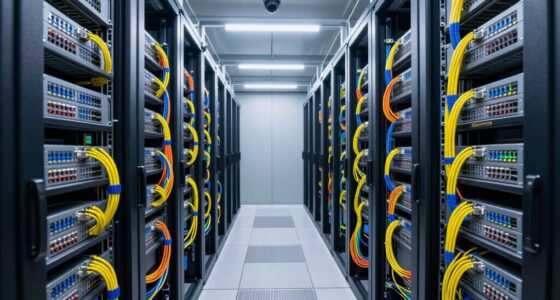

Ensuring your data center’s cabling meets industry standards is vital for reliable performance and future growth. Proper testing and certification can identify potential issues before they cause costly disruptions. By understanding the importance of these processes, you can optimize your infrastructure’s resilience and efficiency. But what exactly does cable testing involve, and how can it protect your investment? Exploring these questions can help you make informed decisions for your data center’s network health.

Get business pricing on networking and server gear
- Business-only prices and quantity discounts
- Tax-exempt purchasing
- Multiple users, one account, clear invoices
Key Takeaways
- Ensures fiber optic and cabling performance meet industry standards like TIA, ISO, and IEC for reliable data transfer.
- Detects faults and signal degradation early, preventing costly outages and maintaining network integrity.
- Validates power redundancy cabling to support continuous operation and protect against disruptions.
- Provides comprehensive diagnostics including attenuation, insertion loss, and return loss testing for optimal performance.
- Facilitates routine testing and maintenance to build a resilient, scalable, and compliant data center infrastructure.

Ensuring dependable network performance in data centers depends heavily on proper cable testing and certification. When it comes to fiber optics and other cabling infrastructure, thorough testing guarantees that your network can handle high data loads without interruptions. Fiber optics are essential for modern data centers because they support faster speeds and greater bandwidth, but they also require precise installation and testing to perform at their best. By certifying your fiber optic cables, you confirm they meet industry standards, minimize signal loss, and prevent future connectivity issues. Proper testing isn’t just about initial setup; it’s an ongoing process that helps identify potential faults before they escalate into costly outages.
Power redundancy is another critical factor that intertwines with cable testing. Data centers rely on redundant power systems to ensure uptime even when primary power sources fail. When testing cabling, you need to verify that power redundancy mechanisms are correctly integrated with your network infrastructure. Faulty or improperly certified cabling can disrupt power supplies, jeopardize data integrity, and lead to unexpected downtime. Regular certification checks help you detect issues early, ensuring your backup power systems and cabling work seamlessly together, maintaining continuous operations. This proactive approach minimizes the risk of data loss and preserves service availability.
Effective cable testing involves more than just confirming physical connections; it requires comprehensive diagnostics of signal integrity, attenuation, and interference. For fiber optics, this means conducting optical power measurements, insertion loss tests, and return loss assessments. These tests confirm that signals travel efficiently without degradation, which is crucial for high-speed data transfer. When you certify your cables, you’re ensuring they adhere to industry standards like TIA, ISO, or IEC certifications, giving you confidence that your network will perform reliably under load. Proper certification also simplifies troubleshooting down the line, as you’ll have documented proof that your cabling was installed and tested to specifications.
Incorporating routine testing and certification into your data center’s maintenance plan helps you stay ahead of potential issues that could impact network performance. It’s a safeguard against the complexities of fiber optics and the challenges of maintaining power redundancy. When you invest in quality testing tools and certified procedures, you’re not just ensuring current performance; you’re building a resilient infrastructure capable of supporting future growth. This proactive stance helps prevent costly downtime, reduces operational risks, and guarantees your data center remains a reliable hub for your organization’s critical operations. Ultimately, diligent cable testing and certification are essential steps in delivering a robust, high-performing network environment. Including comprehensive testing standards in your maintenance protocols ensures your infrastructure continues to meet evolving technological demands.
As an affiliate, we earn on qualifying purchases.
Frequently Asked Questions
How Often Should Data Center Cables Be Tested and Certified?
You should test and certify your data center cables at least annually to account for cable aging and guarantee peak performance. Regular testing helps identify issues caused by poor installation practices or wear over time. If you notice any performance problems or after significant changes, conduct additional tests. Consistent testing maintains your network’s reliability, prevents downtime, and ensures your cabling meets industry standards.
What Are the Latest Industry Standards for Cable Certification?
Imagine a data center where fiber optic cables pass fire safety tests to meet latest standards. You should follow industry standards like ISO/IEC 11801-1 and TIA-568. These specify testing requirements for cable certification, guaranteeing ideal performance and safety. Regular testing ensures your cables meet these standards, reducing fire risks and maintaining network integrity. Staying current with these standards protects your infrastructure and supports reliable data center operations.
How Does Testing Impact Data Center Downtime and Operations?
Testing markedly reduces data center downtime by identifying cable issues early through thorough testing procedures. When you regularly perform these tests, you extend the cable lifespan and prevent unexpected failures that could disrupt operations. By catching problems before they escalate, you ensure smoother performance and minimal impact on your data center’s uptime. Proactive testing helps you maintain reliable infrastructure, ultimately supporting efficient and continuous operations.
What Are Common Causes of Cable Failure in Data Centers?
Like a fragile thread snapping, cable failure often results from cable degradation or connector issues. You might find corrosion, wear, or bending weakening the cables over time. Loose or damaged connectors can cause signal loss or interruptions. Environmental factors like heat or moisture accelerate degradation, while poor installation increases connector problems. Regular testing helps catch these issues early, preventing unexpected downtimes and ensuring your data center runs smoothly.
Can Portable Testers Accurately Certify High-Density Cabling Systems?
Portable testers can accurately certify high-density cabling systems if they are properly calibrated and used correctly. These devices are designed to handle complex setups and provide reliable certification accuracy, ensuring your cabling meets industry standards. However, it is crucial to follow manufacturer guidelines and perform regular calibration checks. When used properly, portable testers offer a practical, efficient way to verify high-density cabling systems’ performance without sacrificing certification accuracy.
As an affiliate, we earn on qualifying purchases.
Conclusion
By regularly testing and certifying your data center cables, you guarantee reliable performance, prevent costly outages, and stay ahead of potential issues—just like the engineers of the Industrial Revolution who built the backbone of modern infrastructure. Investing in certified procedures and advanced tools might seem old-fashioned, but it’s the key to keeping your network resilient, efficient, and ready for future growth. Don’t wait for a catastrophe—be proactive and keep your data flowing smoothly.
As an affiliate, we earn on qualifying purchases.
As an affiliate, we earn on qualifying purchases.
Fall Picks
fall essentials
As an affiliate, we earn on qualifying purchases.