Did you know that decibel measurements can reveal more about your network cables than just signal strength? Many technicians overlook how vital these tiny measurements are for diagnosing issues and maintaining ideal performance. Understanding how decibel loss impacts data transmission could save you time and trouble. Knowing what to look for might be the key to preventing slow connections or unexpected drops, but there’s more to uncover about how these measurements influence your network’s reliability.
Key Takeaways
- Decibel measurements quantify signal strength and attenuation over cable lengths, indicating overall cable performance.
- Lower decibel loss (e.g., around 3 dB) suggests minimal signal degradation; higher values indicate potential issues.
- Measuring decibel levels helps identify cable quality, with higher attenuation signaling poor quality or damage.
- Regular decibel testing ensures cables maintain optimal signal integrity and prevent network performance problems.
- Decibel values assist in troubleshooting, ensuring that cable installations meet performance standards for reliable data transmission.
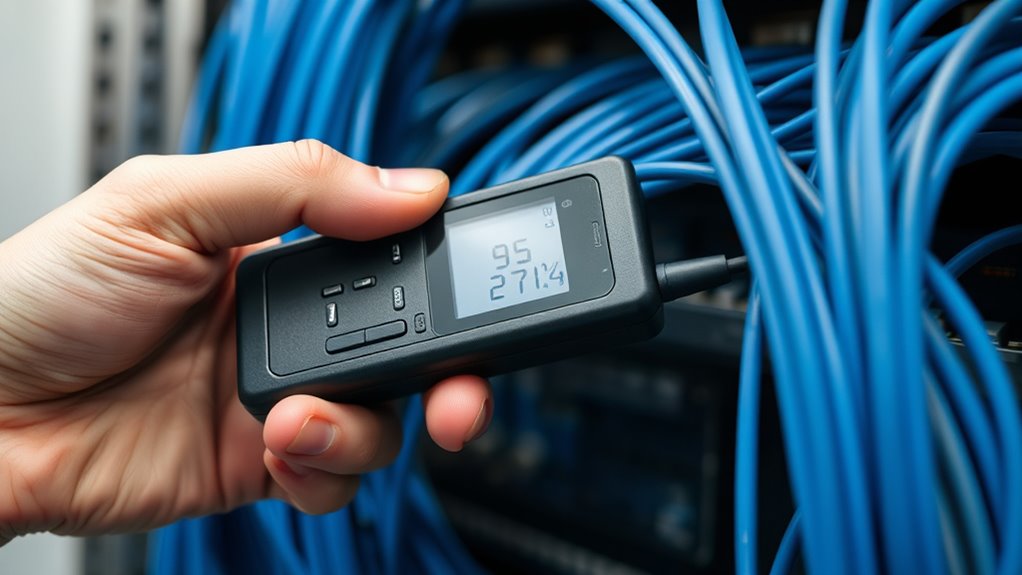
Decibel measurements are vital for evaluating the performance of network cables, as they quantify signal strength and loss over distance. When you’re setting up or maintaining a network, understanding how decibel levels relate to signal attenuation helps you identify potential issues before they impact performance. Signal attenuation refers to the reduction in signal power as it travels through the cable, and measuring it in decibels allows you to gauge how much signal is lost over specific lengths. If you notice high attenuation levels, it indicates that your cable may not be of superior quality or that it’s too long for a reliable connection, which could lead to slower speeds or dropped connections.
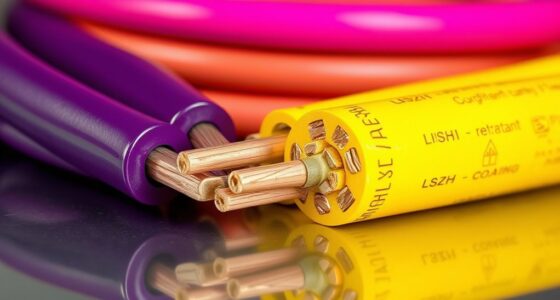
Cable quality plays a significant role in how well your network performs, and decibel measurements give you a clear, quantifiable way to compare different cables. Higher-quality cables tend to have lower attenuation rates, meaning they preserve more of the original signal over longer distances. When you test cables with decibel measurements, you’ll often find that premium cables show less signal loss, ensuring better data integrity and more consistent performance. Conversely, lower-quality cables or damaged ones tend to have higher attenuation, which can cause issues like increased latency, data errors, or reduced bandwidth. By regularly measuring decibel levels, you can proactively replace or upgrade cables before problems arise.
Understanding the decibel scale itself is vital because it’s logarithmic, meaning small changes in decibel readings can represent significant differences in signal strength. For example, a cable with 3 dB of attenuation is generally considered good for most applications, but once you reach 10 dB or more, the signal degradation could start affecting network performance noticeably. When you’re troubleshooting, decibel measurements help you pinpoint whether the problem stems from cable quality, length, or damage. This knowledge enables you to make informed decisions about cabling infrastructure, ensuring you get the best possible performance without unnecessary expenses.
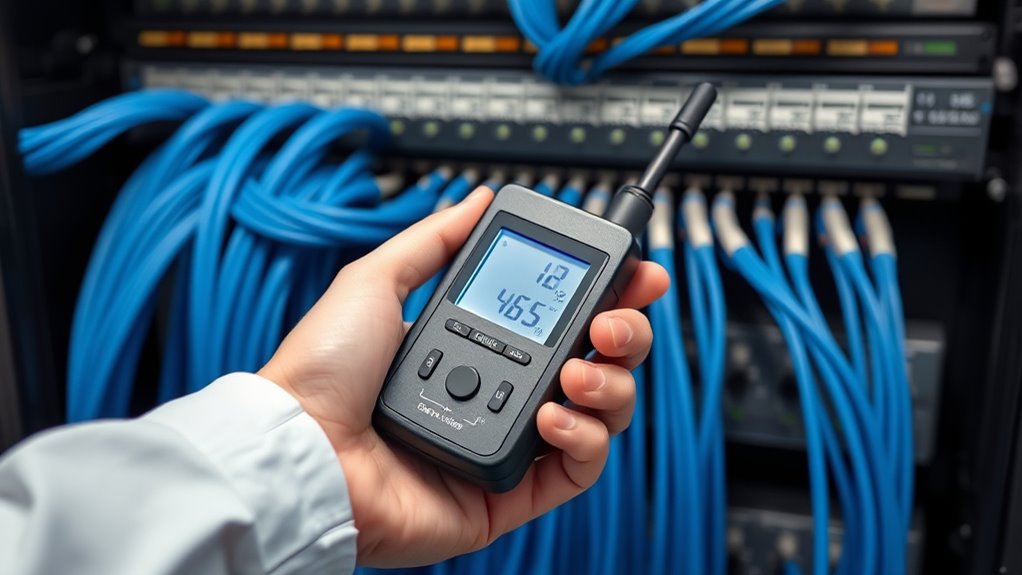
In practice, measuring decibel levels requires a network cable tester or a specialized device that can accurately assess signal attenuation. When you perform these tests, focus on the entire length of the cable, especially connectors and joints, which are common points of signal loss. Keeping an eye on decibel measurements over time can also help you identify gradual degradation, prompting timely maintenance or replacements. Additionally, selecting cables with low attenuation rates can significantly improve overall network reliability. Ultimately, understanding and utilizing decibel measurements empower you to optimize your network’s reliability, speed, and overall performance by ensuring your cables maintain high quality and minimal signal attenuation.
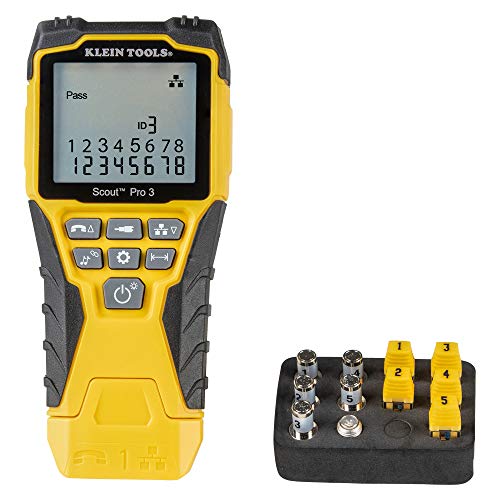
Klein Tools VDV501-851 Cable Tester Kit with Scout Pro 3 for Ethernet / Data, Coax / Video and Phone Cables, 5 Locator Remotes
VERSATILE CABLE TESTING: Cable tester tests voice (RJ11/12), data (RJ45), and video (coax F-connector) terminated cables, providing clear…
As an affiliate, we earn on qualifying purchases.
As an affiliate, we earn on qualifying purchases.
Frequently Asked Questions
How Do Decibel Levels Impact Network Cable Performance?
Decibel levels directly impact your network cable’s performance by indicating signal attenuation and interference effects. Higher decibel readings mean your signal weakens more over distance, causing slower speeds and potential data loss. When interference effects increase, decibel levels rise, further degrading quality. To maintain ideal performance, you need to monitor and minimize these levels, ensuring your cables transmit data efficiently without excessive attenuation or interference.
What Tools Are Best for Measuring Decibel Levels?
You should use a fiber optic power meter or a handheld optical time domain reflectometer (OTDR) to measure decibel levels accurately. These tools are essential because they detect signal attenuation, which can drop by 3 dB over just 100 meters of cable. With precision, you can identify issues affecting fiber optic cables, ensuring ideal performance. Invest in quality equipment to maintain strong, reliable network signals.
Can Decibel Measurements Detect Cable Faults?
Yes, decibel measurements can detect cable faults by identifying issues like signal attenuation caused by damaged or degraded cable insulation. When you measure decibel levels, significant drops indicate potential faults, such as breaks or insulation breakdowns. These readings help you pinpoint where the cable’s performance is compromised, allowing you to troubleshoot effectively and guarantee your network maintains ideal signal quality.
How Often Should Decibel Levels Be Checked in Networks?
You should check decibel levels regularly, ideally every 6 to 12 months, to monitor cable insulation and detect signal attenuation issues early. Frequent testing helps identify deteriorating cable performance, ensuring your network stays dependable. If you notice increased decibel levels or unusual signal attenuation, it’s time to inspect or replace cables. Consistent checks maintain ideal network performance and prevent unexpected outages caused by degraded cable insulation.
Do Decibel Measurements Vary With Cable Length?
Yes, decibel measurements absolutely vary with cable length. As you extend the length of your network cable, signal attenuation skyrockets, causing a dramatic drop in signal strength. Longer cables lead to higher decibel loss, making your signal weaker and more prone to errors. So, keep a close eye on decibel levels as your cable length grows, because even small increases can cause big issues in your network performance.

Klein Tools VDV526-200 Cable Tester, LAN Scout Jr. 2 Ethernet Tester for CAT 5e, CAT 6/6A Cables with RJ45 Connections
VERSATILE CABLE TESTING: Cable tester for data (RJ45) terminated cables and patch cords, ensuring comprehensive testing capabilities
As an affiliate, we earn on qualifying purchases.
As an affiliate, we earn on qualifying purchases.
Conclusion
By regularly measuring decibel levels, you keep your network’s heartbeat steady, preventing issues before they arise. Think of it as tuning a finely crafted instrument—small adjustments guarantee everything plays in harmony. Monitoring attenuation helps you catch potential problems early, safeguarding your data’s journey and maintaining peak performance. Fundamentally, diligent decibel measurement is the compass guiding your network through the complex terrain of connectivity, ensuring your signals stay strong and reliable.
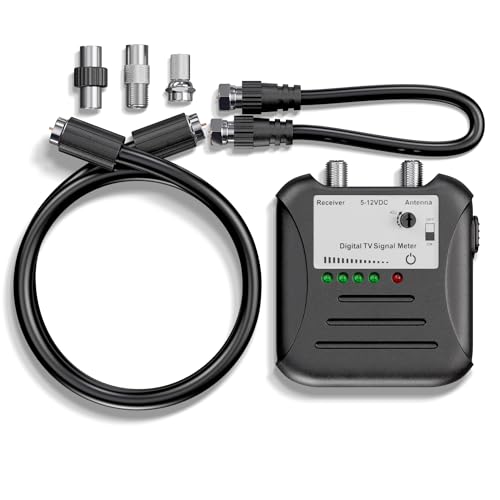
THE CIMPLE CO Signal Strength Meter, LED Indicators, for RV's and Over-The-Air Antennas, Sensitivity Adjuster, TV Antenna Finder, with Coax, Black
Includes: 1 TV signal strength meter with adapter kit and 1 coaxial cable. Please note, the signal meter…
As an affiliate, we earn on qualifying purchases.
As an affiliate, we earn on qualifying purchases.
Klein Tools VDV526-200 Cable Tester, LAN Scout Jr. 2 Ethernet Tester for CAT 5e, CAT 6/6A Cables with RJ45 Connections
VERSATILE CABLE TESTING: Cable tester for data (RJ45) terminated cables and patch cords, ensuring comprehensive testing capabilities
As an affiliate, we earn on qualifying purchases.
As an affiliate, we earn on qualifying purchases.