
It’s a common belief that shielded cables can fully prevent interference, but sometimes, it feels like a coincidence that they work so well in some cases. In reality, shielding can considerably reduce electromagnetic noise, yet it doesn’t guarantee complete immunity. Factors like grounding and material choice play an essential role. If you’re relying solely on shielding, you might be overlooking vital details that could affect performance—so, what’s the real story behind their effectiveness?

Get business pricing on networking and server gear
- Business-only prices and quantity discounts
- Tax-exempt purchasing
- Multiple users, one account, clear invoices
Key Takeaways
- Shielded cables significantly reduce EMI but do not guarantee complete immunity.
- Proper grounding is essential to maximize shielding effectiveness and prevent interference.
- Shielding materials and configurations impact how well interference is minimized.
- Ground loops and improper grounding can cause noise, undermining shielding benefits.
- Combining shielding with correct grounding practices provides the best protection against interference.

Many people believe that shielded cables completely eliminate electromagnetic interference, but this isn’t entirely true. While shielding can substantially reduce interference, it doesn’t guarantee total immunity. To maximize the effectiveness of shielded cables, you must understand how grounding techniques and cable shielding materials work together. Proper grounding is vital because it provides a path for unwanted electrical noise to be safely diverted away from your signals. Without effective grounding, even the best shielding can become a source of interference rather than a solution. The key is guaranteeing that the shield is connected to a low-impedance ground point, which helps drain interference currents safely and prevents them from coupling into your signal conductors.
Shielded cables reduce interference but require proper grounding for maximum effectiveness.
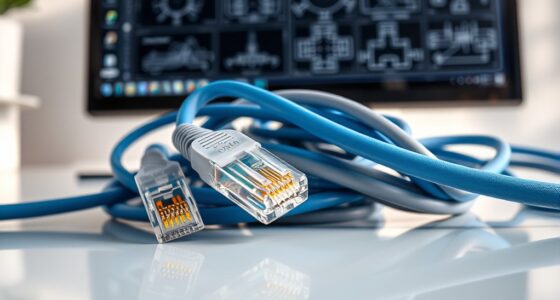
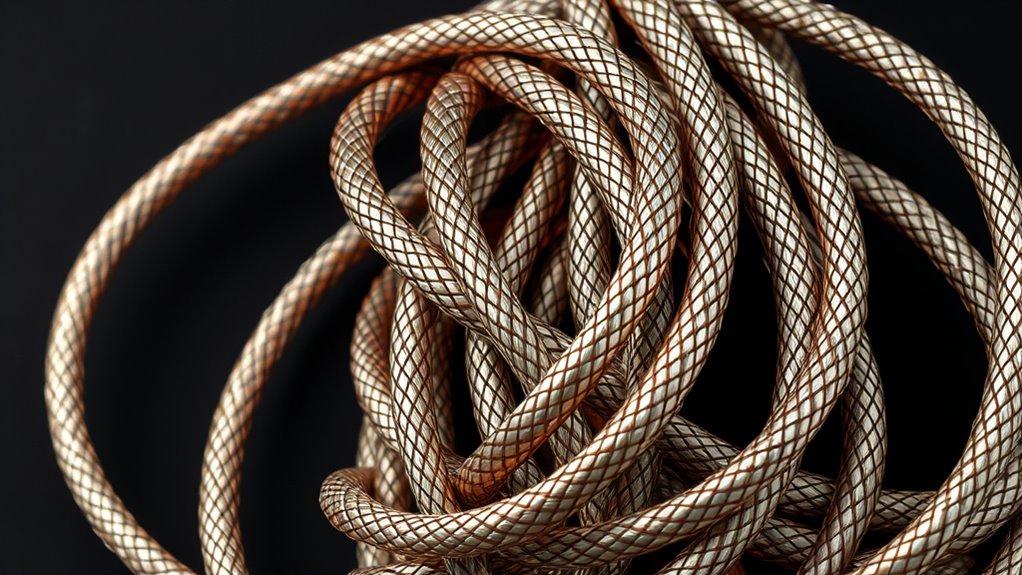
When selecting cable shielding materials, you should consider their properties and how they interact with grounding methods. Common shielding materials include foil, braid, or a combination of both. Foil shields are lightweight and provide excellent coverage against high-frequency interference but are less durable. Braid shields, on the other hand, offer better durability and are effective against low-frequency interference but may have slightly less coverage. Combining these materials can give you a balanced shield that handles a broad spectrum of interference types. No matter the material, proper termination and grounding of the shield are essential. If the shield isn’t grounded correctly, it can act as an antenna, picking up more noise than it blocks, defeating the purpose of shielding altogether.
You also need to pay attention to your grounding techniques. A common mistake is grounding the shield at only one end, which can sometimes cause a ground loop, leading to hums or noise in your signal. To avoid this, consider techniques like single-point grounding or double-shielding configurations, depending on your setup’s complexity. The goal is to guarantee that the shield is effectively connected to ground without creating loops or unintended current paths. This approach minimizes interference and preserves signal integrity. Additionally, understanding shielding materials and their conductive properties can help you select the best options for your application.
In essence, shielding alone isn’t a foolproof solution. It works best when combined with proper grounding techniques and the right cable shielding materials. By understanding these elements, you can substantially reduce electromagnetic interference in your setup. Just remember, no matter how advanced your shielding is, if grounding isn’t handled correctly, interference can still find its way in. So, always pay close attention to how your cables are grounded and choose the appropriate shielding materials for your specific environment. This careful approach guarantees you get the cleanest signal possible, even if shielding alone doesn’t eliminate interference entirely.
shielded audio cables with proper grounding
As an affiliate, we earn on qualifying purchases.
As an affiliate, we earn on qualifying purchases.
Frequently Asked Questions
Can Shielded Cables Prevent All Types of Electromagnetic Interference?
Shielded cables can’t prevent all types of electromagnetic interference (EMI). While they markedly reduce EMI through Faraday cage effects, some interference may still penetrate, especially at very high frequencies or strong sources. For effective EMI mitigation, you should combine shielded cables with proper grounding and shielding techniques. Remember, no cable alone offers complete protection, but they’re an essential part of minimizing interference in your system.
How Does Grounding Affect Shielded Cable Performance?
Grounding considerably improves shielded cable performance by enhancing grounding effectiveness, which helps redirect interference pathways safely to ground. When properly grounded, the shield acts as a barrier, reducing electromagnetic interference. However, poor grounding can create unintended interference pathways, weakening shield effectiveness. To maximize noise reduction, guarantee your shield is securely grounded at one or multiple points, minimizing interference pathways and maintaining ideal cable performance.
Are Shielded Cables More Durable Than Unshielded Ones?
Shielded cables generally have a durability comparison that favors them over unshielded ones, thanks to their enhanced material strength. The shielding layer protects the internal conductors from physical damage, abrasion, and environmental factors, making them more resilient in demanding conditions. If you’re looking for a cable that lasts longer and withstands tough environments, shielded cables are a better choice because of their robust construction and added protection.
What Are the Cost Differences Between Shielded and Unshielded Cables?
You’ll find shielded cables typically cost more than unshielded ones due to added materials and manufacturing complexity. The cost comparison shows shielded cables are a bit pricier, but they often justify the expense with better interference protection. When considering your budget, think about your environment and needs; investing in shielded cables can save you money long-term by reducing signal issues and maintenance.
Do Shielded Cables Require Special Connectors or Installation Techniques?
Shielded cables often need special connectors compatible with their shielding to guarantee proper grounding and signal integrity. You should follow specific installation procedures, like grounding the shield correctly and avoiding damage during setup. Using the right connectors and adhering to proper techniques helps maximize interference protection and maintains system performance. Always check manufacturer guidelines to ensure compatibility and proper installation, preventing issues that could compromise your cable’s effectiveness.
shielded Ethernet cables braid foil
As an affiliate, we earn on qualifying purchases.
As an affiliate, we earn on qualifying purchases.
Conclusion
Remember, shielded cables are like a sturdy umbrella in a storm—they can block much of the rain but won’t keep you completely dry if not properly handled. Proper grounding and installation are essential to maximize their effectiveness. Don’t fall for the myth that they eliminate interference entirely. Instead, see shielding as a helpful tool that, when used correctly, minimizes noise like a shielded knight defending your signal—still vulnerable but much better protected.
grounding tools for shielded cables
As an affiliate, we earn on qualifying purchases.
As an affiliate, we earn on qualifying purchases.
As an affiliate, we earn on qualifying purchases.
Halloween Picks
halloween
As an affiliate, we earn on qualifying purchases.