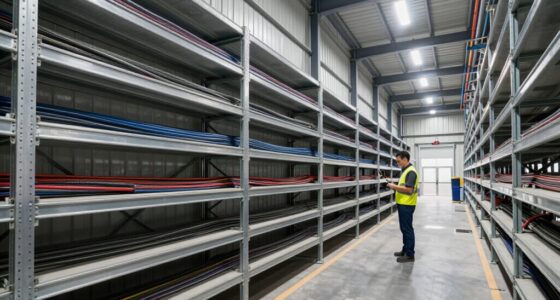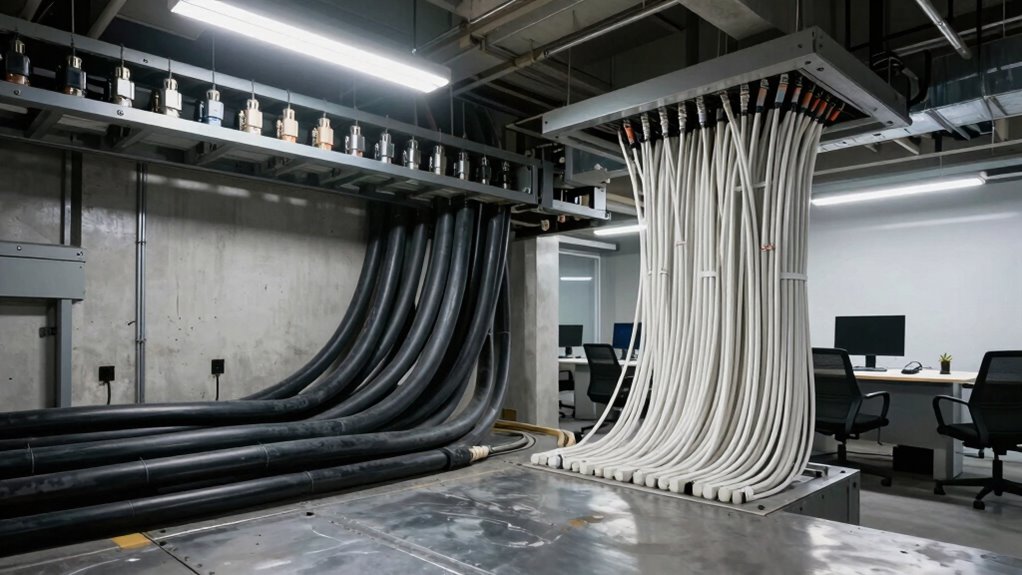

Industrial cable runs are more complex and extensive than office installs, often spanning large distances and supporting heavy machinery and high-voltage systems. You need to plan carefully for routing, organization, and protection, using specialized trays, conduits, and coverings to withstand harsh conditions like chemicals, vibration, or extreme temperatures. Safety and compliance are critical to prevent faults or hazards. If you want to understand how to manage these challenges effectively, keep exploring these essential differences.
Key Takeaways
- Industrial cable runs are longer, more complex, and involve high-voltage and heavy machinery wiring compared to office installations.
- They require specialized cable management systems like trays and conduits to prevent tangling and facilitate maintenance.
- Industrial environments demand durable, weatherproof, and protective coverings to withstand harsh conditions and physical damage.
- Safety and compliance are critical, with rigorous standards to prevent faults, fires, and equipment failures.
- Environmental factors such as chemicals, vibration, and extreme temperatures significantly influence industrial cable design and protection.
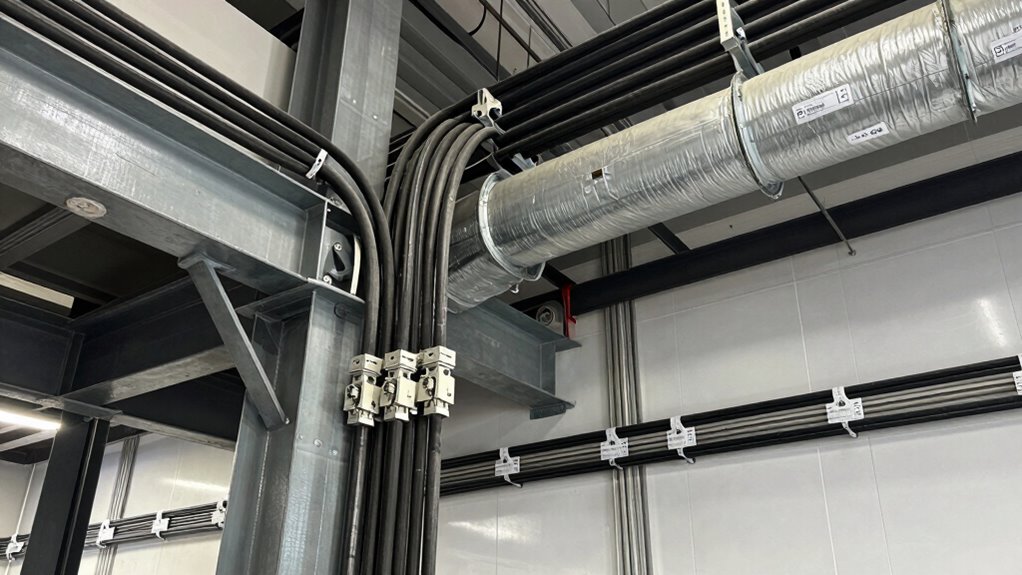
When it comes to installing cables, understanding the key differences between industrial cable runs and office installs is essential for ensuring safety, efficiency, and compliance. In industrial settings, cable runs are often complex, spanning large distances and involving heavy machinery. Proper wire management becomes critical here, as cables must be organized to prevent tangling, minimize wear, and facilitate easy maintenance. Unlike in office environments, where cable routing is typically straightforward and confined to desks and walls, industrial installations require careful planning to handle high-voltage lines, sensor cables, and control wiring. This means implementing robust cable trays, conduits, and protective coverings to shield cables from physical damage, chemicals, and extreme temperatures. Good wire management in such settings isn’t just about neatness; it’s a vital safety measure that reduces the risk of electrical faults, fires, and equipment failure. Proper cable durability is also essential in harsh industrial environments to ensure long-term performance, especially under conditions of vibration or exposure to chemicals. Additionally, selecting appropriate cable durability is crucial in harsh industrial environments to ensure long-term performance. Ensuring proper weatherproofing of cables and enclosures further enhances safety and longevity in outdoor or challenging environments. Recognizing the importance of protective coverings helps prevent damage from environmental hazards and mechanical impacts.

Kable Kontrol Cable Tray – 5 Feet Long x 4" W x 2” H – 10 Pcs Bulk Pack – Wire Mesh Tray Cable Management Rack Cords Organizer Cable Basket, Zinc Plated Steel NEC Approved for Network, Fiber Optic
SPECS – Cable Tray Bulk Pack Straight Section | Width: 4” Inch (101.6mm) | Length: 5’ Feet |…
As an affiliate, we earn on qualifying purchases.
As an affiliate, we earn on qualifying purchases.
Frequently Asked Questions
Are Specialized Tools Needed for Industrial Cable Installations?
Yes, you need specialized tools for industrial cable installations. These tools are designed to handle the demanding environment, heavy-duty cables, and complex installation techniques involved in industrial settings. Using the right specialized tools guarantees safety, efficiency, and compliance with industry standards. They help you manage larger cables, secure connections properly, and navigate tight spaces more easily, making the installation process smoother and more reliable.
How Long Do Industrial Cables Typically Last?
Like a vintage radio, industrial cables can last decades if properly maintained. Typically, they’re built for exceptional durability, with installation longevity often exceeding 20-30 years. Factors like cable quality, environmental conditions, and usage impact their lifespan. You’ll want to choose high-grade cables designed for industrial settings to guarantee maximum cable durability, reducing the need for frequent replacements and ensuring your system stays reliable for years to come.
What Safety Standards Apply to Industrial Cable Runs?
You need to follow strict safety standards for industrial cable runs, primarily focusing on fire safety and environmental regulations. These standards guarantee cables are properly rated for heat, flame resistance, and durability to prevent fires and meet environmental safety requirements. You should adhere to codes like the NEC (National Electrical Code) and OSHA guidelines, which specify proper installation practices, protective measures, and testing to keep your workplace safe and compliant.
Can Existing Office Cables Be Upgraded for Industrial Use?
You can upgrade office wiring for industrial use, but it requires adherence to industrial standards. First, you need to assess if the existing cables meet the higher load capacities and environmental resistance required in industrial settings. Upgrading often involves replacing or reinforcing cables, adding proper conduit, and making sure compliance with safety regulations. Consulting a professional ensures your wiring meets all industrial standards, providing safety, durability, and reliable performance in demanding environments.
What Are the Cost Differences Between the Two Installations?
Think of industrial cable runs as rugged mountain trails compared to office installs’ smooth sidewalks. You’ll likely spend more on industrial setups due to their increased installation complexity and specialized materials, which can stretch your budget considerations. Office installs are simpler and cheaper, but industrial projects demand extra safety measures, durable cables, and skilled labor. So, expect a steeper price tag for industrial environments, but don’t forget the added reliability and performance.

MGI SpeedWare Corrugated Non-Split Conduit, Black Wire Tubing for High-Temperature Automotive Harness and Indoor Outdoor Wire Management – 25ft Length (Inner Diameter 1/2")
Corrugated non-split tubing for durable wire management up to 1/2" in diameter
As an affiliate, we earn on qualifying purchases.
As an affiliate, we earn on qualifying purchases.
Conclusion
Think of your cable run as the nervous system of a building, carrying crucial signals that keep everything alive and functioning. In industrial settings, it’s like a rugged river, enduring rapids and storms to deliver power where it’s needed most. In offices, it’s a steady stream, guiding data smoothly through calm waters. Understanding these differences helps you guarantee your installations are resilient, reliable, and ready to support the heartbeat of your space—no matter the environment.

Kanayu Split Wire Loom Tubing Flame Retardant Wire Covering High Temperature Cable Sleeves Split Protector Cable Conduit for Industrial Electrical Automotive Marine(1/2''-50 ft,Black)
High Temperature Resistant and Flame Retardant: the split wire conduit is made of quality high temperature resistant polypropylene…
As an affiliate, we earn on qualifying purchases.
As an affiliate, we earn on qualifying purchases.

Black Zip Ties Heavy Duty 20 Inch Outdoor, 250lb Extra Large Cable Tie Wraps Long Plastic Wire Ties Wide Big Strong Thick Zipties 40 Pack
Long Zip Ties 20 Inch Black – Extra Large Zip Ties Heavy Duty Outdoor, long cable ties 20…
As an affiliate, we earn on qualifying purchases.
As an affiliate, we earn on qualifying purchases.