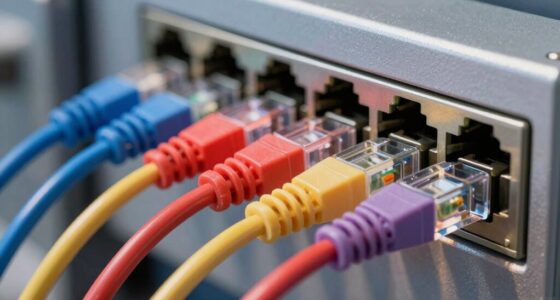
Your network’s reliability starts at Layer 1 because it forms the physical foundation of your connection. Strong cables, connectors, and hardware guarantee uninterrupted data flow and reduce faults. Poor quality or damaged components can cause disruptions, affecting overall performance. Fiber optic cables, resistant to interference and environmental factors, boost stability even further. Focusing on this layer helps prevent issues that can ripple through the entire network, paving the way for a more resilient system—stay tuned to discover how to optimize it further.

Get business pricing on networking and server gear
- Business-only prices and quantity discounts
- Tax-exempt purchasing
- Multiple users, one account, clear invoices
Key Takeaways
- Layer 1 provides the physical transmission medium essential for uninterrupted data flow.
- High-quality cabling and connections prevent physical faults that cause network outages.
- Fiber optic cables offer resistance to interference, ensuring stable signal transmission.
- Proper installation and maintenance of Layer 1 components enhance overall network reliability.
- A strong physical foundation reduces downtime and supports high network performance.
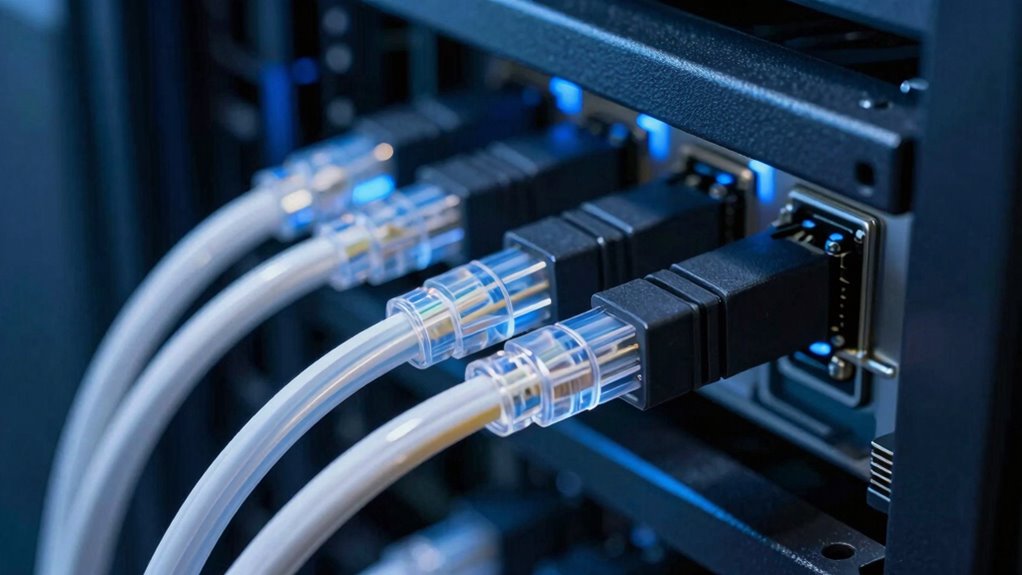
Have you ever wondered what keeps your network running smoothly without interruption? The answer often begins at Layer 1, the physical layer responsible for the actual transmission of data. This layer forms the foundation of your entire network, and its reliability hinges on the quality of the cabling, connectors, and hardware used. At this level, fiber optic cables stand out as a top choice for ensuring high signal integrity. Unlike traditional copper cables, fiber optics transmit data as pulses of light, which significantly reduces interference and signal loss over long distances. This means your data arrives faster and more accurately, with less chance of disruptions that can ripple through your entire network.
Fiber optic cables ensure high signal integrity, reducing interference and signal loss for a more reliable network foundation.
When it comes to maintaining signal integrity at Layer 1, fiber optics provide a robust solution. You benefit from their immunity to electromagnetic interference, which often plagues copper-based systems, especially in environments with heavy machinery or electrical noise. This immunity ensures that the signals remain clear and strong, avoiding the degradation that can cause data corruption or transmission errors. As a result, your network can sustain high bandwidths and low latency, both critical for real-time applications like video conferencing, cloud services, and streaming. Additionally, fiber optic cabling is more resistant to environmental factors, further enhancing the physical layer’s robustness. Proper installation techniques also play a crucial role in maximizing the longevity and performance of fiber optic systems, emphasizing the importance of installation quality.
The physical quality of the cabling plays a vital role in Layer 1 reliability. Damaged connectors, bent cables, or poor-quality installation can all compromise signal integrity, leading to intermittent disruptions or total outages. That’s why choosing high-quality fiber optic components and ensuring proper installation are essential steps. When your infrastructure is built on reliable physical hardware, it minimizes the risk of physical faults that could otherwise cause network downtime. Additionally, cabling durability is crucial, as fiber optic cables are more resistant to environmental factors such as moisture, temperature extremes, and physical stress, further bolstering Layer 1 stability.
Ultimately, the health of your entire network depends on the strength of its foundation. If the physical layer isn’t reliable, no amount of higher-layer protocol enhancements can fully compensate. It’s like building a house on a shaky foundation—you’ll face ongoing issues regardless of how advanced the upper layers are. By focusing on fiber optic cabling and ensuring signal integrity at Layer 1, you set your network up for consistent, high-performance operation. This proactive approach reduces downtime, improves data accuracy, and keeps your network resilient against the myriad physical challenges it may face.
As an affiliate, we earn on qualifying purchases.
Frequently Asked Questions
How Does Layer 1 Impact Overall Network Security?
Layer 1 impacts your network security by addressing physical vulnerabilities and signal interference. If cables aren’t properly secured or are exposed, they become easy targets for tampering or eavesdropping. Signal interference can disrupt data transmission, leading to potential security breaches or data loss. Ensuring physical security, shielding cables, and managing interference helps you maintain a secure, reliable network and reduces the risk of malicious attacks or data compromise.
What Are Common Physical Layer Failure Points?
Imagine a data center experiencing frequent outages; cable degradation and connector corrosion are common failure points at the physical layer. These issues cause signal loss or interference, disrupting network reliability. Over time, environmental factors like humidity or dust accelerate cable wear. Regular inspections and timely replacements of damaged cables and corroded connectors help maintain solid connectivity, preventing costly downtime and ensuring consistent network performance.
How Can Layer 1 Issues Be Diagnosed Effectively?
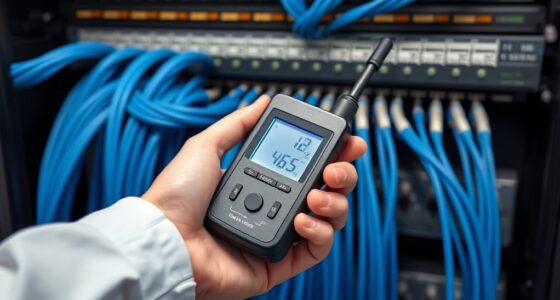
To diagnose Layer 1 issues effectively, you should start with cable troubleshooting, inspecting for physical damage, loose connections, or improper terminations. Use a cable tester to check signal integrity and continuity. Pay attention to signal attenuation or interference, which can cause unreliable connections. Regularly verify connector cleanliness and confirm proper grounding. These steps help you quickly identify and resolve issues, maintaining network reliability from the physical layer upward.
What Are the Best Practices for Layer 1 Maintenance?
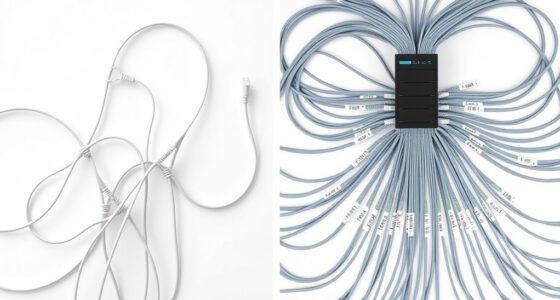
Did you know that proper layer 1 maintenance reduces network failures by up to 60%? To guarantee reliability, regularly inspect fiber optics for damage and clean connectors to prevent signal loss. Implement meticulous cable management to avoid tangling and stress on cables, which can cause faults. Use quality connectors and protective enclosures, and schedule routine checks. These practices help maintain peak performance and minimize downtime.
How Does Layer 1 Influence Network Scalability?
Layer 1 directly impacts your network’s scalability by ensuring proper cable management and maintaining signal integrity. When cables are organized and connections are secure, you can easily add or upgrade devices without disruptions. Good cable management prevents signal degradation, allowing your network to handle increased traffic as it grows. By focusing on reliable, well-maintained physical infrastructure, you set a strong foundation for scalable, high-performance networking.
high quality Ethernet connectors
As an affiliate, we earn on qualifying purchases.
As an affiliate, we earn on qualifying purchases.
Conclusion
Think of Layer 1 as the foundation of a building—you can’t expect the walls to stand tall if the base isn’t solid. When you guarantee your physical layer is robust and reliable, everything else built on top will have a strong platform to operate from. Neglect this layer, and even the smartest network designs can crumble like a house on shaky ground. So, start at the bottom, and your network will stand tall and dependable.
fiber optic cable installation kit
As an affiliate, we earn on qualifying purchases.
As an affiliate, we earn on qualifying purchases.
As an affiliate, we earn on qualifying purchases.
Fall Picks
fall essentials
As an affiliate, we earn on qualifying purchases.