When designing or maintaining a server rack, choosing the right cable management solution can make a big difference. Horizontal and vertical cable managers each serve a specific purpose in organizing your cables efficiently. Understanding their differences helps you decide which best suits your setup. Consider how your system’s size and complexity influence your choice—there’s more to these options than meets the eye. Let’s explore how these two types compare and how they can improve your organization.
Key Takeaways
- Horizontal cable managers guide cables across the rack’s width, promoting neatness and airflow at the back or between equipment rows.
- Vertical cable managers run along the sides of the rack, organizing large cable volumes and reducing clutter in complex setups.
- Horizontal managers improve maintenance access and prevent cable tangling, while vertical managers optimize space in larger, multi-device racks.
- Both types enhance airflow management by preventing cables from blocking vents and maintaining proper ventilation.
- Selection depends on cable volume and rack complexity: horizontal for simpler setups, vertical for larger, intricate wiring configurations.
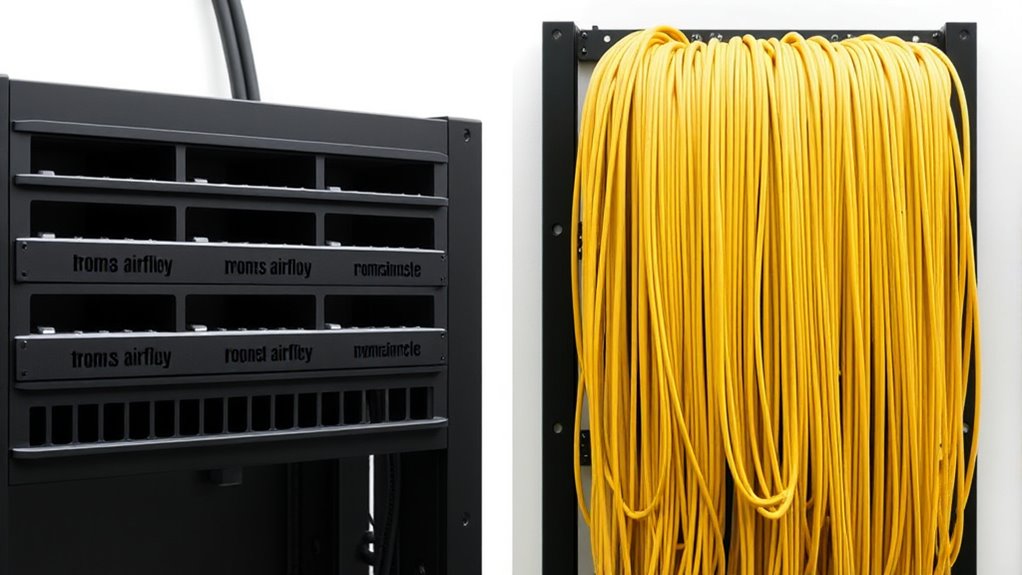
Choosing the right cable manager is essential for keeping your data center organized and ensuring easy maintenance. Whether you opt for a horizontal or vertical cable manager, your goal should be to optimize rack organization and airflow management. Proper cable management not only keeps everything neat but also prevents overheating and makes troubleshooting faster. As you evaluate your options, consider how each type of cable manager impacts these factors and fits your specific setup.
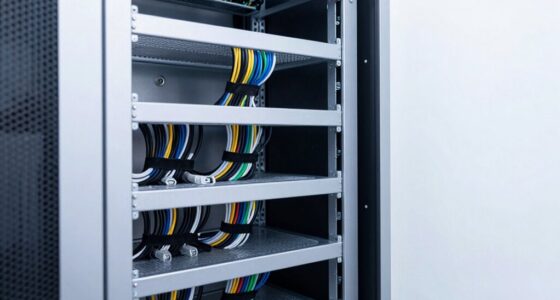
Horizontal cable managers sit across the width of the rack, typically mounted between equipment rows or at the back of the rack. They’re great for maintaining a clean, organized appearance by guiding cables horizontally and preventing tangles. With a horizontal cable manager, you can neatly bundle cables and route them flat against the rack, which simplifies rack organization. This setup makes it easier to identify and access individual cables when needed. Additionally, horizontal managers help improve airflow management by creating a clear separation between cables and equipment. When cables are neatly routed and bundled, they don’t obstruct airflow vents or exhaust fans, reducing hotspots and keeping hardware cool. This is especially important in dense setups where airflow can be restricted by cluttered cables. Properly installed cable management can also facilitate future upgrades and reconfigurations, saving time and effort.
Horizontal cable managers guide cables neatly across the rack, enhancing airflow and simplifying maintenance.
Vertical cable managers, on the other hand, run along the sides of the rack, usually from top to bottom. They’re ideal for managing a large volume of cables and can handle complex wiring setups. Vertical managers help keep cables organized and out of the way, which is crucial when you’re working with multiple servers or switches. They also contribute positively to rack organization by providing a designated pathway for cables to run vertically, minimizing clutter and preventing cables from tangling or interfering with other equipment. When it comes to airflow management, vertical cable managers play a similar role as horizontal ones—they keep cables close to the rack sides and away from airflow paths. By doing so, they help maintain proper ventilation throughout the rack, avoiding airflow restrictions that could lead to overheating.
Ultimately, your choice between horizontal and vertical cable managers depends on your specific needs. If your setup involves fewer cables and demands easy access for adjustments, horizontal managers might be more suitable. For larger, more complex installations, vertical managers can provide a cleaner look and better cable organization over time. Both options contribute profoundly to effective airflow management, which is essential for maintaining optimal operating temperatures and preventing hardware failures. When installed correctly, either type can streamline maintenance, improve rack organization, and optimize airflow, making your data center more efficient and reliable.

Leinuosen 4 Pcak 1U 19'' Cable Manager 24 Slot Horizontal Rack Mount Wire Management Server Rack Management Metal Finger Duct Wire Organizer with Cover and Mounting Screws for Network Cabinet
What You Will Get: the package comes with 4 pieces of 1U 24 Slot cable management brushes and…
As an affiliate, we earn on qualifying purchases.
As an affiliate, we earn on qualifying purchases.
Frequently Asked Questions
Can Horizontal and Vertical Managers Be Used Together Effectively?
Yes, you can use horizontal and vertical cable managers together effectively. Combining them helps improve cable organization and maximizes space efficiency in your setup. Horizontal managers keep cables neat across shelves, while vertical managers manage cables running up and down racks. Using both provides a clean, accessible, and efficient cable management solution, reducing clutter and improving airflow, which is essential for maintaining peak equipment performance.
What Are the Cost Differences Between Horizontal and Vertical Cable Managers?
Think of the cost differences as a dance—horizontal managers often lead with a lower price tag, making installation more budget-friendly, while vertical managers might step in with a slightly higher cost due to added installation flexibility. You’ll find horizontal options excel in aesthetic considerations, creating a clean look, while vertical managers shine in flexibility. Choose based on your budget and whether you prioritize a sleek appearance or versatile setup.
How Do Cable Managers Impact Airflow and Cooling?
Cable managers greatly influence airflow and cooling by facilitating airflow enhancement. When you use proper cable management, it prevents clutter, allowing cool air to circulate freely and hot air to escape efficiently. This enhances cooling efficiency, reducing the risk of overheating and equipment failure. By keeping cables organized and tidy, you guarantee your server or network rack maintains ideal temperatures, ultimately improving system performance and longevity.
Are There Specific Industries That Prefer One Type Over the Other?
You’ll find that industry preferences often dictate whether horizontal or vertical cable managers are favored, based on application suitability. Data centers and server rooms typically prefer vertical managers for better airflow and space efficiency, while office environments might choose horizontal managers for easier access and organization. Your decision should consider the specific needs of your industry, focusing on how each type supports ideal cable management and operational workflows.
What Maintenance Is Required for Horizontal Versus Vertical Cable Managers?
Imagine you’re maintaining a data center with vertical cable managers. You should regularly check for dust buildup and guarantee cables are securely fastened to prevent damage. For horizontal cable managers, you’ll want to periodically tidy up cable organization and verify that rack integration remains tight. Both types require routine inspections to keep airflow ideal, prevent tangles, and maintain system efficiency, making your cables neat and accessible.

StarTech 2-Pack 20U Vertical Cable Organizer with Finger Ducts, Vertical Cable Management Panel, 40U Rack-Mount Cable Raceway, 2x 3ft (91cm) Wire Organizers
VERSATILE CABLE MANAGEMENT: You can install the two 3-foot panels end to end so that they span the…
As an affiliate, we earn on qualifying purchases.
As an affiliate, we earn on qualifying purchases.
Conclusion
Now that you’ve seen the differences, the choice isn’t as clear-cut as you might think. Will you prioritize quick access and simplicity with horizontal managers, or opt for the sleek, all-encompassing organization verticals provide? The decision could shape your entire setup, but there’s one thing to remember: the right cable management can transform your server rack from chaos to clarity—if you choose wisely. Are you ready to take that next step?

10 Pcs 19 in Rack Cable Management Kit, Including 0.5U L-Shaped Tie Bars, 20 Cabinet Screws, 100 Cable Ties, Sturdy Metal with Black Coating, Multi-Hole Design for Flexible Cabling
Sturdy Construction: Crafted from thick metal with a sleek black coating, our L-shaped tie bars offer exceptional scratch…
As an affiliate, we earn on qualifying purchases.
As an affiliate, we earn on qualifying purchases.

Cable Matters Rackmount or Wall Mount 1U 24 Port Keystone Patch Panel with Cable Management and Support Bar, 19-inch Blank Patch Panel for Keystone Jacks
Flexible Keystone Patch Panel: This 24 port blank patch panel supports a wide range of standard-sized keystone jacks,…
As an affiliate, we earn on qualifying purchases.
As an affiliate, we earn on qualifying purchases.