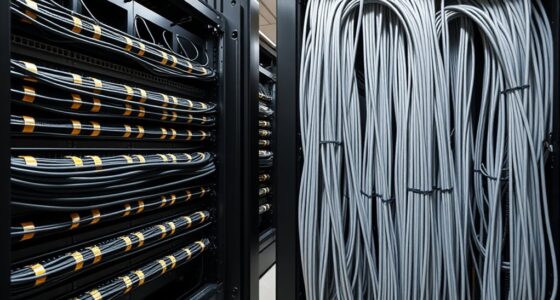

Implementing TIA-606 labeling standards is essential for creating a clear, organized cabling infrastructure that minimizes confusion and reduces downtime. By establishing a consistent labeling system, you can quickly identify cables, their destinations, and their types, which streamlines maintenance and troubleshooting. Properly applied, these standards support reliable network management and scalability. However, understanding the best practices and challenges involved can be complex—there’s more to contemplate if you want your system to truly benefit from these guidelines.
Key Takeaways
- Develop a standardized labeling scheme based on infrastructure layout and assign clear, concise identifiers for cables and equipment.
- Use durable, high-quality labels that are resistant to environmental factors and positioned for easy visibility.
- Ensure consistency in label format, font, and color coding across all labels to facilitate quick identification.
- Integrate the labeling system with documentation and inventory tools, updating records with any infrastructure changes.
- Train staff on labeling best practices and regularly review labels to maintain accuracy and support efficient troubleshooting.

Implementing TIA-606 labeling standards is essential for organizing and managing telecommunications infrastructure effectively. When you adopt these standards, you create a systematic approach that simplifies cable management and improves overall network reliability. Proper labeling is the backbone of efficient infrastructure, enabling you to quickly identify, troubleshoot, and maintain cables and equipment. Without a consistent labeling system, cables can become tangled, misplaced, or misunderstood, leading to unnecessary downtime and increased operational costs.
To start, you should familiarize yourself with the core principles of TIA-606 standards. These guidelines specify how to assign labels, where to place them, and what information they should contain. By following these best practices, you ensure that your labeling is clear, uniform, and easy to interpret. For example, labels should include concise identifiers such as location, cable type, and destination. This level of detail helps you and your team track every cable from source to endpoint without confusion. When you apply consistent standards, you eliminate guesswork, which is fundamental for efficient cable management in complex environments.
Labeling best practices also emphasize durability and accessibility. Use high-quality labels that resist environmental factors like dust, moisture, and temperature fluctuations. Position labels where they will be visible during routine inspections and maintenance, avoiding areas prone to wear and tear. When you standardize label placement, it minimizes the risk of misreading or losing critical information during critical moments. This reliability supports quick identification, reducing downtime and streamlining your troubleshooting process.
Another key aspect is to establish a logical labeling scheme that aligns with your infrastructure layout. You might organize labels by room, rack, or circuit type, depending on your facility’s design. When you implement a logical system, you help future-proof your infrastructure, making expansion or reconfiguration smoother. Consistency is indispensable—use the same format, font, and color codes across all labels, so anyone working on your network can instantly understand the information. This uniformity enhances cable management by providing clarity and reducing errors.
Additionally, understanding debt forgiveness legislation can influence your planning for infrastructure upgrades or financial management, ensuring that your investments are optimized and compliant with current policies. Finally, integrating your labeling practices with documentation and inventory management tools ensures your system remains accurate over time. Whenever you add or modify cables, update your labels and records accordingly. This practice fosters a well-maintained, transparent infrastructure that’s easier to manage, troubleshoot, and scale. By adhering to TIA-606 standards and following these labeling best practices, you set a solid foundation for a reliable, organized telecommunications environment.
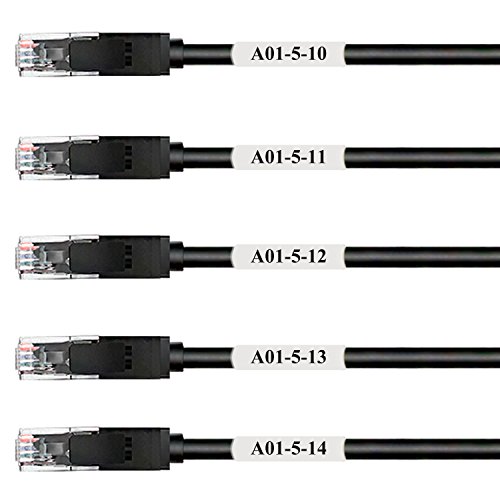
Mr-Label Self-Laminating Wrap Around Cable Labels – Letter Sheet Laser Printer Only – for Wire Marking Identification (25 Sheets (800 Labels), White)
SAVE YOU HEADACHES: When you're up to your neck in a large number of cables while wiring, chase…
As an affiliate, we earn on qualifying purchases.
As an affiliate, we earn on qualifying purchases.
Frequently Asked Questions
How Do TIA-606 Standards Integrate With Existing Cable Management Systems?
You can seamlessly integrate TIA-606 standards with your existing cable management systems by guaranteeing standard compliance. This involves updating labels and documentation to match the standards, which improves system organization and clarity. By aligning your current system with TIA-606, you facilitate easier maintenance and troubleshooting. Proper system integration also ensures future scalability and better asset management, making your cable infrastructure more efficient and compliant with industry best practices.
What Training Is Recommended for Staff to Implement TIA-606 Effectively?
Think of staff training as your bridge to mastery; it’s essential for implementing TIA-606 effectively. You should focus on thorough cable labeling techniques, best practices for labeling consistency, and understanding standards’ guidelines. Hands-on workshops, online courses, and detailed manuals help staff grasp the standards deeply. By investing in detailed training, you ensure your team can accurately label cables, streamline management, and maintain compliance effortlessly.
Are There Digital Tools to Assist With TIA-606 Labeling Compliance?
Yes, digital tools like digital labeling platforms and compliance software can help you stay aligned with TIA-606 standards. These tools automate labeling processes, reduce errors, and guarantee consistency across your data center. By integrating digital labeling solutions, you simplify compliance tracking, streamline updates, and maintain accurate documentation. Using these technologies, you can efficiently manage your labeling efforts and confidently meet TIA-606 requirements with less manual effort.
How Often Should Labeling Be Reviewed and Updated Under TIA-606?
You should review and update your labeling regularly to stay compliant. Typically, a Label review occurs annually, but updates should be made whenever changes happen—like new equipment or renovations—ensuring labels are current, clear, and correct. Establish a consistent schedule for Label review and Update frequency, keeping your labeling legible and compliant with TIA-606 standards. Staying vigilant helps prevent confusion, ensuring smooth system management and seamless service.
What Are Common Challenges Faced During TIA-606 Implementation?
You often face challenges maintaining labeling consistency and ensuring documentation accuracy during TIA-606 implementation. Inconsistent labels can cause confusion, while inaccuracies in documentation lead to errors in network management. You might struggle with integrating new labels into existing systems or training staff to follow standards precisely. Overcoming these issues requires diligent updates, clear procedures, and ongoing staff education to keep labels consistent and documentation accurate across your facility.

Wmiwulien 8 Sheet 240 Pcs Cable Labels for Management, Colorful Waterproof Cord Tags for Electronics, Self Adhesive Tear Resistant Wire Labels for Laser Printer and Handwriting
Cable Labels Tag Size – A4 size 210 mm x 297 mm (sheet size); 3.31 x 1.02 inch…
As an affiliate, we earn on qualifying purchases.
As an affiliate, we earn on qualifying purchases.
Conclusion
By adopting TIA-606 standards, you’re building a foundation as solid as the Great Wall, ensuring your cabling system is clear, organized, and reliable. Just like a well-mapped treasure hunt, proper labeling guides you swiftly to solutions, minimizing downtime and boosting efficiency. Stay consistent, update regularly, and think of your documentation as the guiding star that leads your network to success. With these standards, you’re securing your infrastructure’s future—your own modern-day legacy of order and clarity.

Cable Labels, 300 PCS Waterproof Cable Tags in 10 Colors for Cable Management, Self Adhesive Wire Labels with Color Border Can Write On
Complete Set Specifications: Contains 10 colors, including red, orange, yellow, blue, light blue, purple, light green, green, white,…
As an affiliate, we earn on qualifying purchases.
As an affiliate, we earn on qualifying purchases.

RJ45 Pass through Ethernet Network Crimping tool Pass Through RJ45 Crimper Tool for Cat5e Cat6 Cat7 cat8e Connector with Wire Stripping Knife, Crimper for Stripping Crimping & Cutting + 2 Extra Blades
𝗔𝗹𝗹-𝗶𝗻-𝗢𝗻𝗲 𝗥𝗝𝟰𝟱 𝗖𝗿𝗶𝗺𝗽𝗶𝗻𝗴 𝗧𝗼𝗼𝗹: RJ45 Network Crimping tool, Pass through Ethernet Crimper Tool combines passthrough connectors crimping, cutting,…
As an affiliate, we earn on qualifying purchases.
As an affiliate, we earn on qualifying purchases.