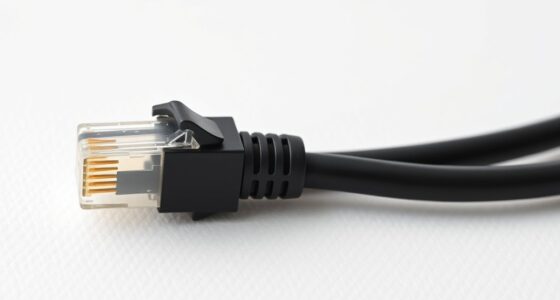
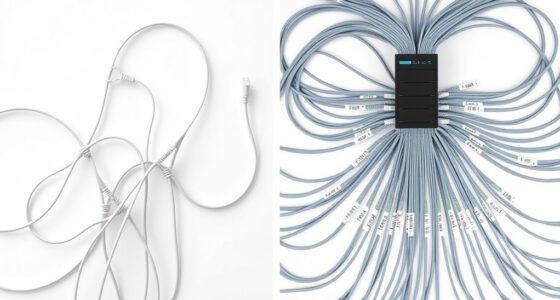
Ignoring proper cable bending radius guidelines can lead to catastrophic failures that compromise entire systems. If you don’t pay close attention to how you bend cables, internal damage and performance issues can happen long before you expect. Ensuring you follow manufacturer recommendations isn’t just a detail—it’s essential for reliable operation. Want to find out the best practices for maintaining cable integrity and avoiding costly mistakes?
Key Takeaways
- Always follow manufacturer’s specifications for the minimum bending radius of specific cable types.
- Proper installation techniques, such as gentle curves and support, prevent internal damage and maintain cable flexibility.
- Using cable management tools like bend restrictors helps uphold recommended bending limits.
- Avoid sharp bends or tight loops that exceed the cable’s specified minimum radius.
- Regularly inspect cable routes to ensure bending radius guidelines are maintained for long-term reliability.

Have you ever wondered why maintaining the proper bending radius is essential for your cables? The answer lies in protecting your cables’ integrity and ensuring their longevity. When you bend a cable too tightly, you risk damaging its internal conductors, insulation, or shielding, which can lead to failures or reduced performance over time. To prevent this, understanding and adhering to the recommended bending radius is crucial. It’s not just about avoiding damage; it also impacts cable flexibility during installation and future operation. Proper bending radius ensures your cables remain flexible enough to navigate complex pathways without compromising their structure or function.
Maintaining the proper bending radius protects cable integrity and extends their lifespan.
Cable flexibility plays a significant role when working with different installation techniques. Whether you’re routing cables through tight spaces, around corners, or across long distances, knowing how to maintain the correct bending radius helps you achieve a smooth installation. For instance, some cables are designed with enhanced flexibility, allowing tighter bends without damage, but even these require attention to specified limits. When you ignore these guidelines, you risk kinking or stressing the cable, which can lead to internal breakage or signal loss. Using proper installation techniques, such as employing cable management tools like bend restrictors, cable trays, or gentle curves, helps you stay within safe bending limits. These techniques not only protect the cable but also make your installation neater and more efficient.
It’s essential to refer to each cable’s datasheet or manufacturer’s specifications for the exact bending radius. Different cables have varying requirements depending on their insulation, conductor type, and application. For example, fiber optic cables generally demand a larger minimum bend radius compared to flexible power cables. When you follow these guidelines and implement appropriate installation techniques, you extend the lifespan of your cables and maintain their performance. Additionally, a careful approach reduces the likelihood of costly repairs or replacements down the line.
In practice, you should always plan your cable runs with the bending radius in mind before beginning installation. Avoid sharp bends or tight loops that exceed the recommended radius. Instead, use gentle curves and proper support structures to guide the cables along their path. Remember, a well-planned installation not only preserves cable integrity but also makes future maintenance easier. By paying close attention to cable flexibility and applying correct installation techniques, you ensure your cables remain reliable and efficient throughout their service life. Ultimately, respecting the proper bending radius is a simple yet vital step that safeguards your investment and guarantees optimal performance. Proper installation techniques help prevent unnecessary stress on the cables and contribute to a longer service life.

Rapink Patch Cables Cat6/ Cat6a 1ft (24 Pack) Slim, Cat6a Ethernet Patch Cable 10G Support, Snagless Cat 6 Patch Cable for Patch Panel to Switch, Flexiable Cat6 Ethernet Cable Black
【24 Pack】24-pack of CAT6a patch cables with short length is excellent solution for connecting patch panel to switch...
As an affiliate, we earn on qualifying purchases.
Frequently Asked Questions
How Do Environmental Factors Affect Bending Radius Requirements?
Environmental factors like climatic impacts and the installation environment directly influence bending radius requirements. You need to take into account temperature fluctuations, humidity, and exposure to elements, as these can make cables more brittle or flexible. In harsh conditions, you might have to increase the bending radius to prevent damage. Always adapt your bending radius to ensure cable longevity and safety, especially in outdoor or extreme environments.
Are There Differences in Bending Radius Guidelines for Fiber Optics Versus Power Cables?
You’ll find that bending radius guidelines differ markedly between fiber optic and power cables, and ignoring this can cause catastrophic failures—like a domino effect. For fiber optics, you need a much larger bend radius to prevent signal loss and damage, sometimes up to ten times the cable diameter. Power cables, however, can usually handle tighter bends. Always follow manufacturer specs to guarantee ideal performance and longevity.
What Tools Are Recommended for Measuring Bending Radius Accurately?
You should use flexible measurement tools like a flexible ruler or a bending gauge to accurately measure the bending radius of cables. These tools help you verify the radius quickly and precisely. To guarantee your measurements are reliable, regularly check and calibrate your tools for accuracy verification. This approach ensures you stay within safe bending limits, protecting your cables from damage and maintaining peak performance.
How Frequently Should Bending Radius Guidelines Be Reviewed or Updated?
You should review your bending radius guidelines at least annually, especially if your cable flexibility or installation techniques change. Studies show that improper bending can reduce cable lifespan by up to 50%. Regular updates ensure you maintain safe installation practices, minimizing damage and guaranteeing peak performance. Keep evaluating your guidelines to adapt to new cable types and installation methods, avoiding costly repairs and downtime caused by overlooked bending radius requirements.
Can Improper Bending Radius Cause Long-Term Cable Degradation?
Improper bending radius can definitely cause long-term cable degradation. When you don’t follow proper installation techniques and push the cable beyond its flexible limits, it stresses the internal conductors and insulation. Over time, this reduces cable flexibility, increases the risk of cracks, breaks, or even failures. To prevent this, always adhere to recommended bending radius guidelines, ensuring the cable maintains its integrity and longevity throughout its service life.
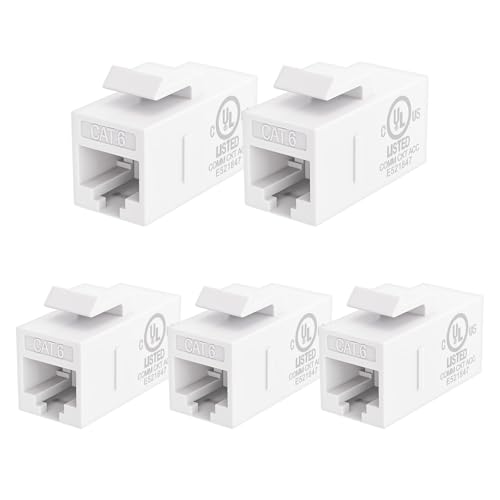
VCE UL Listed CAT6 RJ45 Keystone Jack Inline Coupler 5-Pack, Female to Female Ethernet Cable Extender - White
VCE Double Female Cat6 Keystone Coupler can be used with Cat6/Cat5/Cat5e Ethernet cables. Meet Category 6 performance in...
As an affiliate, we earn on qualifying purchases.
Conclusion
By following the proper cable bending radius guidelines, you protect your cables from damage, preserve signal quality, and extend their lifespan. You guarantee safety, you prevent failures, and you maintain system reliability. You use the right tools, you apply gentle bends, and you regularly inspect your pathways. You create a professional installation, you foster long-term performance, and you achieve peace of mind. Ultimately, adhering to these guidelines helps you build a resilient, efficient, and dependable cable system.

VIVO Under Desk 36 inch Mesh Net Cable Management with Power Strip Holder, Wire Organizer, Adjustable Home Office Standing Desk Cord Storage, Black, DESK-AC36MH-S
Under Desk Cable Management: Easily route cables under your desktop with this 35.8” x 5.5” x 4.3” mesh...
As an affiliate, we earn on qualifying purchases.
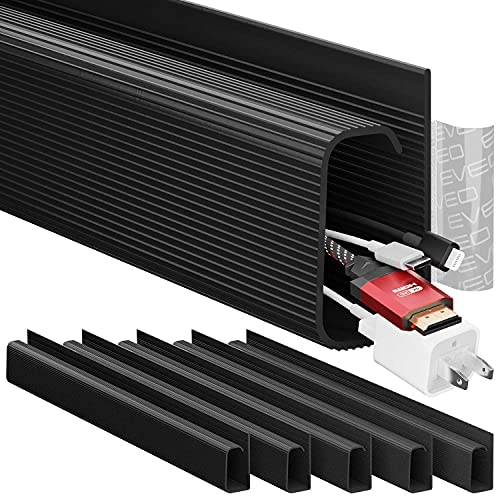
EVEO Cable Management Under Desk Kit (6 Units) - Under Desk Cable Management Cord Hider, Cable Hider Cord Management, Cable Organizer, Cable Raceway | Self-Adhesive 96'' J Channel 6X16 - Black
Transform Your Workspace with EVEO Cable Management: Sleek cable raceway ensures perfect under desk cable management, creating a...
As an affiliate, we earn on qualifying purchases.