Fiber backbones transform how you wire large buildings by providing high-capacity, low-latency networks that support fast internet, smooth video, and reliable connections. They make it easier to integrate wireless systems and power devices through the same cables, reducing clutter and installation time. Plus, fiber systems are scalable and future-proof, helping you grow without major rewiring. If you keep exploring, you’ll discover how these capabilities can revolutionize your building’s infrastructure even further.
Key Takeaways
- Enable high-capacity, long-distance data transmission with minimal latency, improving overall network performance.
- Simplify wiring by supporting Power Over Fiber, reducing the need for separate power cables and installation time.
- Facilitate seamless wireless integration with increased access points and minimized dead zones.
- Allow easy upgrades and scalability to accommodate future technological advancements.
- Enhance security and reliability by reducing points of failure and electromagnetic interference.
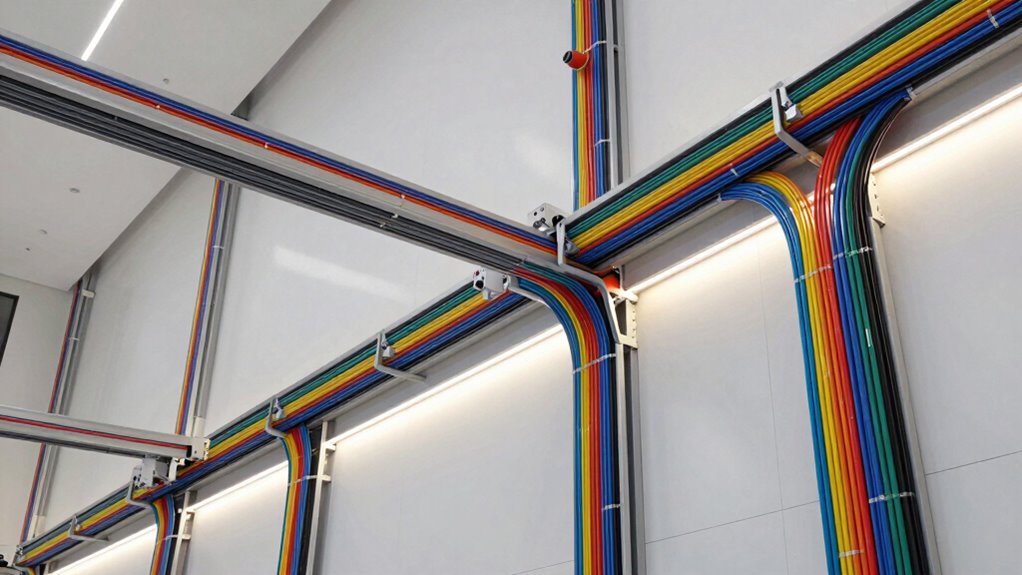
Have you considered how fiber backbones can transform your building’s wiring infrastructure? In large buildings, the traditional cabling systems often struggle to keep up with the demands for speed, reliability, and flexibility. Fiber backbones provide a modern solution that can markedly enhance your network’s performance. They support high-capacity data transmission over long distances with minimal latency, making them ideal for complex environments such as office towers, hospitals, or educational campuses. By replacing older copper wiring with fiber, you open the potential for faster internet speeds, smoother video streaming, and more efficient communication systems.
One of the key advantages of fiber backbones is their ability to integrate seamlessly with wireless technologies. Wireless integration becomes more effective when the wired backbone can handle high data loads and distribute signals efficiently across the building. With fiber, you can support a greater number of wireless access points, guaranteeing robust Wi-Fi coverage in every corner. This setup minimizes dead zones and improves overall connectivity, which is essential in environments where multiple devices and applications rely on reliable internet access. Additionally, fiber optic technology enhances the overall security of your network by reducing potential entry points for cyber threats. Furthermore, the durability and immunity to electromagnetic interference of fiber make it especially suitable for industrial or high-interference settings.
Fiber backbones enable seamless wireless integration, ensuring robust coverage and reliable connectivity throughout large buildings.
Another game-changing feature is power over fiber, a technology that delivers electrical power through the same fiber optic cables used for data transmission. Power over fiber simplifies wiring by reducing the need for separate power sources and cables for devices like security cameras, access control systems, or IoT sensors. Instead of running multiple cables, you can deploy these devices with a single fiber link that supplies both data and power. This not only saves space but also reduces installation time and costs. Power over fiber also boosts security and reliability, as it minimizes potential points of failure and electromagnetic interference, which are common issues with traditional power and data wiring. Additionally, power over fiber can support emergency backup power systems, ensuring critical functions remain operational during outages. Incorporating fiber into your infrastructure can also improve network resilience, providing a more dependable communication backbone during adverse conditions.
Fiber backbones also support scalability and future-proofing your building’s infrastructure. As technology advances and data demands grow, a fiber-based system can be upgraded or expanded without major rewiring. This flexibility ensures your building remains competitive and adaptable to new innovations. With high bandwidth capacity, low latency, and the ability to support wireless integration and power over fiber, a fiber backbone fundamentally changes how large buildings are wired. It offers a reliable, efficient, and versatile backbone that meets today’s connectivity needs while preparing you for tomorrow’s technological advancements. Additionally, color accuracy in the transmission process helps maintain the integrity of data signals, ensuring consistent performance across your network.
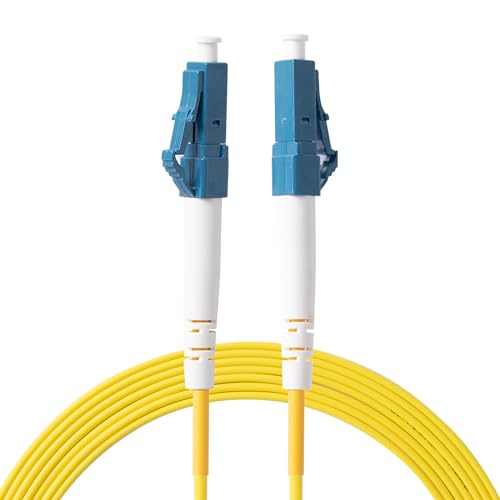
KeepFly Fiber Fiber Optic Cable 0.2m/7inch, Length Option:0.2m-200m, OS2 LC to LC Fiber Patch Cable, 10G SMF 9/125μm Single Mode SIMPLEX Fiber Jumper Cable Cord LSZH(Yellow) – 0.2m(7inch)
High-quality OS2 LC to LC Single Mode Simplex Fiber Patch Cable:Made with the finest materials and craftsmanship,our fiber…
As an affiliate, we earn on qualifying purchases.
As an affiliate, we earn on qualifying purchases.
Frequently Asked Questions
How Do Fiber Backbones Impact Future Building Technology Upgrades?
Fiber backbones substantially impact future building technology upgrades by enabling seamless wireless integration and supporting smart building features. You’ll find upgrades faster and more efficient because fiber provides high-speed, reliable data transfer essential for IoT devices and automation systems. This infrastructure allows you to easily add new technologies, improve energy efficiency, and enhance occupant comfort, making your building smarter, more adaptable, and ready for future innovations.
Are Fiber Backbones Cost-Effective for Small or Medium-Sized Buildings?
Fiber backbones can be cost-effective for small or medium-sized buildings, especially when you consider the cost comparison over time. Although initial setup might be higher, the scalability options allow you to upgrade easily without significant new investments. This means you save money in the long run, as fiber networks support higher data demands and future tech needs, making them a smart, cost-efficient choice for buildings of all sizes.
What Maintenance Is Required for Fiber Backbone Systems?
Think of your fiber backbone as the heart of your building’s network—requiring steady care. You’ll need to regularly inspect for fiber durability issues and verify cable flexibility to prevent breakage. Clean connectors carefully, monitor for signal loss, and replace any damaged cables promptly. Maintaining your fiber system guarantees it stays resilient and efficient, supporting your building’s connectivity needs without interruption. Proper upkeep keeps your network’s pulse strong.
How Do Fiber Backbones Integrate With Existing Building Infrastructure?
You integrate fiber backbones with existing building infrastructure by carefully planning the installation process to minimize disruption. You typically use conduit or cable trays as building material to run the fiber cables through walls, ceilings, or floors. During installation, you guarantee compatibility with current wiring systems and reinforce structural elements if needed. This seamless integration improves network performance while maintaining the building’s safety and functionality.
What Are the Security Advantages of Fiber Backbone Wiring?
Think of fiber backbone wiring as a fortress wall, shielding your data from intruders. Its security advantages shine through advanced encryption protocols, making intercepted signals unreadable. Plus, integrated intrusion detection acts like vigilant guards, alerting you to any suspicious activity. This combination creates a nearly impenetrable barrier, ensuring your sensitive information stays safe. With fiber, you’re building not just faster networks, but a secure digital stronghold.

HBFQMDJLX 1 Male to 2 Male Optical Audio Cable, Toslink SPDIF Digital Optical Splitter Cord for Soundbar TV PS4 Amplifier, High Fidelity, EMI-Proof, PVC & POF Fiber Core – 6.6FT
🔀 1 Male to 2 Male Optical Splitter – Share One Audio Source: This Toslink to dual Toslink…
As an affiliate, we earn on qualifying purchases.
As an affiliate, we earn on qualifying purchases.
Conclusion
You now see how fiber backbones revolutionize wiring in large buildings, offering faster, more reliable connections. With up to 10 gigabits per second speeds, they handle massive data loads effortlessly, reducing latency and downtime. This means your building’s network stays robust and future-proof, even as demands grow. Embracing fiber backbone technology isn’t just smart—it’s essential for keeping your infrastructure ahead of the curve and ready for tomorrow’s tech needs.

Estink SFP Ethernet Fiber Optic Switch, 1000m Ethernet Fiber Optic Transceiver, 4 Optical Ports 2 Electrical Ports, 120km, with LED Indicator, Supports 9k Bytes Jumbo Frames
【Efficient 】: Ethernet fiber transceiver supports a variety of protocol data lossless and efficient , full and half…
As an affiliate, we earn on qualifying purchases.
As an affiliate, we earn on qualifying purchases.

TP-Link EAP610 Omada Business WiFi 6 AX1800 Wireless Gigabit Access Point – Support Mesh, OFDMA, Seamless Roaming & MU-MIMO, SDN Integrated, Cloud Access & Omada App, PoE+ Powered, White, Dual-Band
Designed with the latest wireless Wi-Fi 6 technology featuring 1024-QAM and Long OFDM Symbol
As an affiliate, we earn on qualifying purchases.
As an affiliate, we earn on qualifying purchases.