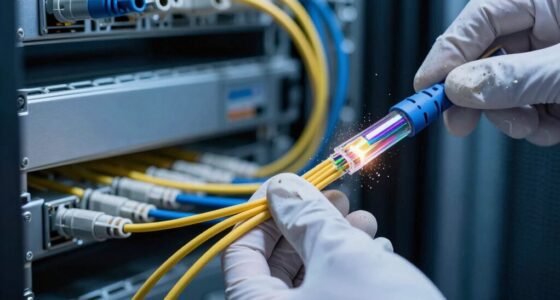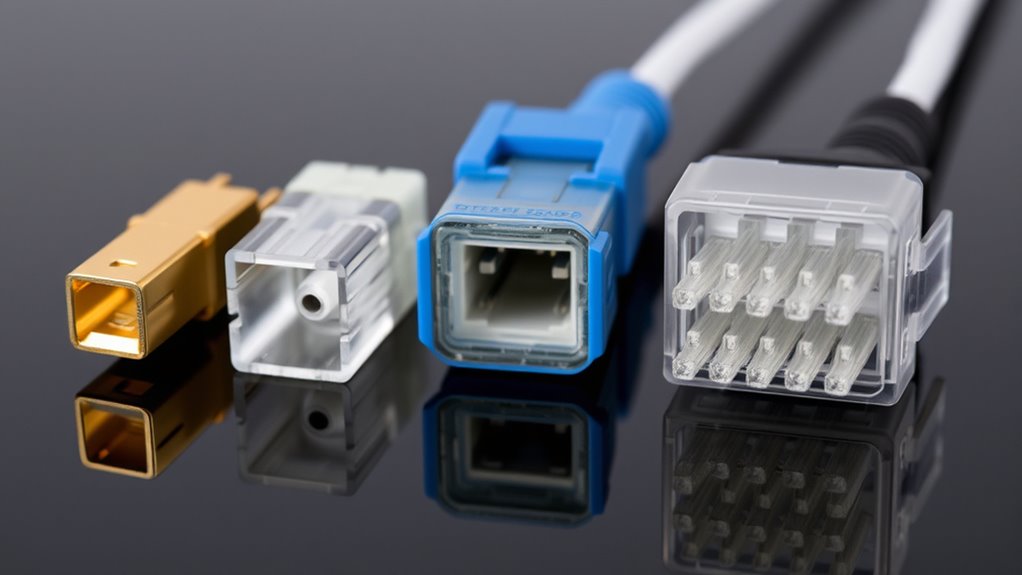

Few things impact your network’s performance more than choosing the right fiber optic connectors—yet many overlook their importance entirely. Understanding the differences between LC, SC, and MPO connectors can mean the difference between seamless data transmission and costly failures. Each type has unique features suited for specific environments and applications, but how do you know which one is right for your setup? The answer can profoundly influence your network’s efficiency and reliability.

Get business pricing on networking and server gear
- Business-only prices and quantity discounts
- Tax-exempt purchasing
- Multiple users, one account, clear invoices
Key Takeaways
- LC connectors are small, high-density connectors ideal for tight spaces and high-density fiber applications.
- SC connectors are larger, push-in connectors known for durability and reliable connections.
- MPO connectors support multiple fibers simultaneously, suitable for high-bandwidth, high-density setups.
- Proper compatibility ensures optimal fiber alignment, minimizing signal loss and damage in each connector type.
- Durable materials like ceramic ferrules enhance longevity and performance in various installation environments.

Have you ever wondered how fiber optic networks achieve such fast and reliable data transmission? The secret lies in the quality and design of the connectors used to link fiber strands. These connectors are essential in maintaining signal integrity and ensuring seamless communication. When selecting fiber optic connectors, understanding fiber compatibility is critical. Not all connectors fit every type of fiber, whether it’s single-mode or multi-mode. Compatibility ensures that the connector properly aligns the fibers, minimizes signal loss, and prevents damage. For example, LC connectors are small and suited for high-density applications, while SC connectors are larger but offer robust connections. Knowing which connector type suits your fiber type and application helps you achieve maximum performance.
Choosing the right fiber optic connector ensures optimal alignment, minimal signal loss, and reliable high-speed data transfer.
Another important factor to consider is connector durability. Fiber optic connectors are often exposed to harsh environments, frequent connections and disconnections, and physical stresses. A durable connector withstands these conditions without degrading, ensuring consistent performance over time. High-quality materials and precise manufacturing contribute to connector durability. For instance, connectors with ceramic ferrules are more resistant to wear and provide better alignment than those with plastic ferrules. When durability is a priority, especially in industrial or outdoor settings, choosing connectors designed for rugged use minimizes maintenance and replacement costs. Additionally, selecting connectors with ruggedized construction can further enhance their longevity in demanding conditions.
The process of connecting fiber optic cables involves careful handling and proper insertion techniques. If connectors aren’t compatible with your fiber type or aren’t durable enough to withstand repeated use, you risk damaging the fibers or introducing signal loss. This can lead to slower data speeds or unreliable connections. So, verifying fiber compatibility before purchase and selecting connectors with proven durability are key steps. Properly maintained, durable connectors preserve the integrity of your network and ensure high-speed data transfer without interruption.
Additionally, connectors like MPO (Multi-Fiber Push-On) are designed to handle multiple fibers simultaneously, making them ideal for high-density setups. They require careful attention to fiber compatibility to ensure all fibers align correctly, and their durability is crucial due to the complexity of their design. Proper installation and maintenance of MPO connectors prevent misalignment and damage, maintaining network performance. Whether you’re deploying a data center or upgrading your existing infrastructure, understanding these aspects helps you choose the right connectors that balance fiber compatibility with connector durability.
As an affiliate, we earn on qualifying purchases.
Frequently Asked Questions
How Do I Choose the Right Fiber Optic Connector for My Application?
To select the appropriate fiber optic connector, consider your application’s needs, focusing on connector durability and installation techniques. If you need a rugged option for outdoor use, go for a connector with high durability. For ease of installation, choose one that aligns with your equipment and space constraints. Evaluating these factors helps guarantee reliable performance and simplifies your installation, making your fiber optic setup efficient and long-lasting.
What Are the Maintenance Requirements for Different Fiber Connectors?
Did you know that improper connector maintenance causes 80% of fiber optic issues? You should regularly clean connectors with proper tools to prevent dust and dirt buildup, which can degrade performance. For durability, check for signs of wear or damage and replace connectors if necessary. Proper connector cleaning and routine inspection ensure peak performance and longevity, helping you avoid costly outages and maintain reliable network connections.
Can Connectors Be Swapped Without Affecting Network Performance?
Yes, connectors can be swapped without affecting network performance if you follow proper installation procedures and consider connector durability. Make certain you handle connectors carefully to prevent damage and maintain cleanliness, which is vital for peak performance. Properly aligning and securing the new connector minimizes signal loss. Regular maintenance and using high-quality connectors help preserve network integrity, making swapping seamless and safe without compromising your network’s performance.
Are There Compatibility Issues Between Different Connector Types?
In the days of dial-up, compatibility issues still exist between connector types. You might encounter problems if you mix LC, SC, and MPO connectors because of differences in connector color coding and polishing techniques. These variations can lead to poor connections or signal loss. Always verify compatibility and use adapters if needed. Properly matching connector types ensures your network performs smoothly without interruptions or performance drops.
What Are the Environmental Considerations for Fiber Optic Connectors?
You need to consider environmental durability and contamination prevention for fiber optic connectors. Make sure connectors are protected from moisture, dust, and extreme temperatures, which can degrade performance. Use protective caps and proper enclosures to prevent dirt and contaminants from entering the connectors. Regularly inspect and clean your connectors to maintain optimal signal quality, especially in harsh environments. Proper environmental management extends the lifespan and reliability of your fiber optic connections.
As an affiliate, we earn on qualifying purchases.
Conclusion
By now, you see how choosing the right fiber optic connector can make all the difference in your network’s performance. Whether you opt for the compact LC, the reliable SC, or the high-capacity MPO, proper installation and maintenance keep things running smoothly. Remember, a stitch in time saves nine—taking care of your connectors now guarantees seamless, high-speed connections tomorrow. Don’t let small details trip you up; stay vigilant and keep your network strong.
As an affiliate, we earn on qualifying purchases.
As an affiliate, we earn on qualifying purchases.
Halloween Picks
halloween
As an affiliate, we earn on qualifying purchases.