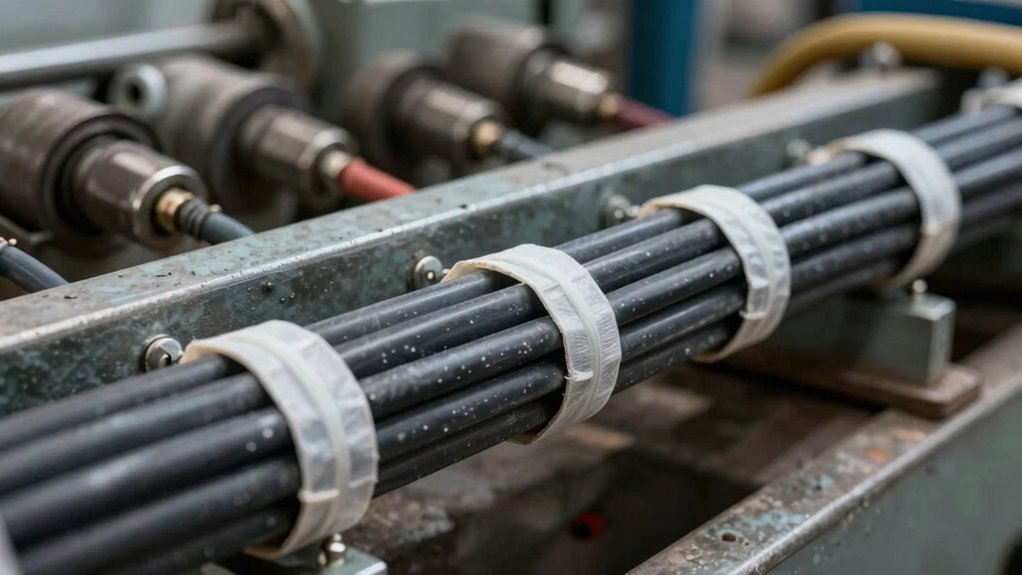

To handle cables near machinery and vibration sources, organize and secure them using cable trays, clips, or conduits to prevent movement and damage. Incorporate vibration isolators like rubber mounts and flexible conduits to absorb vibrations. Regularly inspect and replace worn cables, and use weatherproof or rugged options for harsh environments. Proper grounding and shielding are essential for signal integrity. Want to know more about ensuring long-term durability and safety? Keep exploring for detailed strategies.

Get business pricing on networking and server gear
- Business-only prices and quantity discounts
- Tax-exempt purchasing
- Multiple users, one account, clear invoices
Key Takeaways
- Use cable trays, conduits, or clips to securely route and organize cables away from moving parts and vibration sources.
- Incorporate vibration isolators like mounts or pads to absorb vibrations and prevent cable transfer.
- Regularly inspect cables for wear, cracking, or looseness, especially after machinery operation.
- Employ weatherproof, industrial-grade, or vibration-resistant cables suited for harsh environments.
- Ensure proper grounding and shielding to reduce electrical noise and maintain signal integrity near vibration sources.
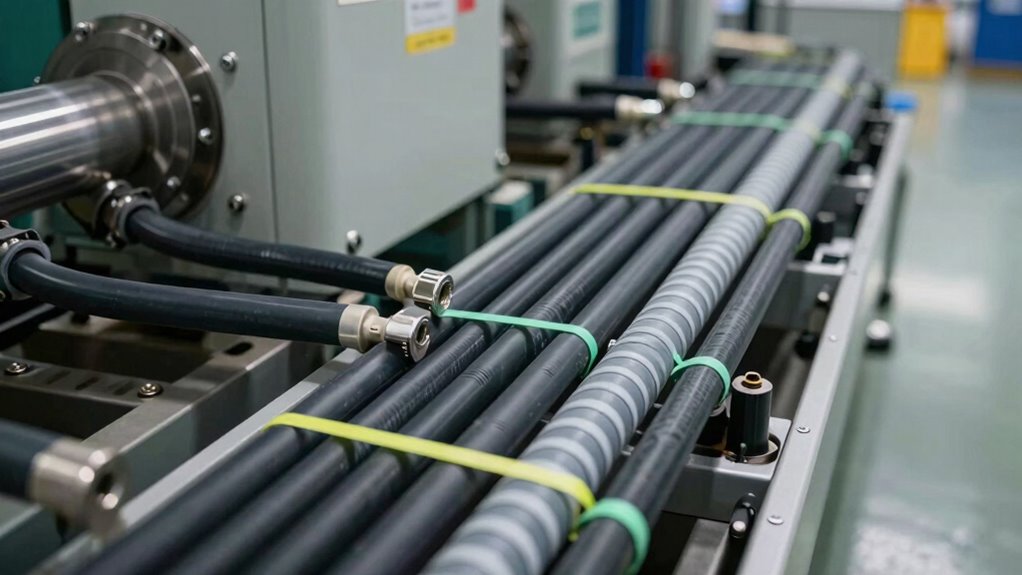
When cabling runs near machinery and vibration sources, proper handling becomes crucial to prevent damage, guarantee safety, and maintain reliable operation. Effective cable management is your first line of defense. You want to ensure cables are organized, secured, and routed away from moving parts or areas with high vibration. Use cable trays, conduits, or clips to keep cables neatly aligned, avoiding unnecessary bending or twisting that can weaken insulation or connectors over time. Proper cable management not only reduces the risk of accidental disconnection but also makes maintenance easier, saving you time and effort.
Vibration isolation plays a critical role when dealing with machinery that produces consistent or sporadic vibrations. Vibrations can cause cables to loosen, wear prematurely, or even break, leading to costly downtime or safety hazards. To counteract this, incorporate vibration isolators—such as rubber grommets, mounts, or pads—between the vibration source and the cable routing path. These materials absorb and dampen vibrations, preventing them from transferring to the cables. When installing, make sure that cables are not tightly stretched or pressed directly against vibrating surfaces. Instead, allow some slack and use flexible cable conduits or spiral wraps to accommodate movement without strain. Additionally, selecting vibration-resistant cables designed for such environments can further enhance durability.
You should also consider the environment when handling cables near machinery. High levels of vibration often come with dust, oils, or other contaminants that can degrade cable insulation or connectors. Use weatherproof or industrial-grade cables designed for challenging environments. Regular inspections are crucial; check for signs of wear, cracking, or loosening, especially after machinery starts or stops. If you notice damage, replace affected sections promptly to avoid failures that could compromise safety or disrupt operations. Incorporating protective measures such as sealants or protective covers can also help extend cable lifespan in harsh conditions. Additionally, employing proper installation techniques can significantly reduce the impact of environmental stressors on cable longevity.
Another key point is grounding and shielding. Proper grounding minimizes electrical noise caused by vibration-induced static or electromagnetic interference. Shielded cables help maintain signal integrity, especially in sensitive control or data lines. Ensure that all shielding is properly grounded at both ends, and avoid unnecessary loops or exposed wires that can pick up interference. Additionally, understanding cable fatigue and how vibrations can weaken cable integrity over time is essential for long-term reliability.
cable management clips for machinery
As an affiliate, we earn on qualifying purchases.
As an affiliate, we earn on qualifying purchases.
Frequently Asked Questions
What Types of Cables Are Best for High-Vibration Environments?
You should choose cables with robust shielding and vibration isolation features for high-vibration environments. Shielded cables, like those with metallic or foil shielding, protect signals from external interference. Vibration-isolated cables incorporate flexible insulation or damping materials to reduce the impact of vibrations. These types of cables guarantee signal integrity and durability, preventing damage and maintaining performance even when exposed to constant or intense vibrations near machinery.
How Often Should Cabling Be Inspected Near Machinery?
You should inspect cabling near machinery at least quarterly, but more often if vibrations are intense or conditions change. Proper cable management involves regularly checking for wear, looseness, or damage, especially in high-vibration environments. Implement a consistent inspection schedule to catch issues early, ensuring safety and reliable operation. Adjust inspection frequency based on machinery usage, environment, and cable age to maintain peak performance and prevent unexpected failures.
Are There Specific Connectors Designed for Vibrating Areas?
Did you know that specialized connectors can improve vibration resilience by up to 80%? For vibrating areas, you should choose connectors specifically designed for durability and resilience against movement. These connectors feature reinforced materials and locking mechanisms that withstand constant vibrations, ensuring reliable connections. By selecting connectors built for vibration resilience, you prevent disconnections and damage, maintaining safety and operational efficiency near machinery.
Can Vibration Dampers Be Used to Protect Cables?
Yes, vibration dampers can be used to protect cables. They absorb vibrations, reducing stress on the cables and preventing damage from constant movement or shock. Incorporate vibration dampers into your cable routing near machinery or vibrating sources to enhance cable protection. Properly installed dampers help extend cable lifespan, maintain signal integrity, and minimize downtime, ensuring safe and reliable operation in environments with significant vibration.
What Are the Safety Considerations for Cabling in These Areas?
Think of cable routing as guiding a river safely through rocks; you must plan carefully to prevent accidents. Always secure cables properly to avoid stress and damage, especially near vibration sources. Use safety signage to alert workers of potential hazards, and guarantee cables are insulated and protected from moisture or debris. Regularly inspect the setup, keeping safety at the forefront, so the flow of work remains smooth and secure.
vibration isolators rubber mounts
As an affiliate, we earn on qualifying purchases.
As an affiliate, we earn on qualifying purchases.
Conclusion
By carefully managing cabling around machinery and vibration sources, you can prevent damage and guarantee safety. Think of your cables as delicate vines weaving through a garden; with gentle guidance and proper support, they thrive without breaking. Regular inspections, flexible routing, and vibration dampers are your tools to keep this garden healthy. With these practices, you’ll create a resilient environment where cables and equipment work in harmony, like a well-conducted orchestra.
As an affiliate, we earn on qualifying purchases.
cable conduits for harsh environments
As an affiliate, we earn on qualifying purchases.
As an affiliate, we earn on qualifying purchases.
Evergreen bestsellers Picks
bestsellers
As an affiliate, we earn on qualifying purchases.