Did you know that many industrial networks rely on complex redundancy strategies to prevent costly downtime? While you might think a single backup system is enough, true resilience requires layered components like dual switches, fiber optic links, and real-time diagnostics. Understanding how these elements work together can substantially improve your network’s fault tolerance—but the reasons behind their integration might surprise you. Exploring this can help you design more reliable and efficient systems.
Key Takeaways
- Redundancy creates multiple communication paths to prevent network failure and ensure continuous data flow.
- Implementing dual switches and fiber optic links enhances fault tolerance in industrial networks.
- Automated failover mechanisms quickly reroute data during component failures, minimizing downtime.
- Combining hardware and software redundancy techniques maintains high availability and data integrity.
- Redundancy improves network resilience, operational efficiency, and safety in industrial environments.

Have you ever wondered how industrial networks stay operational even when parts fail? The answer lies in the concept of fault tolerance and the overall network resilience built into their design. Fault tolerance ensures that a network can continue functioning smoothly even if some components experience issues. Instead of a single point of failure causing a shutdown, redundant pathways and backup systems kick in, maintaining continuous operation. This approach is vital in industrial settings where downtime can lead to costly delays or safety hazards. By designing for fault tolerance, engineers create networks that detect failures quickly and reroute data automatically, minimizing disruption.
Industrial networks use fault tolerance and redundancy to stay operational despite component failures.
Network resilience plays a significant role here. It’s about more than just having backup hardware; it involves creating a robust infrastructure that adapts to changing conditions. Redundancy is the backbone of this resilience. For example, multiple communication paths between machines and control systems mean that if one route fails, data can flow through an alternative. Similarly, deploying redundant power supplies and network switches prevents a single failure from bringing down the entire system. This layered redundancy provides a safety net, ensuring the network remains operational even during unexpected events or component failures.
Implementing fault-tolerance strategies requires thoughtful planning. You need to identify critical points in the network and add redundant connections or devices accordingly. For instance, dual Ethernet switches or multiple fiber optic links can be used to guarantee continuous data flow. These redundant paths are often monitored with real-time diagnostics, enabling quick detection of issues and automatic failover. This proactive approach prevents minor malfunctions from escalating into system-wide failures, keeping your operations running smoothly. Additionally, understanding security zone info helps in protecting these redundant systems from cyber threats, ensuring continued operational integrity.
Furthermore, redundancy isn’t just about hardware. It also involves software strategies such as data replication and load balancing. These techniques ensure that even if one system encounters a problem, the workload shifts seamlessly to backup systems. This continuous operation is essential in environments where data integrity and real-time responses are critical, like manufacturing lines or energy grids. By integrating fault-tolerant design and building network resilience, you create an industrial network that withstands disruptions and maintains high availability.
In essence, the combination of fault tolerance and network resilience forms the foundation of reliable industrial networks. They allow your systems to endure failures, adapt to issues, and keep processes running without interruption. This proactive design approach not only enhances operational efficiency but also safeguards your infrastructure against unpredictable failures, ensuring your industrial environment remains productive and safe.
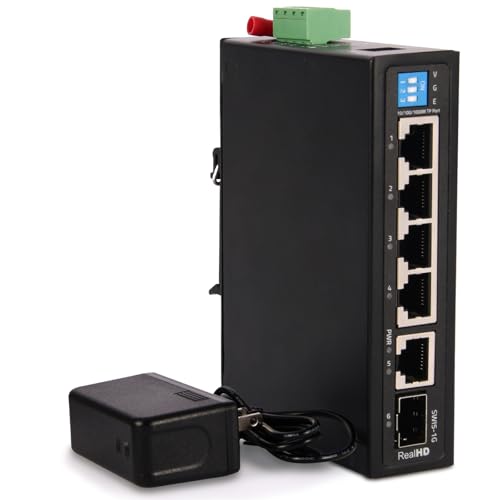
Industrial Ethernet Switch, 6-Port Gigabit Ethernet Switch, 1000Mbps, 4*1 RJ45 Uplink+1 SFP Port, Din Rail & Wall Mountable (-40 to 185 F), 12Gbps Switching Capacity, with UL Power Supply
This network switch include 4 gigabit Ethernet ports+1 RJ45 Uplink+1 SFP Port, switching capacity up to 12Gbps, support…
As an affiliate, we earn on qualifying purchases.
As an affiliate, we earn on qualifying purchases.
Frequently Asked Questions
How Does Redundancy Impact Network Latency in Industrial Settings?
Redundancy can increase network latency in industrial settings because it introduces additional pathways, which may cause network congestion if not managed properly. However, with proper latency optimization techniques, you can minimize these delays. While redundancy may add slight latency, it greatly improves reliability and fault tolerance. By carefully designing your network, you ensure continuous operation without compromising performance, striking a balance between resilience and latency.
What Are the Cost Implications of Implementing Network Redundancy?
Think of network redundancy like building a safety net—initial costs are higher, but you prevent costly downtime. Your cost analysis should weigh equipment, installation, and ongoing maintenance. While the upfront investment increases your budget considerations, it safeguards productivity and reduces unexpected expenses. Ultimately, adopting redundancy pays off by providing reliability, much like a safety net, ensuring your industrial operations stay smooth and resilient without breaking the bank.
How Do Redundancy Protocols Adapt to Network Failures?
When network failures occur, redundancy protocols adapt by switching to alternative paths based on network topology, ensuring continuous operation. You’ll see protocols like RSTP or HSR dynamically select the best route, leveraging protocol diversity to enhance resilience. This automatic failover minimizes downtime, maintains data flow, and keeps your industrial network stable even during disruptions, effectively safeguarding your operations without manual intervention.
What Are Common Challenges in Maintaining Redundant Industrial Networks?
You face challenges like cybersecurity vulnerabilities and hardware compatibility issues when maintaining redundant industrial networks. Cyber threats can exploit weak points, so you need robust security measures. Ensuring all hardware components work seamlessly together is essential, but incompatible devices can cause failures. Regular updates and thorough testing help you keep the network resilient. Balancing security and compatibility requires careful planning to prevent downtime and protect your system’s integrity.
How Is Redundancy Tested and Validated in Industrial Environments?
You test and validate redundancy in industrial environments by conducting network simulations and fault injection tests. Simulations help you assess how the network responds under normal and failure conditions, ensuring redundancy mechanisms activate correctly. Fault injection allows you to intentionally introduce failures, verifying that backup paths and failover processes work seamlessly. Regular testing and validation keep your network resilient, preventing costly downtime and maintaining continuous operations.

X AUTOHAUX Car Fiber Optical Optic Loop Cable Bypass Connector Female Replacement
Material: Durable and reliable to use, great tool for diagnosing or bypassing parts of the media oriented systems…
As an affiliate, we earn on qualifying purchases.
As an affiliate, we earn on qualifying purchases.
Conclusion
Now, imagine your industrial network standing strong against unexpected failures, seamlessly rerouting data through backup paths. With redundancy in place, you’re confidently prepared for any disruption, watching critical systems continue without a hitch. But what if a hidden fault lurks somewhere, ready to test your setup? Stay vigilant—your network’s resilience depends on it. Keep planning, keep safeguarding, and guarantee that when chaos strikes, your operations keep flowing smoothly, no matter what’s ahead.

BUILDING RESILIENT SYSTEM WITH CHAOS ENGINEERING: Implement Chaos Engineering to Test and Enhance System Resilience in Production
As an affiliate, we earn on qualifying purchases.
As an affiliate, we earn on qualifying purchases.
industrial network fault tolerance equipment
As an affiliate, we earn on qualifying purchases.
As an affiliate, we earn on qualifying purchases.