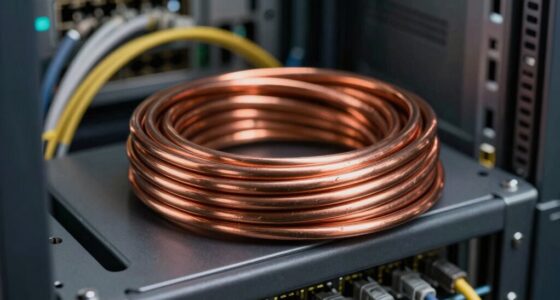

Imagine walking into a busy office where every device is connected seamlessly without a single cable in sight. It’s tempting to think wireless networks will soon replace wired ones entirely, but the reality is more complex. While wireless technology advances, certain needs—like security, reliability, and high-speed performance—still require wired connections. So, can wireless truly stand alone, or will wired networks always have a place? The answer isn’t as simple as it seems.
Open a free Amazon Business account
Business pricing, bulk buying and tax-exempt orders.
As an affiliate, we earn on qualifying purchases.
Key Takeaways
- Wired networks provide stable, high-speed connections essential for critical and high-performance tasks.
- Wireless networks face interference and bandwidth limitations, making them less reliable for demanding applications.
- Fully replacing wired infrastructure is costly and technically challenging, with coexistence being the practical solution.
- Wired connections offer superior security when properly managed, unlike wireless networks which require careful configuration.
- The inherent technical limitations of wireless technology prevent it from fully matching wired networks in speed and reliability.

Have you ever believed that wireless networks are inherently less secure than wired ones? Many think that wireless connections pose greater security risks because they’re more exposed to potential intruders or eavesdroppers. While it’s true that wireless signals can be intercepted if not properly secured, advances in encryption and network security protocols have considerably reduced these risks. Properly configured WPA3 encryption, strong passwords, and regular updates make wireless networks just as safe as wired ones. It’s a misconception that wireless inherently invites vulnerabilities; instead, security depends on how you set it up.
However, security isn’t the only concern when comparing wireless to wired networks. Bandwidth limitations remain a notable challenge. Wireless networks often struggle to deliver consistent, high-speed connections, especially in crowded environments or areas with many devices competing for bandwidth. Unlike wired networks, which can provide dedicated, stable connections through Ethernet cables, wireless signals are susceptible to interference from other electronic devices, physical obstructions, or even weather conditions. This can lead to slower speeds, higher latency, and unreliable performance, making wireless less suitable for bandwidth-intensive tasks like large file transfers or real-time streaming.
Despite these issues, many believe wireless networks will eventually replace wired ones completely. The idea is tempting—no more tangled cables, greater mobility, and easier setup. Yet, the reality is more complex. Wired networks still offer superior security, bandwidth, and reliability, especially for critical business operations, data centers, or environments where high performance is essential. Wired connections provide dedicated bandwidth, eliminating interference and latency issues that plague wireless setups. For large organizations or households with numerous devices, wired infrastructure ensures consistent speeds and minimal disruptions.
Furthermore, the infrastructure costs and practicality of replacing all wired networks with wireless are significant hurdles. Building a fully wireless network that matches the security, speed, and stability of wired connections is technically challenging and often prohibitively expensive. While wireless technology continues to evolve rapidly, it’s unlikely that it will completely displace wired networks in the foreseeable future. Instead, the two will coexist, with wireless serving as a flexible, convenient supplement rather than a wholesale replacement. So, if you’re considering the future of network infrastructure, remember that each approach has its strengths and limitations, and the myth that wireless will fully replace wired networks isn’t entirely accurate.
Additionally, understanding the importance of high refresh rates and low input lag is crucial for users involved in gaming, where performance can significantly impact the experience.
Ethernet cable for high-speed internet
As an affiliate, we earn on qualifying purchases.
As an affiliate, we earn on qualifying purchases.
Frequently Asked Questions
Can Wired Networks Still Outperform Wireless in Speed and Reliability?
Yes, wired networks can still outperform wireless in speed and reliability. Wired connections typically have lower network latency, providing faster data transfer and more consistent performance. They also benefit from more durable hardware, reducing the chance of signal interference and connection drops. If you need high-speed, dependable connectivity—especially for critical tasks—wired networks remain a superior choice. You’ll experience fewer disruptions and better overall performance with a wired setup.
How Do Security Concerns Differ Between Wired and Wireless Networks?
You should know that security concerns differ between wired and wireless networks. With wired networks, physical access is vital—someone needs to connect directly to your cables to pose a threat. Wireless networks rely heavily on encryption protocols to protect data transmitted over the air, but they’re more vulnerable to eavesdropping and hacking if these protocols aren’t properly implemented. Always guarantee strong encryption and control physical access to maintain security.
Are Wired Networks More Cost-Effective Long-Term Than Wireless?
Think of wired networks as planting a sturdy, long-lasting tree. They often prove more cost-effective long-term because of lower ongoing infrastructure costs and fewer repairs. Your cost analysis shows initial setup might be higher, but maintenance is simpler and cheaper over time. Wireless networks are like quick-growing vines—less expensive upfront but can incur higher costs in the long run due to upgrades and security concerns.
What Industries Primarily Rely on Wired Versus Wireless Networks?
You’ll find industries like manufacturing and healthcare infrastructure rely heavily on wired networks for their stability and security. Industrial automation benefits from wired connections to ensure consistent data transfer and minimize downtime. Healthcare facilities use wired networks to protect sensitive patient data and support reliable communication between devices. Wireless networks complement these setups, but wired networks remain essential where high security, low latency, and uninterrupted service are vital.
Will Future Technological Advancements Eliminate the Need for Wired Networks?
Future technological advancements won’t eliminate the need for wired networks. You’ll still rely on fiber optics and network cabling for high-speed, reliable connections, especially in data centers and large organizations. Wireless tech will continue to evolve, but fiber optics and cabling provide the backbone for critical infrastructure. So, even as wireless becomes more advanced, wired networks will remain essential for performance, security, and stability.
As an affiliate, we earn on qualifying purchases.
Conclusion
Remember, claiming wireless will fully replace wired networks is like expecting the wind to carry every ship—idealistic but unrealistic. While wireless technology advances, wired networks remain the steadfast anchor for security, speed, and reliability. Both have their place, working together like a well-orchestrated symphony rather than rivals in a contest. Embrace the balance, knowing that in the world of connectivity, harmony between wired and wireless truly keeps everything running smoothly.
network switch for wired connections
As an affiliate, we earn on qualifying purchases.
As an affiliate, we earn on qualifying purchases.
high-performance wired network adapter
As an affiliate, we earn on qualifying purchases.
As an affiliate, we earn on qualifying purchases.
Flea & tick season Picks
flea and tick prevention
As an affiliate, we earn on qualifying purchases.