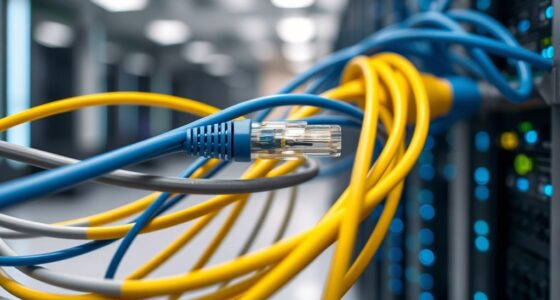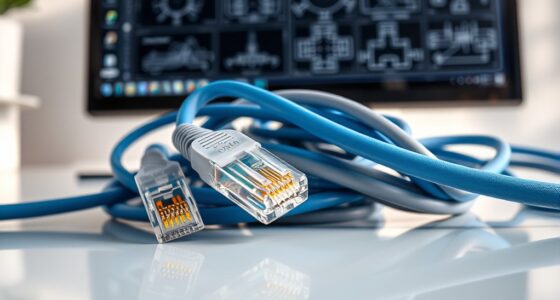

You should consider shielded cable if your environment has high electromagnetic or radio frequency interference, which can cause data corruption or equipment malfunction. It’s also worth it when you handle sensitive information or require reliable signal quality. Keep in mind, installation may be more complex and costly, especially if grounding and routing are challenging. We’ll explore more factors to help you decide if shielded cable is truly worth the investment.

Get business pricing on networking and server gear
- Business-only prices and quantity discounts
- Tax-exempt purchasing
- Multiple users, one account, clear invoices
Key Takeaways
- Assess the level of electromagnetic interference in your environment and if shielding will significantly improve signal integrity.
- Consider the complexity of the installation and whether extra shielding will complicate routing or increase labor costs.
- Evaluate if the system handles sensitive data or critical operations that require enhanced protection against noise.
- Check if proper grounding practices are feasible to maximize the shielding’s effectiveness.
- Compare the long-term benefits of improved reliability and reduced maintenance against the initial higher cost.

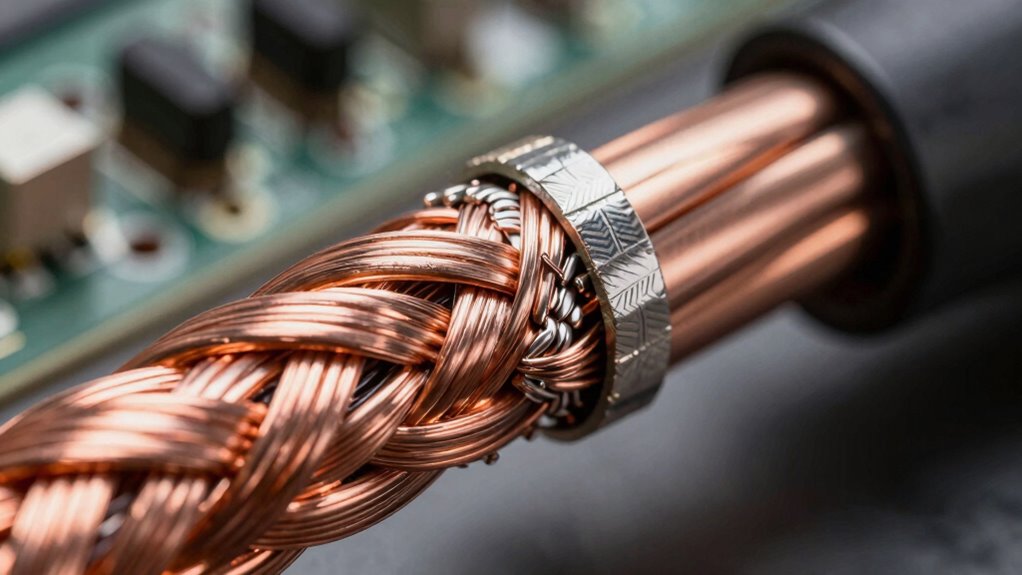
Have you ever wondered whether the extra cost of shielded cable is justified for your project? When weighing the benefits, it’s essential to consider how shielded cable can protect your system from electromagnetic interference (EMI) and radio frequency interference (RFI), which can cause data corruption, signal degradation, or equipment malfunction. Shielded cables are designed with an additional conductor or foil layer that acts as a barrier against external interference, making them ideal for environments with high EMI, such as industrial settings, medical facilities, or communication hubs. However, this added protection comes with higher costs and more complex installation requirements.
One of the key factors that influence your decision is understanding the grounding requirements for shielded cables. Proper grounding is critical to ensure the shield functions effectively, diverting unwanted interference safely to ground without creating noise or potential safety hazards. If your project involves systems that require precise grounding methods, you’ll need to verify whether the shielded cable you’re considering meets these standards. Improper grounding can negate the benefits of shielding, leading to persistent interference issues and increased troubleshooting time. If your application demands strict grounding protocols, investing in shielded cable might be justified, but only if you have the means to implement correct grounding techniques. Incorporating proper grounding procedures can significantly enhance the effectiveness of shielding in reducing interference.
Installation challenges also play a significant role in your decision. Shielded cables tend to be stiffer and less flexible than unshielded options, making routing through tight spaces or complex layouts more difficult. The shielding layer can add bulk, complicate connections, and require special connectors designed for shielded cables. These factors can increase installation time and costs, especially if you need to retrofit existing systems or work in environments with limited access. Additionally, ensuring the shield is properly grounded at both ends often requires careful planning and additional labor, which adds to the overall expense. Proper grounding procedures are essential to maximize the benefits of shielding and prevent interference from entering the system. In environments prone to electromagnetic interference, using shielded cable can significantly improve performance and reliability. Furthermore, considering the material and construction of the shield can impact durability and effectiveness over time, especially in harsh environments.
Ultimately, deciding whether shielded cable is worth the extra cost hinges on evaluating your environment’s susceptibility to interference, your grounding requirements, and the practical challenges of installation. If your system operates in a high-EMI environment or handles sensitive data, the benefits of shielding often outweigh the costs. Conversely, if interference isn’t a concern and your installation is straightforward, unshielded cable may suffice. By carefully analyzing these factors, you can make a more informed choice that balances performance, safety, and budget considerations.
As an affiliate, we earn on qualifying purchases.
Frequently Asked Questions
How Does Shielded Cable Impact Installation Complexity?
Shielded cable can increase installation challenges because it’s thicker and less flexible, making routing more difficult. You’ll need to handle the shielding carefully to prevent damage and guarantee proper grounding, which can add time and complexity. However, it effectively reduces electromagnetic interference, so you might find it worthwhile in environments with high interference. While installation becomes more involved, the improved performance often justifies the extra effort and cost.
Are There Specific Industries That Benefit Most From Shielded Cables?
Think of shielded cables as bodyguards for sensitive info. Industries like manufacturing and medical equipment rely heavily on them. For instance, in hospitals, shielded cables protect crucial signals from electrical interference, ensuring accurate readings. In industrial applications, they prevent noise from disrupting automation systems. If your work involves high interference or critical data, shielded cables are essential, offering reliability where it matters most.
Can Shielded Cables Be Reused After Removal?
Yes, you can reuse shielded cables after removal, but it’s often challenging due to reuse challenges like damage or wear during disconnection. Cable recycling becomes important for disposing of old or unusable cables properly, especially since shielded cables contain valuable materials. Carefully inspecting cables before reuse helps guarantee performance, but in many cases, recycling is the best option. Proper handling extends their lifespan and supports environmentally responsible disposal.
What Are the Environmental Factors Affecting Shielded Cable Performance?
Environmental factors profoundly influence shielded cable performance. You need to take into account electromagnetic interference (EMI), which can disrupt signals, especially in industrial or high-electromagnetic environments. Additionally, environmental durability matters; exposure to moisture, chemicals, temperature fluctuations, or UV radiation can degrade insulation and shielding over time. By choosing cables with proper protective ratings and materials suited for your environment, you guarantee reliable performance and longevity.
How Does Shielded Cable Compare to Other Noise Reduction Methods?
Shielded cable effectively reduces electromagnetic interference compared to unshielded options and other noise reduction methods like twisted pairs or ferrite beads. It offers superior protection in high-interference environments. While shielded cable may cost more initially, a thorough cost analysis shows it can save money long-term by preventing signal loss and equipment damage. For critical applications, its noise suppression capabilities make it a worthwhile investment.
As an affiliate, we earn on qualifying purchases.
Conclusion
In the end, weighing the cost against the environment and application is key. Remember, “you get what you pay for,” and investing in shielded cable can save you headaches and money down the line if your setup demands it. If you’re in a noisy or sensitive environment, the extra expense is worth it for peace of mind and reliable performance. Sometimes, spending a little more now prevents bigger problems later.
As an affiliate, we earn on qualifying purchases.
As an affiliate, we earn on qualifying purchases.
Fall Picks
fall essentials
As an affiliate, we earn on qualifying purchases.