

When working on electrical cabling, following proper lockout/tagout procedures is essential to guarantee safety. You need to identify energy sources, isolate them completely, and verify that no voltage remains before starting work. Using lockout devices and tags helps prevent accidental re-energization, protecting you and others. However, the process involves more than just turning off switches—it requires strict control and attention to detail. Understanding these steps can considerably reduce risks, but there’s more to take into account before you begin.
Key Takeaways
- Turn off power and disconnect all cords before starting cabling work.
- Isolate circuit breakers to eliminate electrical energy sources safely.
- Apply lockout devices and tags to physically prevent re-energization and warn personnel.
- Verify complete de-energization with voltage testers before proceeding.
- Follow proper procedures to remove lockout/tagout devices and re-energize equipment after work.
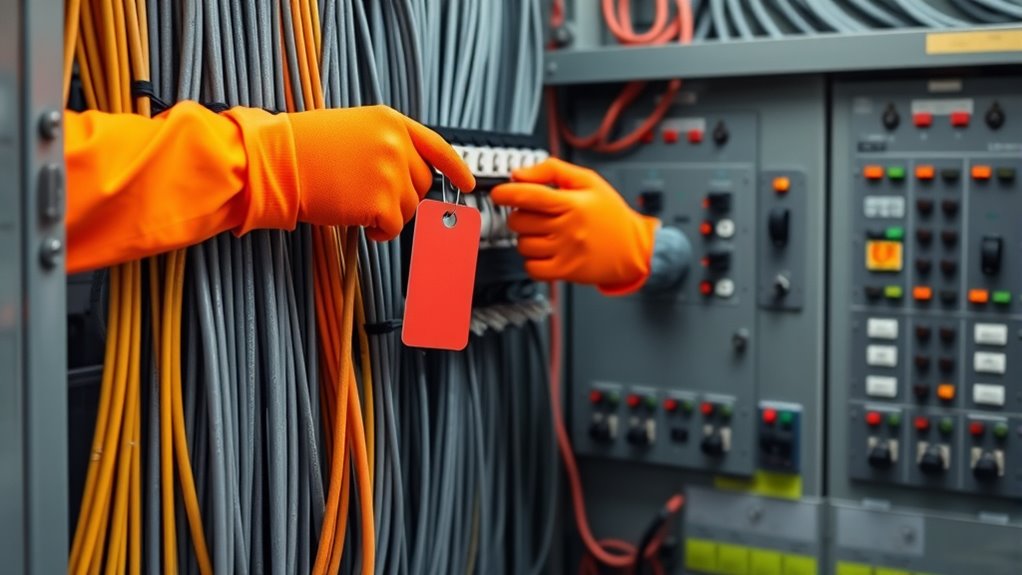
When performing cabling work, implementing lockout/tagout procedures is essential to guarantee your safety and prevent equipment accidents. These procedures ensure that electrical and mechanical systems are completely de-energized before you begin any work. Proper equipment de energization means disconnecting power sources and verifying that no residual energy remains. This step is critical because even a small amount of stored energy can cause severe injuries. To achieve this, you need to follow a systematic process that includes turning off power switches, disconnecting cords, and isolating circuit breakers. Once the equipment is de-energized, you must use safety equipment such as lockout devices and tags to secure the energy sources. Lockout devices physically prevent the re-energization of equipment, while tags serve as visual warnings indicating that maintenance work is in progress and that the equipment should not be operated. By doing this, you reduce the risk of accidental startup, which could lead to electrocution, burns, or other injuries.
Before starting your cabling work, double-check that the equipment is fully de-energized. Use proper testing devices to verify that no voltage is present. This step is crucial because assumptions can lead to dangerous mistakes. Safety equipment like voltage testers or multimeters help confirm that the equipment remains de-energized throughout the process. It’s also essential to ensure that only authorized personnel have access to the lockout devices and tags. This control prevents anyone from unintentionally re-energizing the system while work is underway. When applying lockout/tagout, make sure the locks are durable, weather-resistant if necessary, and uniquely identifiable to you. Tags should clearly state the reason for the lockout, the date, and your contact information, so others understand the work being performed.
Additionally, understanding automation in business can help organizations develop safer and more efficient procedures for maintenance activities. Throughout the process, stay vigilant and adhere strictly to your company’s lockout/tagout policies. Never bypass safety measures or attempt to re-energize equipment without following the proper procedures. Remember, the goal of these steps is to create a safe environment for you and your colleagues. When your cabling work is complete, follow the proper sequence to remove lockout devices and tags, and carefully re-energize the equipment. Confirm that all tools and materials are cleared from the work area before restoring power. Proper implementation of equipment de-energization and use of safety equipment not only protects you but also ensures the safety of everyone around you, reducing the risk of accidents and promoting a safe working environment.

Lockout Tagout Station Safety Kit Electrical Loto Devices – OSHA Compliant Industrial Organizer | 14 Safety Locks, 2 Plug Locks, 5 Hasps, 40 Tags and Ties, 5 Circuit Breaker Lockouts – OSHA Compliance
Rugged All-METAL Construction – Lock Out Tag Out Devices Built for Harsh Industrial Environments. This LOTO station Unlike…
As an affiliate, we earn on qualifying purchases.
As an affiliate, we earn on qualifying purchases.
Frequently Asked Questions
How Often Should Lockout/Tagout Procedures Be Reviewed?
You should review lockout/tagout procedures at least annually to guarantee they stay effective. Regular lockout review helps identify any changes needed, and maintaining proper tagout frequency keeps everyone safe. It’s important to update procedures whenever there are equipment modifications or new hazards. By consistently reviewing your lockout/tagout practices, you ensure compliance and prevent accidents, keeping your team protected during cabling work.
What Are the Common Mistakes During Lockout/Tagout Implementation?
You often make mistakes during lockout/tagout implementation when you become complacent about safety protocols, leading to rushed procedures. Improper tagging is a common error, causing confusion or accidental energization. To avoid these issues, stay vigilant, double-check all tags and locks, and follow procedures carefully. Remember, complacency can compromise safety, so always prioritize thoroughness and attention to detail during lockout/tagout tasks.
Who Is Responsible for Verifying Lockout/Tagout Effectiveness?
Think of verification like checking a fire alarm after installation; you’re responsible for making sure it works properly. As the person performing cabling work, you’re accountable for confirming lockout/tagout effectiveness. Use techniques like testing equipment or attempting to operate devices to confirm they’re de-energized. Your diligence ensures safety, prevents accidents, and upholds accountability—so always double-check and document your verification steps before resuming work.
Are There Specific Tools Required for Lockout/Tagout in Cabling?
You should use specialized tools and safety equipment designed for lockout/tagout in cabling work. These tools help guarantee the equipment stays de-energized and safe to work on. You’ll need lockout devices, such as padlocks or circuit breaker lockouts, and safety equipment like gloves and eye protection. Always follow manufacturer instructions and safety protocols to prevent accidental energization and protect yourself during the lockout/tagout process.
How to Handle Emergency Situations During Lockout/Tagout?
In emergencies during lockout/tagout, you should first activate emergency communication to alert others immediately. Then, follow rescue procedures outlined in your safety plan, which may include removing locks and tags safely or providing first aid if needed. Always guarantee you stay calm, clearly communicate with team members, and know the location of emergency equipment. Proper training ensures you can respond effectively and protect yourself and others.

Master Lock Red Electrical Box Circuit Breaker Lockout, Tagout Breaker Box Lock for Standard Single and Double Toggles, 493B, 24 Amps
Lockout tagout circuit breaker lockout is best used on standard height and tie-bar toggles typically found on 120…
As an affiliate, we earn on qualifying purchases.
As an affiliate, we earn on qualifying purchases.
Conclusion
By mastering lockout/tagout procedures, you’re the guardian standing watch over a safe work zone, like a lighthouse guiding ships away from hidden dangers. When you turn off, isolate, and verify, you’re building a fortress of safety around energized equipment. Remember, only authorized personnel should hold the keys, and after work, re-energize with care. With these steps, you create a secure environment where accidents are kept at bay, and everyone returns home safely.

AstroAI Digital Multimeter Tester 2000 Counts with DC AC Voltmeter and Ohm Volt Amp Meter; Measures Voltage, Current, Resistance, Continuity and Diode, Blue
Additional Tips – The following incorrect operations may cause the multimeter not to show results: Firstly, the plugs…
As an affiliate, we earn on qualifying purchases.
As an affiliate, we earn on qualifying purchases.

Lockout Tagout Kit Electrical Loto – Group Lockout Hasps, Lockout Tags, Safety Padlocks with Number, Nylon Ties with Pocket Bag(Red Kit)
LOCKOUT TAGOUT KIT: Lockout pouch is made of heavy duty nylon with metal belt loops for convenient tagging…
As an affiliate, we earn on qualifying purchases.
As an affiliate, we earn on qualifying purchases.