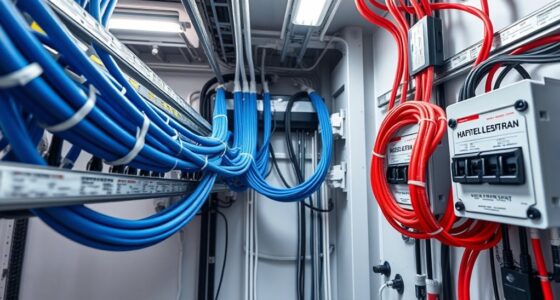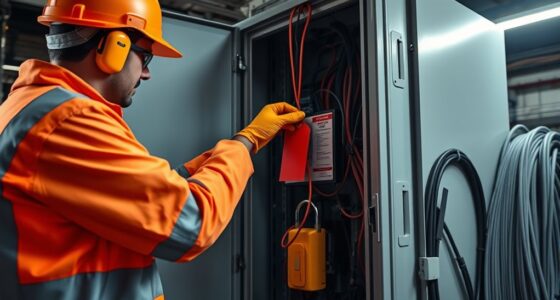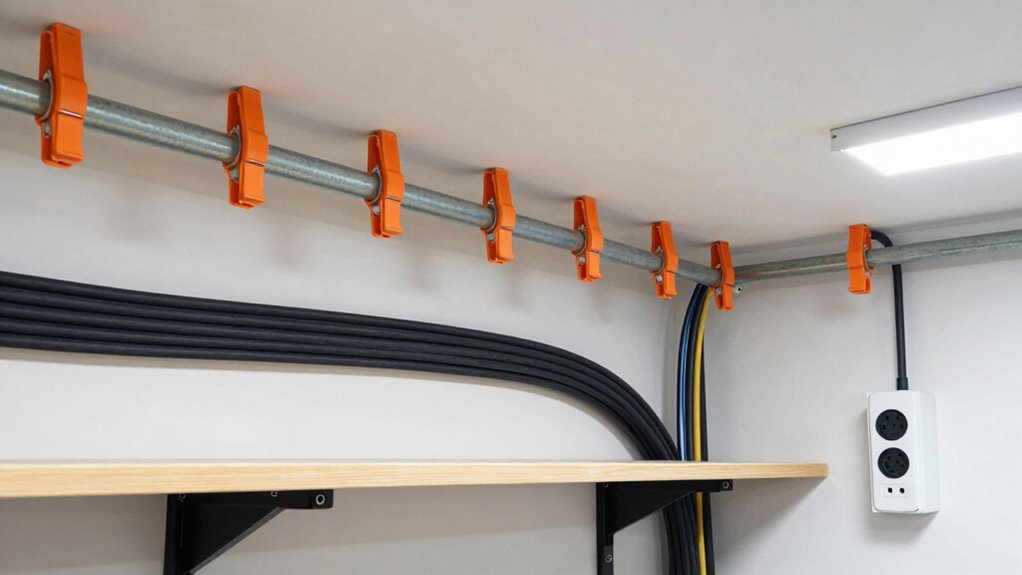

To build safer cable runs in workshops and garages, plan the layout to avoid crossing high-traffic areas and keep cables off the ground. Use quality, insulated cables rated for your environment, and secure them with conduit, clips, or raceways along walls or ceilings. Guarantee proper grounding, circuit protection, and replace damaged cords immediately. Regularly inspect your setup for wear and damage. Keep local safety standards in mind for maximum protection—exploring these tips further can help you craft a safer workspace.

Get business pricing on networking and server gear
- Business-only prices and quantity discounts
- Tax-exempt purchasing
- Multiple users, one account, clear invoices
Key Takeaways
- Use conduit or raceways to protect cables and keep them off the ground in workshops and garages.
- Secure cables along walls or ceilings with clips, avoiding crossing high-traffic areas.
- Select moisture-resistant and insulated cables suitable for the environment for safety and durability.
- Ensure all outlets, switches, and cords are properly grounded and protected with circuit breakers.
- Regularly inspect and replace damaged cables to prevent electrical hazards and maintain safety.

Have you ever wondered how to guarantee your cable runs are both safe and dependable? Proper cord management is essential to prevent accidents and ensure your workshop or garage remains a safe environment. When cables are tangled or left strewn across the floor, they pose tripping hazards and can easily get damaged, leading to electrical safety risks. To build safer cable runs, start by planning your layout carefully. Identify the most direct paths for your cords, avoiding crossing busy walkways or high-traffic areas. Use cable clips, conduit, or raceways to secure cables along walls or ceilings, keeping them off the ground and out of harm’s way. This not only reduces clutter but also protects the cords from wear and tear, which can cause shorts or electrical failures over time. Incorporating landscaping elements to conceal and protect cables can also enhance safety and aesthetics. Additionally, employing cable management techniques can help keep your workspace organized and reduce the risk of accidental damage.
Choosing the right materials is equally important. Use high-quality, insulated cables rated for your specific applications. When running cables through walls or ceilings, opt for flexible conduit or trunking that provides a physical barrier against damage. This adds an extra layer of electrical safety by preventing accidental cuts or punctures. Always confirm that cables are rated for the environment—moisture-resistant cables are vital in garages or workshops where exposure to humidity or liquids is possible. When installing, avoid over-tightening cable ties or clamps, which can damage insulation and compromise safety. Ensuring cable ratings are appropriate for your environment is crucial for long-term safety and reliability. Additionally, selecting cables with proper insulation helps prevent electrical faults and enhances overall safety. Proper grounding and circuit protection are critical components of building safer cable runs. Make sure all outlets, switches, and extension cords are properly grounded. Use circuit breakers or fuse systems that match the load requirements of your equipment. This way, if a short circuit or overload occurs, the system will trip, preventing damage or fire hazards. Regularly inspect your cable runs for signs of wear, such as fraying or discoloration, and replace damaged cords immediately. Labeling circuits and outlets can also help you quickly identify and troubleshoot problems, minimizing the risk of electrical accidents.
As an affiliate, we earn on qualifying purchases.
Frequently Asked Questions
What Are the Best Materials for Cable Conduits in Workshops?
For cable conduit durability and ideal cable material selection, you should choose materials like PVC, metal, or flexible plastic. PVC conduits are affordable, corrosion-resistant, and easy to install, making them perfect for workshops. Metal conduits, such as galvanized steel, provide superior strength and protection against physical damage. Flexible plastic conduits are great for adapting to tight spaces. Select the material that best suits your workshop environment to guarantee safety and long-lasting cable runs.
How Often Should Cable Runs Be Inspected for Safety?
You should inspect your cable runs at least twice a year, or more often if you notice signs of cable deterioration—like frayed wires or melting insulation—that threaten safety. Imagine a tiny, silent predator lurking in your cables, ready to cause chaos. Regular inspection keeps this menace at bay, ensuring your workshop remains safe. Don’t wait for failure—prevent it with consistent checks and prompt repairs.
Can I Install Cable Runs Myself Without Professional Help?
Yes, you can do DIY wiring for cable runs, but you must follow safety guidelines closely. Make certain you understand electrical codes and use proper tools and materials. It is crucial to turn off power before starting and double-check connections. If you’re unsure about any step, consult a professional. Prioritizing safety ensures your workshop or garage remains a safe environment while saving money and learning valuable skills.
What Are Common Mistakes to Avoid When Building Cable Runs?
You’d think ignoring cable management and fire safety would be harmless, but it’s a common mistake. Avoid leaving cables loose, overloading circuits, or skipping proper supports—these slip-ups can turn a workshop into a fire hazard. Always secure cables properly, keep them organized, and don’t overload outlets. Proper cable management isn’t just neat—it’s essential for safety, helping prevent accidents and keeping your workspace fire-safe.
How Do I Prevent Pests From Damaging Cable Insulation?
To prevent pests from damaging cable insulation, you should implement pest proofing techniques like sealing gaps around cable entry points with caulk or foam. Regularly inspect insulation for wear and use insulation repair methods such as replacing damaged sections promptly. Keep the area clean and free of debris, and consider installing physical barriers like mesh or conduits. These steps help protect your cables from pest damage and maintain a safe workspace.
As an affiliate, we earn on qualifying purchases.
Conclusion
By following these safety tips, you’ll considerably reduce the risk of electrical accidents in your workshop or garage. Remember, a properly installed cable run can prevent injuries and equipment damage. Did you know that electrical fires caused nearly 13,000 home fires annually? Staying vigilant and ensuring your cables are secured and organized isn’t just smart—it’s essential. Take the time to build safer cable runs, and enjoy a safer, more efficient workspace every day.
moisture-resistant extension cords
As an affiliate, we earn on qualifying purchases.
As an affiliate, we earn on qualifying purchases.
circuit breaker panel for workshop
As an affiliate, we earn on qualifying purchases.
As an affiliate, we earn on qualifying purchases.
Halloween Picks
halloween
As an affiliate, we earn on qualifying purchases.