
TL;DR

Get business pricing on networking and server gear
- Business-only prices and quantity discounts
- Tax-exempt purchasing
- Multiple users, one account, clear invoices
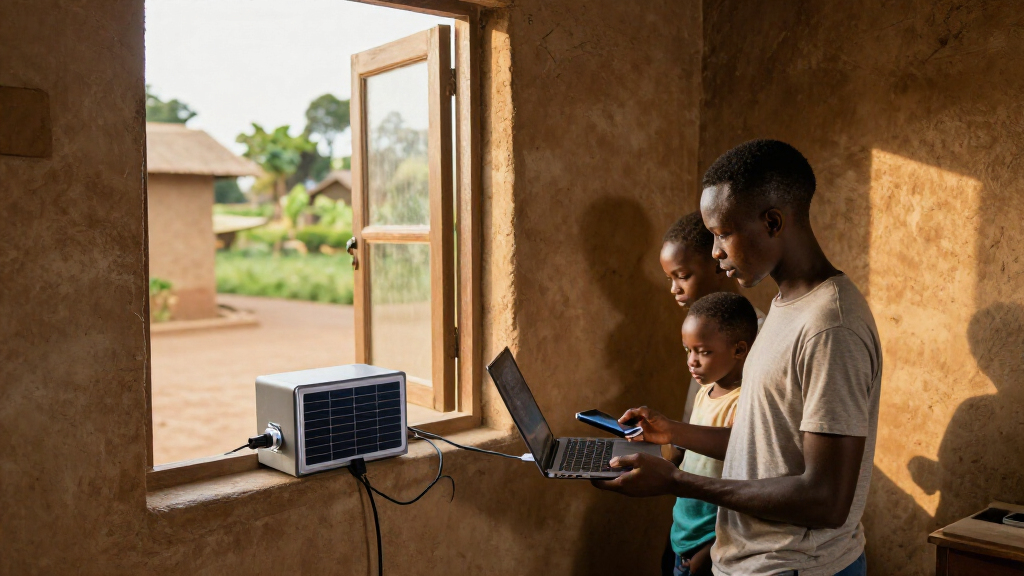
Google and Ignite Energy Access are using mapping, routing and supply-chain tools to support off-grid solar deployment across sub-Saharan Africa. Google estimates the partnership enabled more than 160,000 tonnes of CO2-equivalent emissions reductions in the first half of 2026, linked to 3.7 million solar devices delivered since 2023.
Google said its three-year partnership with Ignite Energy Access has supported delivery of 3.7 million solar devices across sub-Saharan Africa since 2023, with an estimated reduction of more than 160,000 tonnes of CO2-equivalent emissions in the first half of 2026. The collaboration is developing mapping and logistics tools intended to help reach households beyond the electricity grid, where access, terrain and limited address data complicate solar deployment.
The figures and account were published by Google on October 26, 2026. Google attributes the estimated emissions reductions to the partnership and says Ignite’s teams delivered the devices across the region since 2023. The company did not publish a methodology for the emissions estimate in the report, so the figure is an attributed company estimate, not an independently verified measurement in the material provided.
Google says the work has included more than 100 advisory sessions with researchers, engineers and data specialists over three years. The teams combined satellite imagery and Google’s Open Buildings dataset with routing algorithms to locate homes that do not appear in standard mapping applications. Google also described research into identifying rural paths and optimizing warehouse and mini-hub locations using factors such as transport costs, vehicle capacity, routes and inventory expenses.
A further effort aims to identify small rooftop solar installations in satellite imagery. Google says a single panel can occupy roughly one pixel in standard imagery, making it difficult to detect at scale. Researchers are developing computer-vision models with Gemini for Science and training them with drone images supplied by Ignite. Google said the models are being tested for precision and recall; it did not report final performance results.
Reaching Homes Beyond Mapped Roads
The partnership addresses practical barriers that can prevent solar access even where the technology exists: companies must find households without formal addresses, move equipment over rural routes and plan deliveries efficiently. Better location data and logistics could help providers deploy equipment to dispersed communities, though the report does not quantify how much the tools have reduced costs or increased access.
Google cites a scale of need exceeding 600 million people without electricity across sub-Saharan Africa, describing this as nearly half the continent’s population. For households relying on kerosene or candles, solar systems can provide basic lighting without extending the central grid. The stated delivery total and emissions estimate suggest a sizable deployment effort, but do not by themselves show how many people received reliable electricity or how long systems remain in use.
The work also points toward a wider energy challenge. Solar kits designed for lighting may not supply enough power for electric cooking. Google says it and Ignite are modeling community-level microgrids to provide more power, potentially linking household electrification with cleaner cooking and reduced exposure to smoke from wood and charcoal.
Products Worth Considering

Anker SOLIX C200 DC Portable Power Station, 192Wh, 200W

Jackery Explorer 300 Portable Power Station, 292Wh

Logitech MX Keys S Wireless Keyboard, Graphite
As an affiliate, we earn on qualifying purchases.
From Solar Kits to Microgrids
Ignite Energy Access is described by Google as an off-grid clean-energy company aiming to connect 100 million people in Africa by 2030. That is the organization’s stated ambition, not a confirmed outcome. Google’s Startups for Sustainable Development program supported the collaboration, which focused on data and logistical obstacles beyond Google’s own operational footprint.
The partnership’s work has moved from locating homes and planning deliveries toward mapping installed systems and considering higher-power energy needs. Google says mapping existing micro-solar installations could help identify underserved villages and guide later deployments. It also says the project’s broader methods may form a repeatable approach for energy-access efforts in emerging markets, but no independent assessment of that claim is included in the report.
Google frames the emissions estimate against its wider aspiration to help partners collectively reduce one gigaton of carbon-equivalent emissions annually by 2030. That company-wide goal is separate from the specific partnership estimate and should not be read as a projection of Ignite’s contribution.
““In the first half of 2026 alone, we estimate our partnership with Ignite Energy Access has enabled over 160,000 tCO2e in emissions reductions.””
— Google’s report
Impact Figures and Model Results
The report does not explain the assumptions or calculation method behind the 160,000-tonne emissions estimate, nor does it provide an independent audit. It also does not state how many households or people the 3.7 million devices serve, whether the devices are all operational, or how the total is distributed by country.
Google describes the satellite-identification models as under development and testing, but gives no accuracy scores, deployment schedule or evidence that the models are already guiding field operations at scale. The report also does not provide cost comparisons or measured changes in delivery times resulting from the routing and supply-chain tools.
The microgrid work is described as modeling for a future phase. Its planned locations, financing, capacity, timeline and likely number of beneficiaries remain unspecified. The report does not say when community systems for electric cooking may be built or whether households will be able to afford the appliances and service.
Testing Models and Cooking Systems
Google says researchers are continuing to test computer-vision model variations using drone imagery from Ignite, while the partners are modeling community microgrids for electric cooking. The company has not announced a completion date, public performance results or confirmed construction plans for those systems.
Further reporting will be needed to establish whether the mapping and routing tools lead to more households receiving reliable service, and whether the emissions estimate can be independently assessed. The next concrete milestones would include published model results, details of microgrid pilots and updated figures on installations and the people they serve.
Key Questions
What did Google and Ignite Energy Access report?
Google said the partnership supported delivery of 3.7 million solar devices across the region since 2023 and estimates it enabled more than 160,000 tonnes of CO2-equivalent emissions reductions in the first half of 2026.
How are the partners trying to reach remote households?
The work combines satellite imagery and Google’s Open Buildings dataset with routing algorithms. Google also describes research into identifying rural paths and planning warehouses and local mini-hubs around transport and inventory constraints.
Are the satellite solar-detection models already in use?
The report says the computer-vision models are being developed and tested using drone imagery supplied by Ignite. It does not say they are deployed at scale or provide accuracy results.
What does the partnership plan for clean cooking?
Google says the partners are modeling community microgrids that could supply more power for electric cookstoves than individual rooftop solar kits. It has not announced pilot locations, construction dates or customer numbers.
Source: blog.google