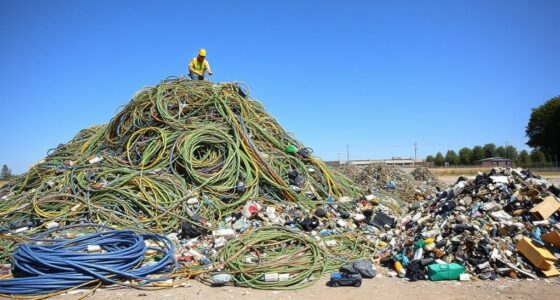
Imagine building a project with a box of supplies, only to realize most of it ends up discarded. Reducing material waste isn’t just about saving costs; it’s about making a tangible difference for the environment and your bottom line. Establishing eco-friendly partnerships, implementing effective recycling, and adopting sustainable workflows can turn excess into opportunity. But how do you start transforming your installation practices to minimize waste efficiently?
Key Takeaways
- Partner with suppliers committed to sustainable packaging and bulk deliveries to minimize excess materials.
- Implement clear labeling and staff training to improve waste sorting and reduce material contamination.
- Incorporate prefabricated components for easier disassembly, reuse, and waste reduction during installation.
- Embed recycling practices into workflows to divert waste from landfills and promote sustainable resource use.
- Foster long-term supplier relationships focused on eco-friendly materials and continuous waste minimization innovations.
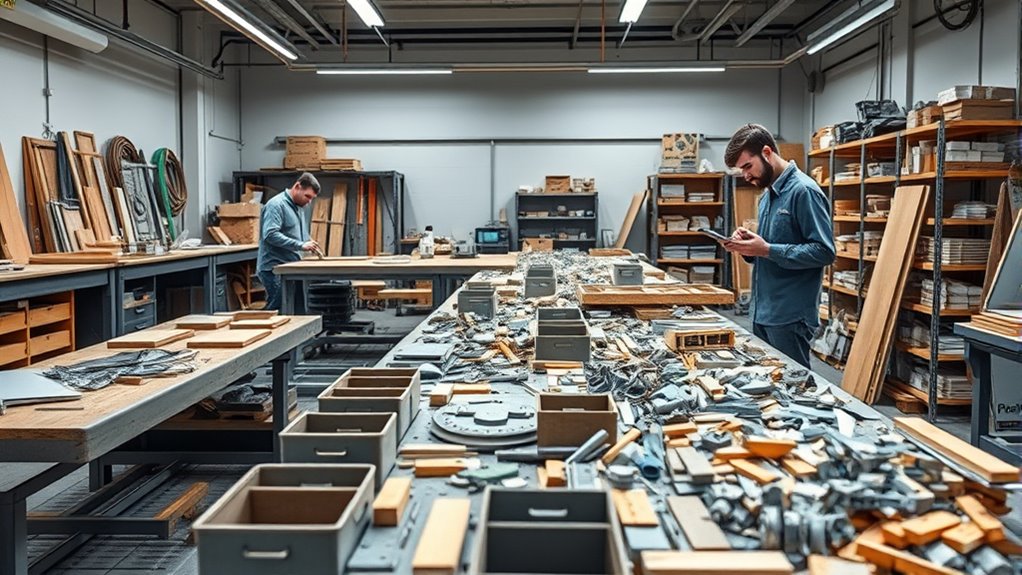
Have you ever considered how much material waste your business or daily habits generate? The truth is, many installations produce more waste than we realize, often ending up in landfills instead of being reused or recycled. Reducing this waste starts with understanding how to implement effective strategies, starting with recycling initiatives. By establishing clear recycling programs within your operations, you can divert a substantial portion of waste away from disposal. Make it easy for your team to sort materials properly—label bins clearly and educate everyone on what can be recycled. This simple step not only minimizes waste but also fosters a culture of sustainability. Additionally, integrating recycling initiatives into your installation process can lead to cost savings, as recycled materials often require less processing and disposal fees. It’s a win-win that benefits your bottom line and the environment. Incorporating sustainable practices into your workflow can further enhance your waste reduction efforts and promote ecological responsibility.
Another essential element in reducing material waste involves building strong supplier partnerships. When you collaborate with suppliers committed to sustainable practices, you gain access to eco-friendly materials that are easier to recycle or reuse. Open communication ensures that you receive materials in ways that minimize packaging waste and optimize transport efficiency. For example, working with suppliers who deliver in bulk or use recyclable packaging can considerably cut down on excess waste generated during installation. These partnerships also allow you to set standards for material quality and disposal, ensuring that your supply chain aligns with your waste reduction goals. Establishing long-term relationships with environmentally conscious suppliers makes it easier to implement waste-minimizing practices consistently, as they often provide guidance and resources to support your efforts. This proactive approach can lead to innovations in material use, such as prefabricated components designed for easy disassembly and reuse.

Earthbag Building: The Tools, Tricks and Techniques (Mother Earth News Wiser Living Series, 8)
As an affiliate, we earn on qualifying purchases.
As an affiliate, we earn on qualifying purchases.
Frequently Asked Questions
How to Estimate Material Needs Accurately Before Starting Installation?
To estimate material needs accurately, start with thorough inventory management, checking what’s already available. Measure precisely during site preparation to determine exact quantities required, avoiding excess. Review project plans and blueprints carefully, considering possible adjustments. Communicate with suppliers for accurate delivery timelines. By combining detailed site prep, accurate measurements, and good inventory management, you minimize waste and guarantee you have just enough materials to complete the installation efficiently.
What Are the Best Tools to Minimize Waste During Installation?
To minimize waste during installation, you should use tools like recycling programs and reusable packaging. Recycling programs help you sort and properly dispose of waste, reducing environmental impact. Reusable packaging guarantees materials are protected and can be reused for future projects, cutting down on unnecessary waste. Additionally, implementing precise cutting tools and waste tracking software helps you manage materials efficiently, preventing excess and promoting sustainable practices throughout the installation process.
How Can Suppliers Support Waste Reduction Efforts?
Suppliers can support your waste reduction efforts through strong collaboration, sharing insights on sustainable practices, and offering eco-friendly materials. They can optimize packaging to minimize excess and reduce waste during transit. By working closely with you, suppliers guarantee materials are delivered efficiently, cutting down on unnecessary packaging and leftovers. This partnership helps you meet sustainability goals, save costs, and promote environmentally responsible installations with less waste.
Are There Eco-Friendly Materials That Generate Less Waste?
Yes, there are eco-friendly materials that generate less waste. You can opt for sustainable alternatives like recycled metals, biodegradable plastics, or reclaimed wood to support eco-conscious choices. These materials reduce waste, minimize environmental impact, and often come with lower carbon footprints. By choosing such options, you actively contribute to sustainability efforts and promote responsible resource use in your installations. Making informed decisions helps create a greener, more sustainable future.
How to Train Staff on Waste Reduction Best Practices?
Think of your team as skilled navigators steering through a storm of waste. To train them effectively, you should foster clear team communication, emphasizing waste tracking and best practices. Use hands-on workshops and real-time feedback to reinforce lessons, encouraging everyone to spot waste early. Regular updates and shared goals keep everyone aligned, empowering your team to sail smoothly toward waste reduction, making a positive impact on both the environment and project success.

Honeycomb Packing Paper 12" x 200 ft, Premium-Grade Packing Paper for Shipping, Moving & Packaging, Recyclable Eco-Friendly Packing Supplies, Bubble Wrap Alternative with 20 Fragile stickers
Upgraded Durability for Secure Protection: Crafted from Biodegradable & recyclable kraft paper with reinforced perforations, our honeycomb packing…
As an affiliate, we earn on qualifying purchases.
As an affiliate, we earn on qualifying purchases.
Conclusion
By embracing sustainable practices, you’ll cut material waste like a sharp blade through excess, making your installations leaner and greener. Partner with eco-conscious suppliers, implement clear recycling programs, and adopt modular designs to minimize waste and boost efficiency. These steps not only benefit the environment but also streamline your workflow, saving costs in the long run. When you prioritize waste reduction, you’re shaping a future that’s as sustainable as it is successful.

Prefabricated Systems: Principles of Construction
Used Book in Good Condition
As an affiliate, we earn on qualifying purchases.
As an affiliate, we earn on qualifying purchases.

Rubbermaid Commercial Products Brute 32G Blue Recycling Vented Trash Container, for Landscapers/Construction Sites/Restaurants/Back of House/Offices/Warehouses/Commercial Environments
ENCOURAGES WASTE SEPERATION: Intuitive recycling lids with color-coding options ensure recyclables get into the right bins
As an affiliate, we earn on qualifying purchases.
As an affiliate, we earn on qualifying purchases.