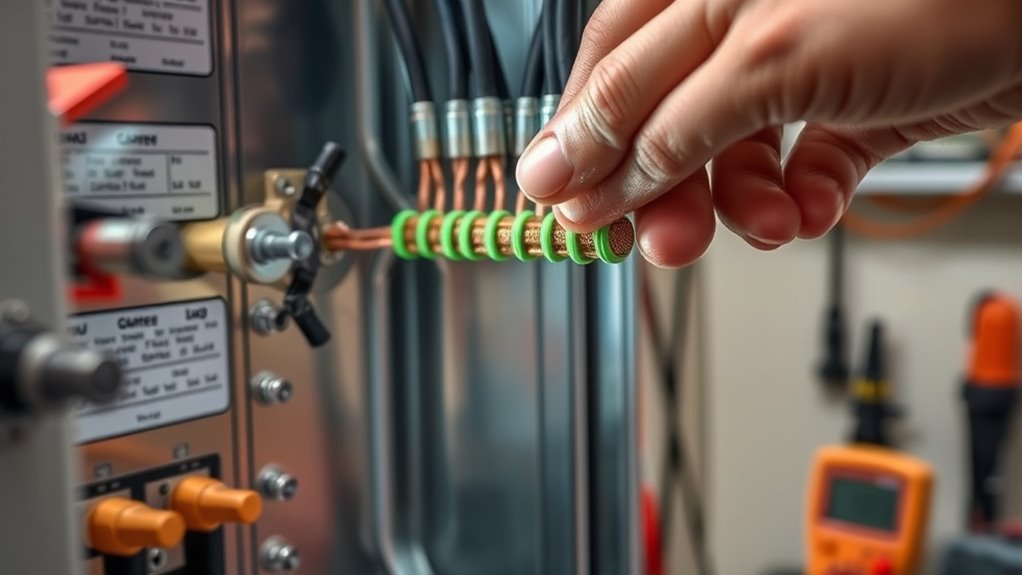

Did you know that improper grounding causes nearly 70% of electrical faults in residential systems? Ensuring proper bonding and grounding is essential for safety and equipment protection, but many overlook critical inspection steps. If your grounding system isn’t functioning correctly, it could lead to dangerous voltage differences or shock hazards. Curious about the key methods to verify your system’s integrity and prevent potential hazards?
Key Takeaways
- Use a multimeter or grounding tester to verify continuity between grounding conductors and equipment frames.
- Inspect all grounding and bonding connections for corrosion, looseness, or damage.
- Ensure grounding conductors are properly sized, securely attached, and free of defects.
- Confirm that bonding connections link system components, such as enclosures and grounding electrodes, without gaps.
- Conduct regular inspections to identify and repair any issues affecting the integrity of grounding and bonding systems.

Have you ever wondered why proper grounding and bonding are essential for electrical safety? They serve as crucial safeguards that protect you from electrical shock, equipment damage, and fire hazards. When you check grounding and bonding, you’re ensuring that electrical systems work as intended, preventing dangerous voltage buildup and providing a safe path for fault currents. Without correct equipment grounding and system bonding, anyone working on or near electrical equipment faces increased risks of injury or death. It’s not just about following code; it’s about keeping yourself and others safe.
Equipment grounding involves connecting the non-current-carrying metal parts of electrical devices to the grounding system. This connection ensures that if a fault occurs, the excess electrical current has a low-resistance path to the ground, causing the circuit breaker to trip quickly. You want to verify that all equipment grounding conductors are properly connected and intact. Check for corrosion, loose connections, or damage, as these can compromise the grounding system’s effectiveness. When inspecting, ensure that grounding conductors are of adequate size and made from approved materials, and that they’re securely attached to grounding points. Proper equipment grounding minimizes the risk of shock if a live wire contacts metal parts, which is essential in industrial, commercial, and residential settings.
System bonding, on the other hand, links the various system components together to ensure a continuous, low-resistance path for fault currents. It involves connecting the system’s neutral conductor to the grounding system at a single point, creating a unified, bonded system. When you check system bonding, you need to confirm that all bonded parts, such as metal enclosures, conduit, and grounding electrodes, are correctly connected and free of corrosion or damage. Proper bonding prevents dangerous voltage differences between conductive parts and helps ensure that fault currents will flow back to the source efficiently, allowing protective devices to trip promptly. If bonding isn’t correctly established, you risk creating potential shock hazards or unintentional current paths.
To ensure safety, use a multimeter or a grounding tester to verify continuity between equipment, system components, and grounding points. Conducting regular inspections and testing can reveal issues before they cause hazards. Remember, grounding and bonding are interconnected; both need to be maintained correctly for the electrical system to be safe. By routinely checking equipment grounding and system bonding, you’re actively preventing electrical faults from turning into dangerous situations. Ultimately, thorough and consistent testing provides peace of mind, knowing that your electrical system is safe, reliable, and compliant with safety standards.

Klein Tools RT250 GFCI Outlet Tester with LCD Display, Electric Voltage Tester for Standard 3-Wire 120V Electrical Receptacles
CLEAR LCD READOUT: GFCI Receptacle Tester features a large backlit LCD readout for easy voltage reading and clear…
As an affiliate, we earn on qualifying purchases.
As an affiliate, we earn on qualifying purchases.
Frequently Asked Questions
How Often Should Grounding Systems Be Inspected?
You should inspect your grounding system at least once a year to guarantee proper maintenance. During these inspections, focus on bonding wire inspection and check for corrosion, loose connections, or damage. Regular grounding system maintenance helps prevent electrical hazards and ensures safety. If your environment is harsh or you notice issues, consider more frequent inspections. Staying proactive keeps your electrical system reliable and compliant with safety standards.
What Are Common Signs of Improper Grounding?
You’ll notice signs of improper grounding if you experience electrical shocks when touching equipment or notice frequent tripping of circuit breakers. Visual clues like loose or corroded connections, scorch marks, or damaged insulation also point to grounding issues. These problems can increase the risk of electrical shock and cause equipment damage, so it’s vital to address them promptly. Regular inspections help catch these signs early and ensure safety and proper operation.
Can Grounding Issues Cause Electrical Fires?
Yes, grounding issues can cause electrical fires, especially if they involve bonding differences or false grounding myths. Poor grounding can lead to electrical arcs or sparks, igniting nearby materials. Many people believe grounding is optional or that bonding alone is enough, but both are vital for safety. Proper grounding ensures that electrical faults are safely directed away, reducing fire risks. Always verify grounding systems meet code standards to prevent dangerous situations.
What Tools Are Best for Testing Grounding?
Think of testing grounding like a detective solving a mystery. You’ll want tools like a ground tester or a multimeter for resistance measurement, which are essential for accurate ground testing. These tools help you verify that the grounding system’s resistance is within safe limits. Use a clamp meter to check bonding continuity. With these instruments, you can confidently identify issues and ensure your electrical system’s safety, just like a skilled detective.
Are Grounding and Bonding Requirements the Same?
Grounding and bonding are related but not the same. Grounding system basics involve connecting electrical systems to earth to prevent shock hazards, while bonding ensures all metal parts are connected to create a continuous path for fault currents. You need to understand grounding vs bonding to guarantee safety. Grounding controls voltage levels, and bonding maintains electrical continuity, both essential for proper system operation and safety.

AstroAI Digital Multimeter Tester 2000 Counts with DC AC Voltmeter and Ohm Volt Amp Meter; Measures Voltage, Current, Resistance, Continuity and Diode, Blue
Additional Tips – The following incorrect operations may cause the multimeter not to show results: Firstly, the plugs…
As an affiliate, we earn on qualifying purchases.
As an affiliate, we earn on qualifying purchases.
Conclusion
So, next time you skip checking those grounding connections, remember you’re playing a dangerous game with shock hazards lurking in the shadows. A quick visual or multimeter test might seem mundane, but it’s your best defense against unexpected sparks—or worse. Don’t let complacency turn your safety into a shocking surprise. After all, who needs peace of mind when you can gamble with electrical safety? Stay vigilant, stay grounded.

Feekoon 3 Pcs Ground Clamp 1/2" to 1", Copper Alloy Wire Pipe Ground Clamps for Bonding Wire to Water Pipe or Steel
Package Includes: You will receive 3 pieces of ground clamps, each ground clamp is equipped with screws for…
As an affiliate, we earn on qualifying purchases.
As an affiliate, we earn on qualifying purchases.

KAIWEETS Electrical Test Kit KIT01, Digital Multimeter, Smart Non-Contact Voltage Tester & GFCI Outlet Tester with LCD, Complete Set with Carrying Case & Batteries for Electrician, DIY & HVAC
1 Kit, 3 Essential Tools – Unzip it to reveal your complete diagnostic setup: a digital multimeter, non-contact…
As an affiliate, we earn on qualifying purchases.
As an affiliate, we earn on qualifying purchases.