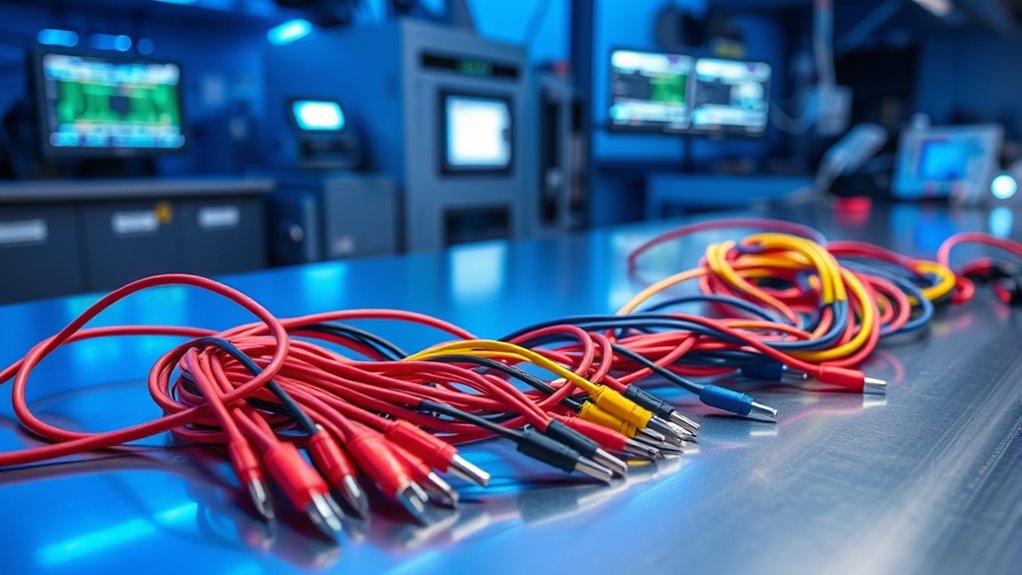

Did you know that improper cabling can cause significant safety hazards or data loss in labs? Many organizations overlook the importance of proper planning and management, risking costly downtime and compromised experiments. Ensuring reliable, compliant, and well-organized cables isn’t just about convenience—it’s essential for safety and data integrity. Understanding the key principles behind lab cabling can help you avoid these pitfalls and maintain smooth operations, but there’s more to take into account than just laying wires.
Key Takeaways
- Plan cable routes considering future expansion, equipment placement, and safety compliance to ensure organized and scalable infrastructure.
- Use cable trays, conduits, and ties to secure wiring, preventing tangling and facilitating maintenance.
- Follow safety standards such as OSHA and IEC, ensuring proper grounding, shielding, and regular inspections for wear.
- Label cables clearly with durable, color-coded tags to enable quick identification and efficient troubleshooting.
- Select high-quality, environment-rated cables, including shielded options, to maintain data integrity and safety in laboratory conditions.
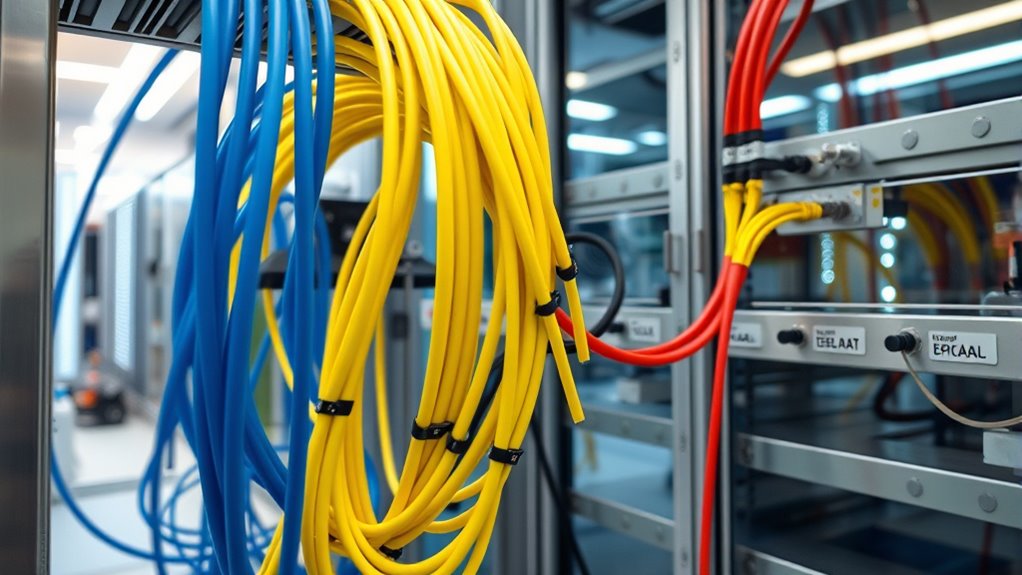
Are you ensuring your laboratory’s cabling infrastructure is up to the task? Proper wire management isn’t just about keeping things neat; it’s a critical component of safety standards and operational efficiency. In research environments, where precision and reliability are paramount, well-organized cabling prevents accidents, minimizes downtime, and guarantees seamless data flow. You need to prioritize effective wire management practices to avoid tangled cords, accidental disconnections, and potential hazards that could compromise experiments or personnel safety.
Proper lab wire management ensures safety, minimizes downtime, and guarantees reliable data flow in research environments.
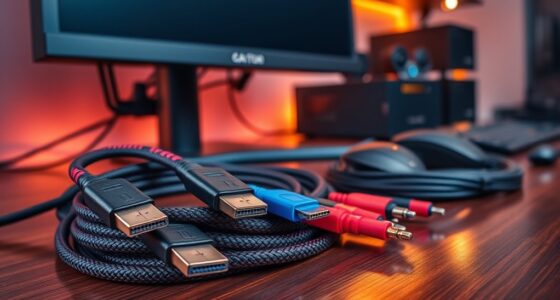
Start by planning your cabling layout meticulously. Map out where each cable runs, considering future expansion and equipment placement. Use cable trays, conduits, or cable ties to secure wires neatly along walls or beneath workbenches. This not only creates a tidy workspace but also makes troubleshooting or upgrades easier and less time-consuming. When securing cables, guarantee they’re not pulled too tightly, which could damage the insulation or connectors, risking failures and safety violations.
Adhering to safety standards is non-negotiable. Follow regulations set by agencies like OSHA or IEC, which specify how cables should be installed and maintained. Regular inspections are essential; look for signs of wear, fraying, or loose connections that might pose electrical hazards. Proper grounding and shielding of cables further protect against electromagnetic interference and reduce the risk of electrical shock or data corruption.
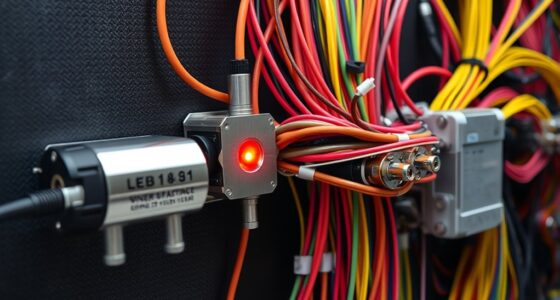
Labeling your cables is another indispensable step. When every wire is clearly marked, you can quickly identify and troubleshoot issues without unnecessary disassembly. This reduces downtime and limits the disturbance to sensitive experiments. Use durable, color-coded labels or tags that withstand the laboratory environment’s conditions, such as chemical exposure or temperature fluctuations.
Invest in high-quality cables suited for your specific laboratory needs. Inferior wiring can lead to signal loss, data inaccuracies, or electrical failures. Ensure cables meet industry standards and are rated for the environment—consider fire-resistant options in high-risk areas or shielded cables where electromagnetic interference is a concern. Proper cable management isn’t a one-time task; it requires ongoing attention to maintain compliance with safety standards and operational integrity.
Additionally, understanding the role of contrast ratio in your projectors can help ensure the visual quality of your displays is maintained, which is essential for accurate data analysis and presentations. Proper cable management isn’t just a safety measure; it also supports the integrity of your research environment by reducing the risk of signal degradation or interference that can compromise data quality.
In essence, maintaining a disciplined wire management system aligned with safety standards not only protects your personnel and equipment but also enhances your laboratory’s productivity. When you invest time and resources into organizing your cabling infrastructure, you create a safer, more reliable workspace where your research can thrive without interruptions caused by preventable electrical issues.
Top picks for "cabl laboratory research"
Open Amazon search results for this keyword.
As an affiliate, we earn on qualifying purchases.
Frequently Asked Questions
How Does Cabling Influence Laboratory Safety Protocols?
Cabling directly impacts laboratory safety protocols by guaranteeing cable safety and hazard prevention. You need to properly install and organize cables to prevent tripping hazards and electrical accidents. Regular inspections help identify wear or damage, reducing risks. Clear labeling and secure connections ensure safe operation, while avoiding overloading outlets minimizes fire hazards. By prioritizing cable safety and hazard prevention, you create a safer environment, protecting personnel and sensitive equipment alike.
What Are the Latest Innovations in Research Facility Cabling?
You’ll find that the latest innovations in research facility cabling include fiber optics for faster, more reliable data transmission and wireless integration for greater flexibility. These advancements allow you to streamline setup, reduce clutter, and improve connectivity across your lab. By adopting fiber optics and wireless solutions, you enhance operational efficiency, support high-bandwidth applications, and future-proof your research environment for emerging technological needs.
How Is Cabling Managed During Facility Renovations or Expansions?
Imagine your facility as a living organism, constantly evolving. During renovations or expansions, you manage cabling by carefully planning the cabling infrastructure upfront, ensuring minimal disruption. You coordinate renovation planning with a detailed layout, labeling existing cables, and choosing flexible solutions like modular pathways. This proactive approach keeps the cabling organized, scalable, and ready for future upgrades, allowing your research environment to grow seamlessly while maintaining critical connectivity.
What Training Is Required for Staff Handling Specialized Cabling?
You should guarantee your staff receives proper certification in cable management and specialized cabling systems. This training covers safety protocols, installation techniques, and handling sensitive equipment. Certification programs from recognized industry organizations help your team stay updated on best practices, reducing errors and ensuring reliable connections. Ongoing education also prepares them for new technologies, ultimately maintaining high standards and safety during the installation and maintenance of specialized cabling systems.
How Do Cabling Solutions Adapt to Future Research Technology Needs?
You can guarantee cabling solutions adapt to future research technology needs by incorporating wireless integration and modular systems. Wireless options reduce reliance on physical cables, offering flexibility for evolving setups. Modular systems allow you to easily upgrade or reconfigure cabling infrastructure as new technologies emerge. Regularly reviewing and updating your cabling plan helps you stay ahead of research demands, making your lab more adaptable and efficient for future innovations.
Conclusion
Proper cabling is crucial for your lab’s safety and efficiency. Did you know that poor cable management can cause up to 30% of equipment failures? By planning routes, using quality shielded cables, and adhering to safety standards, you guarantee reliable data transmission and protect your team. Investing in effective cable management not only minimizes downtime but also keeps your research environment safe and productive. Stay proactive, and your lab will run smoothly every time.