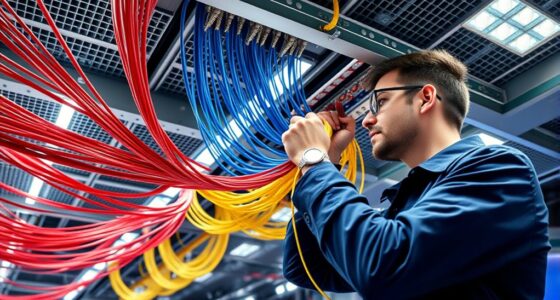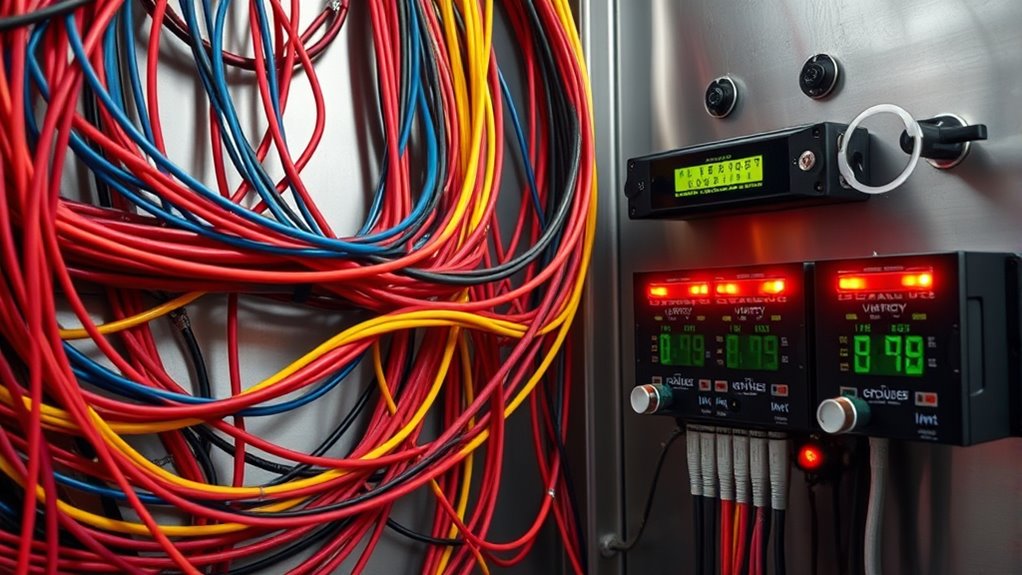

When setting up a renewable energy monitoring system, choosing the right cabling is essential to guarantee reliable data transfer and system longevity. Proper cables prevent voltage drops, resist environmental damage, and facilitate accurate performance tracking. But with so many options available, it’s important to understand what makes a cable suitable for outdoor, long-distance use. The details behind selecting, installing, and maintaining these cables can considerably impact your system’s efficiency and safety.
Key Takeaways
- Use weather-resistant, properly rated cables to ensure durability and data integrity in outdoor renewable energy environments.
- Organize cabling with conduits or trays to prevent damage and facilitate maintenance.
- Select appropriate cable lengths and gauges to minimize voltage drops and maximize system efficiency.
- Secure weatherproof connectors and proper grounding to protect against moisture, electromagnetic interference, and environmental factors.
- Conduct routine inspections to detect degradation, maintain secure connections, and ensure consistent data flow for reliable monitoring.

Effective cabling is vital for reliable renewable energy monitoring systems. When it comes to solar power setups, the quality and arrangement of your cabling directly influence how well your system performs. One of the most critical aspects is guaranteeing that the connections between your solar panels and your data collection units are solid and efficient. Your solar panel captures sunlight and converts it into electrical energy, but without proper cabling, this energy can’t be effectively transmitted or monitored. Good cabling ensures that the data transmitted from your solar panels to your monitoring system is accurate and timely. This way, you can quickly identify issues or inefficiencies and take action to optimize your energy production.
Proper solar cabling guarantees accurate data transfer and optimal system performance.
When selecting cabling for your solar panel setup, you need to think about the type of wire that best suits outdoor conditions. Solar cables are specially designed to withstand harsh weather, UV exposure, and temperature fluctuations. These cables typically have a robust insulation layer to prevent degradation over time. Using substandard cables might save you money upfront, but it can lead to failures, data loss, or even safety hazards in the long run. Properly rated cables ensure the longevity of your system and maintain the integrity of data transmission, which is vital for real-time monitoring and analysis. Additionally, implementing fraud prevention tools such as secure connections can help protect your system from tampering or malicious interference.
The way you route and connect your cabling also matters. Keeping cables organized and protected from physical damage prevents interruptions in data flow. Use conduits or cable trays to shield the wiring from environmental stressors like wind, rain, or animals. When connecting your solar panels, make sure the connectors are secure and weatherproof, preventing moisture ingress that could corrupt data or cause electrical faults. Proper grounding and shielding of cables reduce electromagnetic interference, which can distort signals and compromise the accuracy of your data transmission.
Additionally, think about the length of your cables. Longer runs can lead to voltage drops, reducing the efficiency of power transfer and possibly affecting data quality. Use thicker gauge wires if you need to span greater distances, and keep cable runs as short as feasible to minimize losses. Regular inspections and maintenance are also key; over time, cables may degrade or become loose, leading to data inaccuracies or system failures. Guaranteeing all connections are tight and cables are intact maintains consistent data flow and system reliability.

JianHan Solar Entry Gland 10ft Weatherproof ABS Double Cable 10AWG for All Cable Types UV Resistance Dual Cable Entry Housing for Solar Project on Rv,Boat,Camper,Van
【IP68 Waterproof Design】: The solar cable has ABS shell to be weatherproof,IP68 waterproof design,can anti-ultraviolet and anti-aging ability.It…
As an affiliate, we earn on qualifying purchases.
As an affiliate, we earn on qualifying purchases.
Frequently Asked Questions
How Does Cable Durability Impact Renewable Energy System Lifespan?
Cable durability directly affects your renewable energy system’s lifespan by ensuring reliable performance over time. When you choose cable material with high wear resistance, it withstands environmental stresses like UV exposure, temperature fluctuations, and mechanical wear. This durability reduces failures and maintenance costs, allowing your system to operate efficiently longer. Proper cable material selection is essential; it safeguards your investment, maximizes energy output, and extends the overall lifespan of your renewable energy setup.
What Are the Eco-Friendly Cabling Options for Renewable Projects?
You can choose eco-friendly cabling options like biodegradable cables made from natural, compostable materials, reducing environmental impact. Additionally, look for cables constructed from recycled materials, which help conserve resources and lower waste. These options support sustainable renewable energy projects by minimizing ecological footprints. By selecting biodegradable cables and those made from recycled materials, you contribute to a greener future while ensuring reliable system performance.
How Do Temperature Fluctuations Affect Cable Performance?
When temperatures fluctuate, cables face a rollercoaster ride, and you better hold on tight. These changes cause thermal expansion and contraction, which can lead to insulation degradation over time. This weakens the protective layers, risking signal loss or short circuits. To keep your system running smoothly, select cables designed for temperature extremes, and consider proper insulation materials that withstand thermal stress, preventing costly repairs down the line.
What Are the Best Practices for Cable Management in Solar Farms?
You should focus on proper wire routing to prevent tangling and safeguard cables from environmental damage. Use cable labeling to clearly identify circuits, making maintenance easier and reducing errors. Secure cables with appropriate fasteners to avoid movement and wear. Keep cables away from heat sources and water, and regularly inspect connections. Implementing these best practices ensures reliable performance and simplifies troubleshooting in your solar farm.
How Can Cable Failure Risks Be Minimized in Wind Turbines?
Think of cable failure risks like a fragile glass, easily shattered if not protected. You can minimize these risks by ensuring proper cable insulation and applying protective coatings that shield against environmental factors like moisture, UV, and vibrations. Regular inspections help catch wear early. Proper cable routing, secure fastenings, and using high-quality components further reduce failure chances, keeping your wind turbines running smoothly and efficiently.

ECO-WORTHY 10000W Complete Off-Grid Solar Panel Kit for Home| 10KW 120V/240V Output Split Phase| 20.48kWh Lithium Battery with Rack| 9840 Watts Solar Panel PV
[Ideally Output Of 40KWH] The 9840W solar panel complete kit will produce an average of 40KWH of electricity…
As an affiliate, we earn on qualifying purchases.
As an affiliate, we earn on qualifying purchases.
Conclusion
Choosing the right cables is essential for reliable renewable energy monitoring. Properly installed, weather-resistant cables can improve system lifespan by up to 25% and reduce energy losses. Remember, routine inspections catch issues early, preventing costly downtime. With over 2,500 GW of renewable energy capacity worldwide, investing in quality cabling ensures your system performs at its best and safely, helping you maximize energy output and protect your investment for years to come.

ECO-WORTHY 10FT 10AWG Solar Extension Cable 30A/1000V DC, IP67 Waterproof with Compatible Quick Connectors (Red+Black) for Solar Panels, Controllers, Off-Grid Systems
Tinned Copper Core: Premium 10AWG oxygen-free copper wire with tin-plated surface prevents oxidation (3X corrosion resistance vs bare…
As an affiliate, we earn on qualifying purchases.
As an affiliate, we earn on qualifying purchases.

Liquid-Tight Conduit and Connector Kit 1/2 Inch 25 Ft,Flexible Non Metallic Liquid Tight Electrical Conduit UL Certification,Electrical Conduit Kit with 5 Straight,3 Angle Fittings
𝐏𝐫𝐞𝐦𝐢𝐮𝐦 𝐋𝐢𝐪𝐮𝐢𝐝 𝐓𝐢𝐠𝐡𝐭 𝐂𝐨𝐧𝐝𝐮𝐢𝐭: 1/2 inch flexible conduit made from anti-oxidation virgin pvc.smooth inside for easier wire pulling,no…
As an affiliate, we earn on qualifying purchases.
As an affiliate, we earn on qualifying purchases.