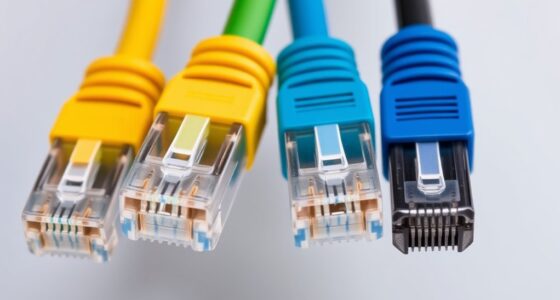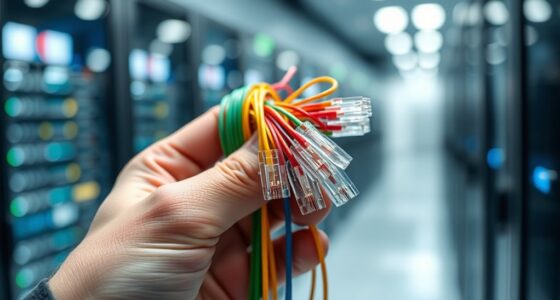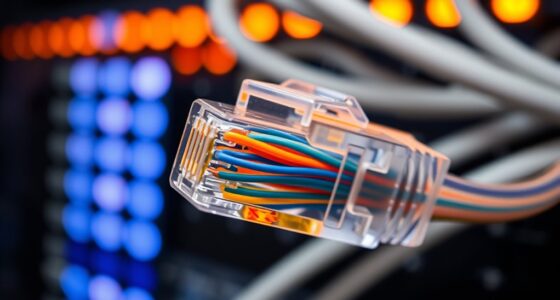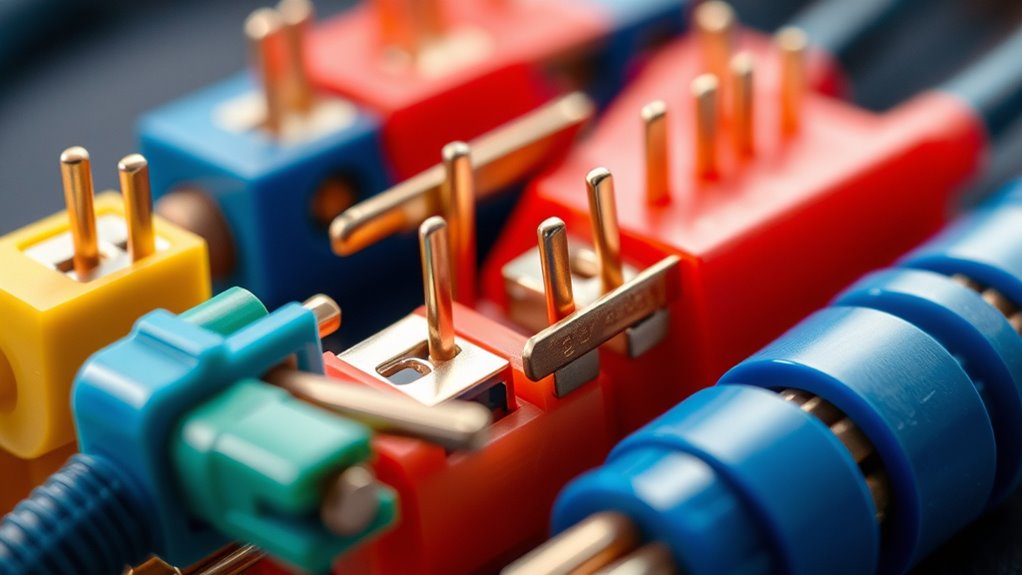

Did you know that the quality of a connector can make or break your cable’s performance? Many people overlook how small details like contact resistance or locking mechanisms directly impact signal clarity and reliability. Properly designed connectors maintain consistent connections and reduce interference, but even minor installation mistakes can cause significant issues. Understanding what goes into a high-performance connector might change how you approach your next setup. Are you aware of the key factors that influence their effectiveness?
Key Takeaways
- Connectors maintain signal integrity by ensuring secure, low-resistance connections that prevent signal loss and interference.
- High-quality connectors are manufactured with precise tolerances to support consistent performance, especially in high-frequency applications.
- Proper installation techniques, including correct stripping and crimping, are essential to prevent signal degradation over time.
- Compatibility and impedance matching in connectors minimize reflections and distortions, ensuring reliable data transmission.
- Poorly installed or low-quality connectors introduce noise and intermittent signals, negatively impacting overall cable performance.

Have you ever wondered how the quality of your cable connections impacts overall performance? The truth is, connectors play a crucial role in maintaining signal integrity, which directly affects the efficiency and reliability of your entire setup. When you choose the right connectors and install them properly, you guarantee that data, audio, or video signals travel smoothly without degradation. Conversely, poor connections can introduce noise, interference, and signal loss, leading to frustrating performance issues. That’s why understanding how connectors influence signal integrity and applying correct installation techniques is essential for any high-quality cable system.
The first step is recognizing that not all connectors are created equal. High-quality connectors are designed to preserve the integrity of the signal as it passes through the cable. They feature precise manufacturing tolerances, quality materials, and secure locking mechanisms that minimize contact resistance and prevent signal leakage. When connectors are well-made, they reduce the chances of signal degradation, ensuring that your data remains intact from source to destination. This becomes especially critical in high-frequency applications like HDMI, Ethernet, or audio/video setups, where even minor disruptions can cause noticeable issues.
Installation techniques are equally vital. Properly installing connectors involves careful preparation of the cable ends—stripping the insulation correctly, avoiding damage to conductors, and ensuring a clean, debris-free contact surface. You should follow manufacturer guidelines meticulously to achieve a secure and stable connection. For example, when crimping connectors onto cables, applying the correct amount of pressure guarantees a solid contact that preserves signal flow. When connectors are poorly installed or improperly terminated, it creates resistance points or gaps that compromise signal quality. Over time, these weak links can result in intermittent signal loss or data errors, which can be costly and time-consuming to troubleshoot.
Another key aspect is guaranteeing that connectors are compatible with your cable type and application. Mismatched connectors can cause impedance mismatches, which lead to reflections and signal reflections that distort the original data. Proper matching and adherence to recommended installation techniques help maintain consistent impedance, reducing the risk of interference and ensuring smooth, reliable signal transmission.

8K 90 Degree HDMI 2.1 Adapter 2 Pack, (Up and Down) Right Angle HDMI Male to Female HDMI L-Shaped Connector Extender Support 8K@60Hz,4K@120Hz for Google Chrome Cast, Roku Stick, Wall TV, Laptop and PC
Right Angle Design : 90 degree and 270 degree HDMI adapter can be selected to change the interface…
As an affiliate, we earn on qualifying purchases.
As an affiliate, we earn on qualifying purchases.
Frequently Asked Questions
What Are the Most Common Types of Cable Connectors?
You’ll find that the most common connector types include USB, HDMI, Ethernet, and audio jacks. When choosing cable connectors, you need to take into account connector compatibility to ensure they fit your devices properly. Different connector types serve specific purposes, so understanding which ones work best for your setup helps prevent connection issues. Being familiar with these common types makes it easier to select the right connectors for your needs.
How Do Connectors Impact Signal Quality?
Think of connectors as the gateways to your signal’s journey. If they’re poorly made or corroded, they cause signal degradation, like a clogged pipe reducing water flow. High-quality connectors maintain signal integrity, ensuring clear transmission. Over time, their lifespan matters—wear and tear can lead to increased degradation. Regularly check and replace connectors to keep your signal sharp, preventing disruptions and optimizing overall cable performance.
Are There Connectors Suitable for High-Frequency Applications?
Yes, there are connectors suitable for high-frequency applications. Look for connectors made from low-loss, durable materials like gold or silver, which minimize signal attenuation. Additionally, verify they have effective connector shielding to prevent electromagnetic interference. Proper shielding and high-quality materials help maintain signal integrity at high frequencies, making these connectors ideal for demanding applications such as RF and microwave communications.
How Do Environmental Factors Affect Connector Performance?
Environmental factors directly impact your connector’s durability and dependability. You should consider corrosion resistance to prevent rust and deterioration in humid or salty conditions. Temperature stability is equally vital; extreme heat or cold can cause expansion, contraction, or material fatigue. By choosing connectors with robust corrosion resistance and excellent temperature stability, you guarantee your connections remain reliable, resisting environmental influences and maintaining ideal performance over time.
What Maintenance Is Required for Cable Connectors?
You should regularly inspect your cable connectors for signs of corrosion and clean them to prevent connectivity issues. Use appropriate contact cleaners and a soft brush or cloth to remove dirt, dust, and corrosion buildup. Applying dielectric grease can also protect against moisture. Proper maintenance guarantees peak performance, extends connector lifespan, and prevents signal loss caused by connector corrosion or poor contact. Always follow manufacturer recommendations for cleaning and maintenance.

20PCS RJ45 Network Cable Lock with 1 Key,RJ45 Network Cable Lock Lockable Ethernet Cable,Super Category 5 Category 6 Category 7 Patchcord Lock for Standard RJ45 Modular Plugs(Black)
【SECURE NETWORK CONNECTION】 The RJ45 Ethernet Cable Lock is designed to secure network connections from unauthorized access or…
As an affiliate, we earn on qualifying purchases.
As an affiliate, we earn on qualifying purchases.
Conclusion
In the end, you can’t afford to overlook the importance of quality connectors in your cable setup. They’re the backbone that keeps your signals clear and reliable. When you choose the right connectors and install them correctly, you’re really covering all your bases. Remember, a chain is only as strong as its weakest link—so don’t cut corners. Paying attention to these details guarantees your systems run smoothly and trouble-free, every time.

RG6 RG59 Coax Cable Compression Crimper Tool Kit,with 10 pcs Coaxial Compression Fitting Connector,Compression Tool, Coax Cables Stripper for Cable TV Video Audio
Fully Adjustable and Replaceable Blades can Strip Cable Perfectly: Work with rg59, rg59 quad, rg6, rg6 quad, and…
As an affiliate, we earn on qualifying purchases.
As an affiliate, we earn on qualifying purchases.
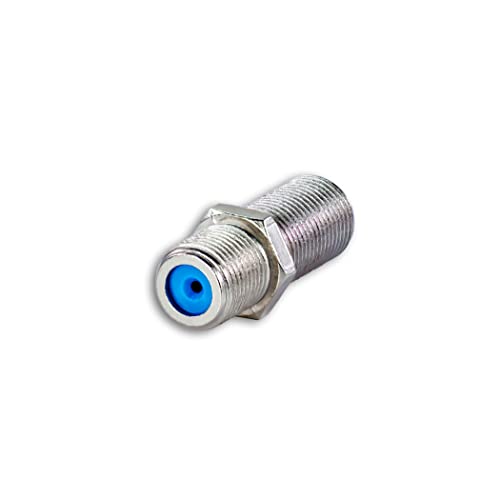
SatelliteSale High-Frequency F81 Coaxial Barrel Connectors Female to Female F-Type 3Ghz Adapter Coupler (Pack of 2)
SatelliteSale High-Frequency F81 coaxial cable coupler antenna connectors are perfect for connecting and extending your F-Pin coaxial cables….
As an affiliate, we earn on qualifying purchases.
As an affiliate, we earn on qualifying purchases.