

Imagine you’re troubleshooting a network issue where your data suddenly becomes noisy or slow, especially near the cable’s transmitting end. That interference could be caused by Near-End Crosstalk (NEXT), a common problem in wired communications. NEXT happens when signals from one pair of wires induce unwanted noise into neighboring pairs, often due to close proximity or poor insulation. Understanding how NEXT occurs and how to reduce it can help guarantee your connections stay clear and reliable, but there’s more to think about regarding its causes and solutions.
Key Takeaways
- Near-End Crosstalk (NEXT) is unwanted interference caused by signals from one wire pair affecting another near the transmitting end.
- It results from electromagnetic coupling between closely bundled wires within the same cable.
- Proper cable design, twisting, and shielding reduce NEXT by minimizing electromagnetic interference.
- Longer cables and poor isolation increase the likelihood and severity of near-end crosstalk.
- Upgrading cables with better shielding and maintaining proper installation practices help mitigate NEXT issues.
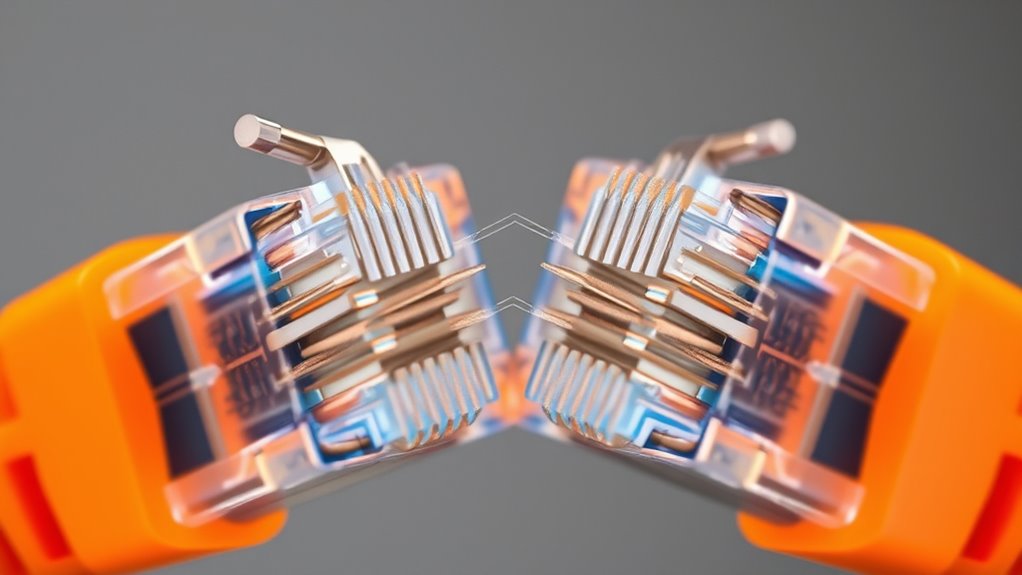
Have you ever noticed unwanted noise or interference when using a communication line? This pesky disruption is often caused by near-end crosstalk, a common issue in data and voice transmission. Near-end crosstalk occurs when signals from one pair of wires interfere with signals on another pair within the same cable, especially near the transmitting end. It’s like a conversation where one person’s voice unintentionally overlaps another’s, making it hard to understand either clearly. This problem can critically degrade the quality of your communication, leading to lost data, distorted audio, or poor call quality.
To understand near-end crosstalk better, you need to grasp the concept of signal interference. When multiple wires run close together, the electrical signals traveling through one pair can induce unwanted voltages in neighboring pairs. This electromagnetic coupling results in signal interference, which manifests as noise or crosstalk on the line. The closer and more tightly bundled the wires are, the stronger this interference can become. That’s why proper cable design and shielding are vital in minimizing these effects. Good cable isolation techniques help keep signals contained within their respective pairs, preventing the electromagnetic fields from affecting each other. Effective cable isolation involves twisting wire pairs tightly and using shielding materials to block external interference, which reduces the chances of near-end crosstalk.
When you’re troubleshooting communication issues, it’s helpful to consider how cable isolation influences near-end crosstalk. Poorly isolated cables or loose twists can lead to increased signal interference, making near-end crosstalk more prominent. This interference is most noticeable at the transmitting end—hence the term “near-end”—where the signals originate. The degree of crosstalk can vary based on cable quality, length, and installation methods. Longer cables tend to have more crosstalk issues because the interference has more space to develop along the line. Upgrading to higher-quality cables with better isolation and shielding can dramatically reduce these problems, resulting in clearer signals and more reliable communication.
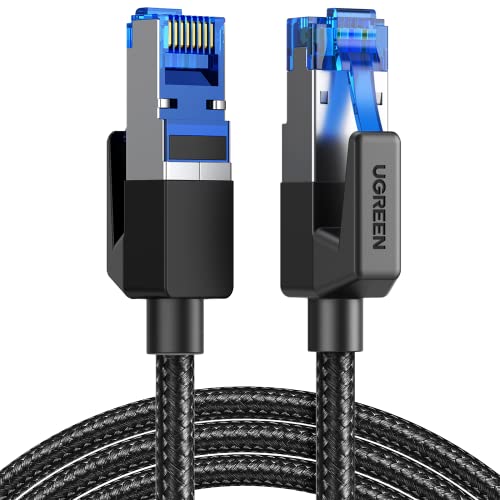
UGREEN Cat 8 Ethernet Cable 6FT, High Speed Braided 40Gbps 2000Mhz Network Cord Cat8 RJ45 Shielded Indoor Heavy Duty LAN Cables Compatible with Gaming PC PS5 PS4 PS3 Xbox Modem Router 6FT
- High-Speed Data Transfer: Supports 40 Gbps and 2000 MHz bandwidth
- Anti-Interference Design: Shielded with F/FTP, gold-plated connectors
- Durable and Flexible: Cotton braided exterior, bends over 10,000 times
As an affiliate, we earn on qualifying purchases.
As an affiliate, we earn on qualifying purchases.
Frequently Asked Questions
How Does NEXT Differ From Other Types of Crosstalk?
Next differs from other types of crosstalk because it occurs at the same end of the cable where the signal originates, mainly caused by signal coupling between adjacent wires. You can reduce NEXT through proper interference mitigation techniques, like shielding and twisted pairs. Unlike far-end crosstalk, which happens at the receiving end, NEXT directly impacts signal clarity at the source, making it essential to address for maximum network performance.
What Are the Typical Causes of Near-End Crosstalk?
Ever wondered what causes near-end crosstalk? It mainly results from poor cable quality and ineffective shielding, allowing signals from one pair to interfere with another at the transmitting end. Insufficient shielding or damaged insulation can increase NEXT. Also, tightly packed cables and high signal frequencies can exacerbate interference. To minimize NEXT, choose high-quality cables with good shielding and avoid excessive cable bundling. Isn’t keeping your connections clear worth the extra effort?
How Can NEXT Be Measured Accurately?
You can measure NEXT accurately by performing cable testing with specialized measurement techniques like Time Domain Reflectometry (TDR) or near-end crosstalk testers. Guarantee proper setup by using test equipment calibrated for high-frequency signals and follow standardized procedures. Take multiple measurements to account for variability and compare results against industry standards. This approach helps you identify crosstalk issues precisely, enabling targeted troubleshooting and ideal network performance.
What Are the Best Methods to Reduce NEXT?
To reduce NEXT, you should use shielding techniques like foil or braided shields to block interference. Twisting pairs of cables tightly helps cancel out crosstalk signals by balancing electromagnetic fields. Keep cables separated from sources of electromagnetic interference, and avoid running multiple cables parallel for long distances. Proper grounding also minimizes crosstalk. Combining shielding, twisting, and proper cable management effectively lowers NEXT and improves signal integrity.
Does Cable Length Affect the Level of NEXT?
Think of your cable like a garden hose; the longer it is, the more noise can seep in. Longer cables tend to have increased near-end crosstalk because signals have more opportunity to interfere. Using good cable insulation and shielding techniques can help reduce this effect, but minimizing cable length is also essential. Keep your cables as short as possible to maintain signal clarity and reduce NEXT interference.

Network Cable Untwist Tool – Wire Straightener & Stripper for Category 5/6 Cables, Twisted Wire Separator, for Engineers
- Quick Untwisting Mechanism: Efficiently separates twisted wires
- Simple Operation: Press and turn for straightening
- Ergonomic Design: Comfortable grip reduces fatigue
As an affiliate, we earn on qualifying purchases.
As an affiliate, we earn on qualifying purchases.
Conclusion
By understanding near-end crosstalk, you can better guarantee your network stays clear and reliable. Think of it like guarding your digital castle from sneaky invaders—only instead of knights, you’ve got twisted wires and shielding. Remember, just like a knight’s armor, quality cables and proper installation protect against interference. So, don’t let crosstalk turn your modern day into a scene from a medieval bard’s tale—stay vigilant and keep your signals strong!

SEWACC Printer Data Cable and Crosstalk Reduction Male to Male 3 Meters USB 2.0 with PVC and Aluminum Material, High Transfer Rates for Reliable Printer Connection
- High-Speed Data Transfer: Supports USB 2.0 for fast printing
- Male to Male Connection: Secure and reliable USB link
- Shielded for Reduced Interference: Foil and braid shielding minimizes EMI/FRI
As an affiliate, we earn on qualifying purchases.
As an affiliate, we earn on qualifying purchases.

Tinned Copper Braid Cable Wire Shielding Sleeve 5/16 in Wide(0.2 ID)-28ft
- Material: Tinned copper braided ground straps
- Conductivity: High electrical conductivity and flexibility
- Applications: Ground bonding, shielding, anti-chew protection
As an affiliate, we earn on qualifying purchases.
As an affiliate, we earn on qualifying purchases.


![Paged Out #9 [Pdf]](https://cables-and-networks.com/wp-content/uploads/2026/07/paged-out-9-pdf-featured-260x140.jpg)