Did you know that just a 10°C increase in temperature can reduce a cable’s lifespan by up to 50%? Temperature plays a vital role in how cables perform over time, affecting their durability, safety, and efficiency. When heat rises, materials expand and stress builds inside the cable, often leading to micro-damage. Understanding these effects can help you make better choices for installation and maintenance, but there’s more to take into account about how temperature impacts cable reliability.
Key Takeaways
- Elevated temperatures cause cable materials to expand, inducing mechanical stresses that can weaken the structure over time.
- Heat accelerates insulation degradation, increasing the risk of electrical leaks, shorts, and safety hazards.
- Higher temperatures raise the electrical resistance of conductors, reducing current-carrying capacity and efficiency.
- Excessive heat softens protective sheaths, exposing internal components to environmental damage and potential failures.
- Prolonged high temperatures necessitate proper cable selection, installation, and regular maintenance to ensure safe and reliable performance.
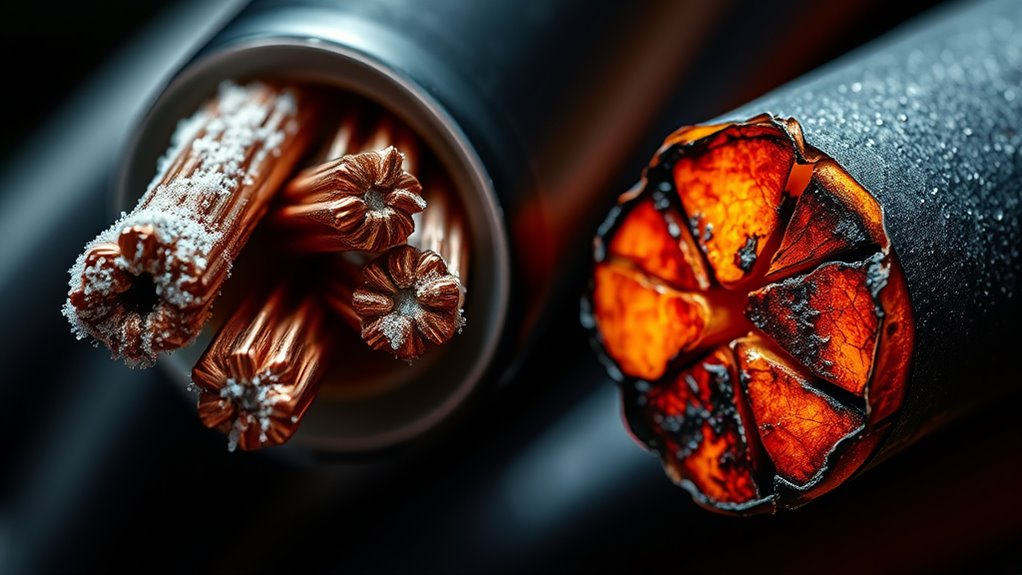
The performance of cables is closely linked to temperature changes, as elevated temperatures can considerably impact their conductivity and overall reliability. When temperatures rise, the materials within your cables expand due to thermal expansion. This phenomenon causes the metal conductors and surrounding insulation to stretch and shift, which can lead to mechanical stress over time. Continuous thermal expansion may weaken the physical structure of the cable, making it more susceptible to cracks or fractures. These micro-damages aren’t always visible but can compromise the cable’s integrity, leading to increased resistance, reduced efficiency, and potential failure.
Elevated temperatures cause cable materials to expand, leading to mechanical stress and potential micro-damage that can compromise performance.
In addition to mechanical effects, higher temperatures accelerate insulation degradation. Cables are typically coated with insulating materials designed to withstand a certain temperature range, but prolonged exposure to heat can break down these layers. As insulation degrades, it becomes less effective at preventing electrical leakage and shorts. This deterioration not only compromises safety but also increases the risk of electrical faults, which could cause outages or damage other components in your system. You might notice signs of insulation breakdown, such as discoloration or a sticky residue, but often, the damage occurs internally, making it harder to detect before serious issues arise.
Temperature fluctuations also influence the electrical properties of the conductors themselves. As the cable heats up, the increased thermal energy causes electrons to move more erratically, raising the material’s resistance. This heightened resistance results in a drop in current-carrying capacity and can cause the cable to overheat under load. Over time, this additional heat can exacerbate the effects of thermal expansion and insulation degradation, creating a cycle that accelerates cable wear and reduces lifespan. If you operate cables in environments with frequent or extreme temperature swings, you’ll need to consider these factors carefully to prevent unexpected failures.
Moreover, sustained high temperatures can cause the cable’s protective sheath to soften or melt, exposing internal components to environmental damage. Moisture, dirt, and other contaminants can then infiltrate, leading to corrosion or further insulation breakdown. This exposure not only degrades performance but also poses safety risks, such as electrical shocks or fires. To mitigate these issues, selecting cables rated for your specific temperature range and ensuring proper installation and ventilation is vital. Regular inspections can help identify early signs of thermal stress, allowing you to replace or upgrade cables before problems become severe. Understanding cable behavior at high temperatures helps you make informed decisions that enhance safety, efficiency, and longevity in your electrical systems.
Top picks for "temperature affect cable"
Open Amazon search results for this keyword.
As an affiliate, we earn on qualifying purchases.
Frequently Asked Questions
How Does Humidity Influence Cable Performance Alongside Temperature?
Humidity impact can critically affect your cable’s performance, especially when combined with temperature changes. Higher humidity levels increase moisture effects, which can lead to corrosion, insulation degradation, and reduced conductivity. When temperatures rise, moisture may condense inside the cable, worsening these issues. To guarantee ideal performance, it’s essential to control humidity levels and select cables designed to withstand moisture and temperature fluctuations in your environment.
Are There Specific Cable Types More Vulnerable to Temperature Fluctuations?
You’ll find that cables with rubber insulation are especially vulnerable to temperature fluctuations. For example, in a factory setting, rubber-insulated cables overheated during summer, causing cracks and increased resistance. These cables often use conductor materials like copper or aluminum, but their insulation’s temperature sensitivity makes them less reliable under extreme conditions. Always consider cable insulation and conductor materials when selecting cables for environments with frequent temperature changes.
How Quickly Does Cable Performance Degrade With Temperature Extremes?
You’ll notice cable performance degrades quickly in extreme temperatures, often within hours or days. Thermal expansion causes the conductor and insulation to expand, stressing the material. If temperatures rise too high, insulation breakdown can occur, leading to short circuits or failures. So, when exposed to temperature extremes, expect rapid deterioration, especially if cables aren’t designed for such conditions, making regular monitoring and proper insulation vital for longevity.
Can Temperature Changes Cause Long-Term Damage to Cables?
Temperature swings are like a relentless tide, gradually eroding your cable’s resilience. Yes, they can cause long-term damage, as thermal expansion stresses the materials and leads to insulation degradation over time. This wear weakens the cable’s core, risking failures. To protect your investment, guarantee proper insulation and avoid extreme temperature exposure, giving your cables a stable environment to thrive and perform reliably for years to come.
What Are the Best Practices for Maintaining Cable Performance in Varying Temperatures?
To maintain cable performance in varying temperatures, you should regularly inspect for signs of thermal expansion and guarantee insulation integrity. Use temperature-rated cables suited for your environment and avoid exposing cables to extreme heat or cold. Properly secure cables to prevent stress and movement, and consider installing protective conduits. These practices help prevent damage, reduce the risk of failure, and extend your cables’ lifespan despite temperature fluctuations.
Conclusion
Just as Icarus warned us about overreaching the sun, pushing cables beyond their temperature limits can lead to failure and disaster. By understanding how heat affects performance, you can prevent micro-damage and extend your cable’s lifespan. Keep your systems cool and within rated temperatures, and you’ll guarantee reliability and safety. Remember, respecting these limits is your best defense against unexpected faults—don’t let your cables become the fall of your electrical mastery.