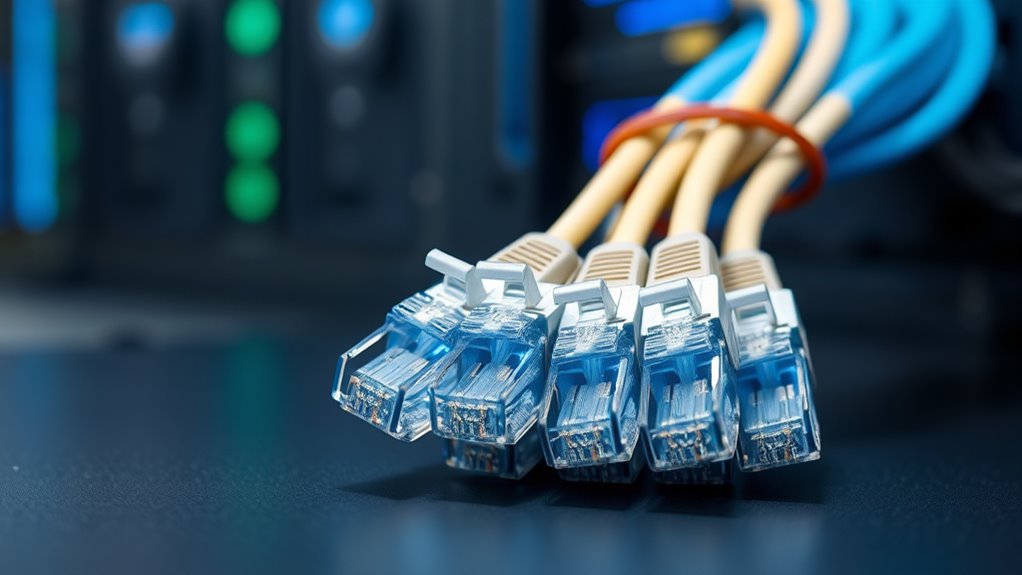

Imagine transforming your network into the fastest, most reliable connection you’ve ever experienced — that’s the power of Cat6a cables. These cables are designed to handle data transfer speeds up to 10 Gigabit Ethernet over 100 meters, making them ideal for demanding applications. But what truly sets them apart are their advanced shielding and compatibility with existing setups, offering benefits that could redefine your network’s performance. Curious how they can impact your environment?
Key Takeaways
- Supports 10 Gigabit Ethernet over 100 meters, enabling high-speed data transfer for demanding applications.
- Offers cost-effective performance improvements compared to fiber optic solutions, simplifying installation.
- Ensures compatibility with existing Ethernet infrastructure for seamless upgrades.
- Features shielding options that reduce electromagnetic interference, enhancing connection reliability.
- Provides a robust backbone for high-speed wireless devices, improving overall network performance.

If you’re looking to upgrade your network for faster and more reliable performance, Cat6a cables are an excellent choice. These cables support higher bandwidths and faster data transfer rates, making them ideal for demanding applications like streaming, gaming, and large data transfers. Unlike traditional cables, Cat6a is engineered to handle 10 Gigabit Ethernet over distances up to 100 meters, reducing latency and improving overall network efficiency. This makes it a solid investment if you want a future-proof infrastructure that can keep up with increasing data demands.
Upgrade to Cat6a for faster, more reliable network performance and future-proof your data needs.
While fiber optic connections are often lauded for their incredible speed and long-distance capabilities, Cat6a offers a practical and cost-effective alternative for many scenarios. Fiber optic cables excel in backbone networks and long-range links, but they can be more expensive and complex to install. Cat6a, on the other hand, is compatible with existing Ethernet setups, easily fits into standard wiring closets, and simplifies upgrades without the need for specialized equipment. If you’re expanding a home or office network, Cat6a provides a robust solution that balances performance with ease of installation.
Wireless connectivity has become increasingly popular, offering convenience and flexibility. However, it often suffers from interference, limited range, and inconsistent speeds, especially in crowded environments. Cat6a cables serve as a reliable backbone for supporting high-speed wireless access points and routers, ensuring your wireless devices perform at their best. When your wired infrastructure is solid, your wireless network can operate more efficiently, with fewer dropouts and higher throughput. This synergy between wired and wireless components is vital for maintaining high-speed, seamless connectivity across your entire network.
In addition, Cat6a’s shielding options help reduce electromagnetic interference, which can impact wireless signals and data integrity. This shielding guarantees that your wired connections remain stable, even in electrically noisy environments. By investing in Cat6a, you’re not just improving wired speeds—you’re also creating a more resilient network that supports both fiber optic backbone links and wireless devices with minimal disruptions. Furthermore, the compatibility with existing infrastructure makes Cat6a an easy upgrade for most current network setups, saving time and costs.

Cable Matters 10Gbps Snagless Shielded Cat 6A Ethernet Cable – 10ft, Cat 6A Cable, Cat6A Cord, Ethernet Cord, Black
High Performance Cat6a, 26 AWG, RJ45, Shielded Ethernet Cable provides universal connectivity for LAN network components such as…
As an affiliate, we earn on qualifying purchases.
As an affiliate, we earn on qualifying purchases.
Frequently Asked Questions
Can Cat6a Support Future Networking Technologies?
Yes, Cat6a can support future networking technologies because it adheres to advanced Ethernet standards, ensuring compatibility with higher data rates. Its superior cable durability means it withstands environmental stress, making it a reliable choice for evolving networks. As technology advances, Cat6a’s enhanced shielding and performance capabilities help you stay prepared for upcoming networking demands, providing the flexibility needed for future innovations.
How Does Cat6a Compare to Fiber Optic Cables?
You’ll find that Cat6a Ethernet standards offer great speeds and less interference compared to older cables, but fiber optic cables surpass it in speed and distance. Fiber is more durable over long runs and resistant to electromagnetic interference, making it ideal for high-demand networks. While Cat6a is easier to install and more cost-effective for short distances, fiber optic cables excel in durability and high-performance across longer distances.
Is Cat6a Suitable for Outdoor Installations?
Yes, Cat6a can be suitable for outdoor installations if you choose outdoor-rated cables designed for durability and weather resistance. These cables are built to withstand outdoor conditions, including UV exposure and moisture. However, you should be aware of installation challenges like protecting the cable from physical damage and ensuring proper grounding. Proper shielding and conduit use help mitigate these issues, making Cat6a a viable choice outdoors with the right precautions.
What Are the Environmental Impacts of Cat6a Production?
You should know that the environmental impacts of Cat6a production are significant. Sustainable manufacturing practices can reduce energy consumption and minimize harmful emissions. Recycling and proper disposal of materials, like plastics and metals, are essential to prevent pollution and waste buildup. By choosing suppliers committed to eco-friendly methods, you help lower the ecological footprint of network cabling, ensuring a more sustainable future for technology infrastructure.
How Does Cat6a Influence Network Security?
Cat6a dramatically boosts your network security by supporting advanced network encryption, making it nearly impenetrable. It minimizes data leakage risks, keeping sensitive information safe from cyber threats. Think of it as a digital fortress—its high-quality shielding and faster speeds help you detect and prevent attacks early. With Cat6a, you’re better protected, ensuring your data stays private and your network remains resilient against evolving security challenges.
Cable Matters 10Gbps Snagless Shielded Cat 6A Ethernet Cable – 25ft, Cat 6A Cable, Cat6A Cord, Ethernet Cord, Black
High Performance Cat6a, 26 AWG, RJ45, Shielded Ethernet Cable provides universal connectivity for LAN network components such as…
As an affiliate, we earn on qualifying purchases.
As an affiliate, we earn on qualifying purchases.
Conclusion
Choosing Cat6a cables gently guides your network towards a more stable and reliable future. With their thoughtful shielding and high-speed capabilities, you’ll notice fewer hiccups and smoother streaming, even when the environment gets a bit noisy. It’s like adding a protective layer that quietly guarantees your connections stay strong and consistent. In the end, investing in Cat6a subtly colors your digital experience with confidence, making every online moment feel seamlessly connected and effortlessly reliable.
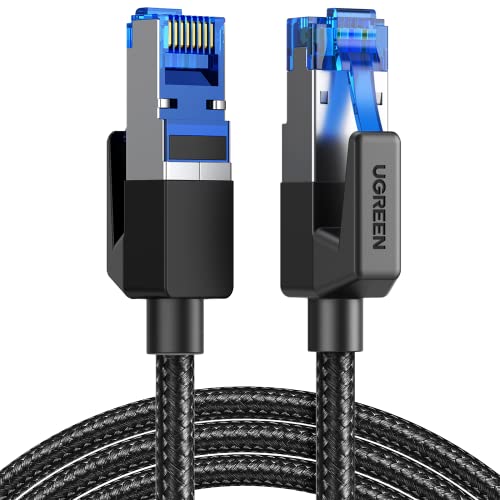
UGREEN Cat 8 Ethernet Cable 6FT, High Speed Braided 40Gbps 2000Mhz Network Cord Cat8 RJ45 Shielded Indoor Heavy Duty LAN Cables Compatible with Gaming PC PS5 PS4 PS3 Xbox Modem Router 6FT
40 Gbps 2000 Mhz High Speed: The Cat 8 ethernet cable support max. 40 Gbps data transfer and…
As an affiliate, we earn on qualifying purchases.
As an affiliate, we earn on qualifying purchases.

Monoprice – 124360 Cat6A Ethernet Patch Cable – Network Internet Cord – RJ45, 550Mhz, STP, Pure Bare Copper Wire, 10G, 26AWG, 10ft, Black
Product Type :Computer Add On
As an affiliate, we earn on qualifying purchases.
As an affiliate, we earn on qualifying purchases.