Have you ever wondered how your devices communicate so efficiently? The answer lies in the different ways cables transfer data—either one bit at a time through serial connections or multiple bits simultaneously via parallel links. While each method has its strengths and limitations, understanding these differences can help you choose the right cable for your needs. But what makes one type better suited for certain tasks over the other?
Key Takeaways
- Serial cables transfer data one bit at a time, suitable for longer distances and modern devices.
- Parallel cables send multiple bits simultaneously, offering faster transfer but with shorter effective range.
- Connector types like DB9/DB25 impact connection ease, security, and compatibility between devices.
- Serial cables support higher data transfer rates and are more reliable over longer cable runs.
- Parallel cables are mainly used in legacy systems such as older printers, but are limited by interference.

Serial and parallel cables are essential components for connecting devices and transferring data between computers and peripherals. Understanding the differences between these cables helps you choose the right one for your needs. One of the key factors to contemplate is connector types. Serial cables typically use connectors like DB9 or DB25, which have a small number of pins and are designed for point-to-point connections. Parallel cables, on the other hand, often use wide connectors like the Centronics or DB25, with many pins to accommodate multiple data lines simultaneously. These connector types determine how easily you can connect your device and how secure the connection remains during data transmission. Additionally, the technology behind these cables influences their performance and suitability for various applications.
Data transfer rates are another critical aspect. Serial cables transfer data one bit at a time over a single channel, which limits their speed but allows for longer cable runs without signal degradation. Modern serial standards, like USB and Thunderbolt, can achieve impressive transfer rates, making them suitable for high-speed data transfer. In contrast, parallel cables send multiple bits simultaneously across multiple channels, considerably increasing transfer speeds—at least in theory. However, because parallel signals can experience timing issues and crosstalk over longer distances, their data transfer rates tend to be slower or less reliable over extended cable lengths. For example, older parallel interfaces like the Centronics used for printers could transfer data at speeds up to a few megabytes per second, which is adequate for printing but less so for high-speed data transfer needs.
When you’re choosing between serial and parallel cables, consider your device’s compatibility and the required data transfer rate. Serial cables are more common today because they offer better signal integrity over longer distances and are easier to implement with modern technology. They also support faster data transfer rates in new standards, making them suitable for high-speed peripherals like external drives, cameras, and networking equipment. Parallel cables, while still used in some legacy systems and specific applications like printers, are generally limited by their shorter effective range and potential for signal interference. Their connector types tend to be bulkier and less flexible, which can make cable management more challenging. Overall, understanding the signal integrity differences can help you select the most reliable connection for your setup.
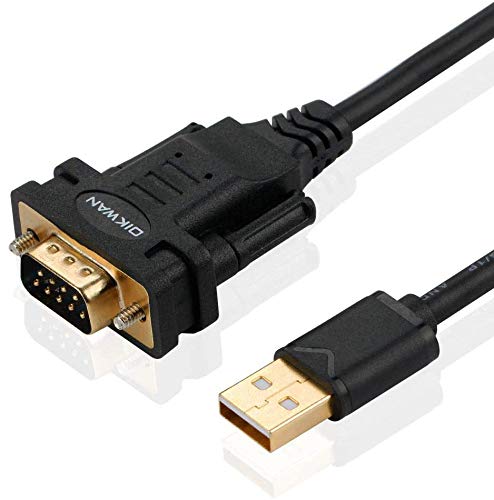
OIKWAN USB to RS232, USB Serial Adapter with FTDI Chipset,USB 2.0 to Male DB9 Serial Cable for Windows 11,10, 8, 7, Vista, XP, 2000, Linux and Mac OS(6ft)…
!!Please NOTE: this is MALE RS232 to DB9 SERIAL CABLE ,Not VGA!!!It is 9 pin, NOT 15 pin!!…
As an affiliate, we earn on qualifying purchases.
As an affiliate, we earn on qualifying purchases.
Frequently Asked Questions
Can Serial and Parallel Cables Be Used Interchangeably?
No, serial and parallel cables can’t be used interchangeably because of cable compatibility and differing transfer protocols. Serial cables transmit data one bit at a time, making them suitable for long distances, while parallel cables send multiple bits simultaneously for short-range connections. You need to match the cable type with the device’s requirements and supported transfer protocols; otherwise, it won’t work properly or could cause damage.
What Are the Common Connectors for Serial and Parallel Cables?
Think of connectors as the gateways between your devices. For serial cables, you’ll find DB9 and DB25 connectors with pin configurations tailored for data transfer. Parallel cables often use Centronics connectors, recognizable by their wide, flat shape and multiple pins. These connector types are designed to match specific pin configurations, ensuring proper communication. You choose the right connector based on your device’s port, making connections reliable and straightforward.
How Do Serial and Parallel Cables Impact Data Transfer Speed?
Serial cables typically offer faster data transfer rates over longer distances, making them more reliable for consistent communication. Parallel cables, however, transfer data simultaneously across multiple wires, which can increase speed but often reduces cable reliability and limits distance. If you need high-speed, reliable data transfer, especially over longer ranges, serial cables are usually the better choice. Parallel cables work well for short distances with high-speed needs but may face interference issues.
Are There Compatibility Issues With Different Devices and Cable Types?
You might face device compatibility issues if your devices don’t support the same cable standards. Different device compatibility and cable standards can prevent proper connections or slow data transfer. Always check your device specifications and verify the cables meet the required standards. Using compatible cables and adhering to device compatibility guidelines helps avoid connection problems, ensuring smooth data transfer without frustration.
What Are the Environmental Factors Affecting Cable Performance?
Environmental factors like electromagnetic interference can disrupt cable performance, causing signal loss or data errors. You should make certain your cables have proper shielding to protect against these external signals. Additionally, avoid placing cables near sources of interference such as motors or fluorescent lights. Temperature and humidity also matter—extreme conditions can degrade cable insulation and connectors. By managing these factors, you help maintain reliable data transmission and extend your cable’s lifespan.

XMSJSIY DB25 to CN36 Parallel Printer Cable, DB25 25 Pin Male to CN36 Centronics 36 Pin Male Serial Parallel Printer Extension Cable Adapter for Connect Computers, Printers 25C*30AWG – 1.5M
DB25 pin to CN36-hole parallel port cable connects your PC to parallel dot matrix printers, older laser printers…
As an affiliate, we earn on qualifying purchases.
As an affiliate, we earn on qualifying purchases.
Conclusion
Now that you understand serial and parallel cables, picture yourself connecting devices seamlessly, like guiding a gentle stream of data through a single, unwavering lane or a bustling highway of multiple streams. Feel confident choosing the right cable for your needs, knowing each has its own rhythm—steady and long-distance or fast and short-range. With this knowledge, you can confidently navigate your tech world, ensuring your connections flow smoothly, just like a well-orchestrated symphony.

StarTech.com 3m Black Straight Through DB9 RS232 Serial Cable – DB9 RS232 Serial Extension Cable – Male to Female Cable (MXT1003MBK), 10 ft / 3m
1x DB9 Serial (male) connector
As an affiliate, we earn on qualifying purchases.
As an affiliate, we earn on qualifying purchases.
XMSJSIY DB25 to CN36 Parallel Printer Cable, DB25 25 Pin Male to CN36 Centronics 36 Pin Male Serial Parallel Printer Extension Cable Adapter for Connect Computers, Printers 25C*30AWG – 1.5M
DB25 pin to CN36-hole parallel port cable connects your PC to parallel dot matrix printers, older laser printers…
As an affiliate, we earn on qualifying purchases.
As an affiliate, we earn on qualifying purchases.