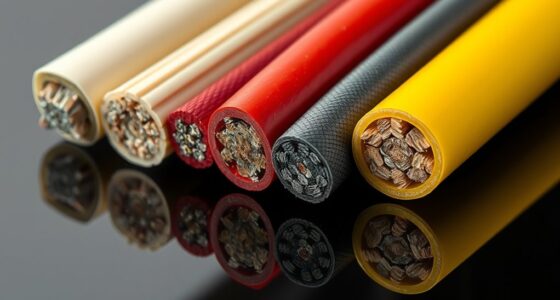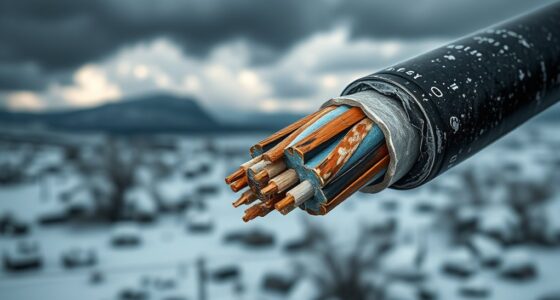

Like a skilled surgeon, handling fiber optics requires precision and care, but a single mistake can lead to serious injury or damage. You must follow strict safety protocols to protect yourself and your equipment. Proper protective gear, disposal procedures, and specialized tools are essential. Without them, you risk exposure to glass shards or environmental contamination. Ensuring safety isn’t just about compliance—it’s about maintaining your work’s integrity and your well-being, making it vital to understand the right practices.
Key Takeaways
- Always wear safety glasses, gloves, and protective clothing to prevent injuries from glass shards and fibers.
- Properly collect and dispose of fiber scraps in puncture-resistant containers to avoid environmental contamination.
- Handle fibers carefully, using specialized tools, to prevent breakage and minimize the risk of injury.
- Keep work areas clean with a HEPA-filter vacuum to remove tiny glass particles safely.
- Follow industry safety standards and receive proper training to ensure safe fiber optic handling practices.

Handling fiber optics safely is essential to prevent injuries and equipment damage. When working with these delicate cables, you need to prioritize safety at every step. Wearing the right protective gear is your first line of defense. Safety glasses are a must to shield your eyes from tiny glass shards or splinters that can fly off during cutting or stripping. Gloves made from cut-resistant material help protect your hands from punctures or abrasions, especially when handling sharp fiber ends. Additionally, wearing long sleeves and protective clothing minimizes skin exposure to glass fragments. Remember, fiber optic strands are extremely thin and fragile, so handling them with care reduces the risk of accidental breakage and injury. Proper disposal procedures are equally crucial. Fiber optic scraps, tips, and broken strands are hazardous if not disposed of correctly. Always collect all debris in a designated, puncture-resistant container to prevent accidental injury or environmental contamination. Never toss glass fibers into trash bins without proper containment—these tiny shards can easily cause cuts or injuries to anyone handling waste later. After completing your work, thoroughly clean the work area to ensure no fiber fragments are left behind. Use a vacuum equipped with a HEPA filter if possible, as it can effectively trap tiny glass particles. Following strict disposal procedures not only protects you but also keeps your workspace safe for others. Handling fiber optics also involves being cautious with cable management. Keep fibers coiled properly and avoid unnecessary bending or twisting, which can cause damage to the inner glass strands. When cutting or terminating fibers, always use specialized tools designed for fiber optic work. These tools help create clean cuts, reducing the risk of fiber splinters and ensuring a safe, efficient connection process. Never reuse damaged or improperly cut fibers, as they pose safety hazards and can compromise system integrity. Additionally, understanding the safety standards associated with fiber optic handling can further help avoid accidents and ensure compliance with industry regulations. In addition to protective gear and disposal procedures, always follow manufacturer guidelines and safety protocols. Proper training on handling fiber optics can markedly reduce the risk of accidents. Never rush through tasks; take your time to ensure each step is completed safely. Remember, safety isn’t just about protecting yourself—it’s about maintaining the integrity of the equipment and the safety of everyone around you. By wearing protective gear and following disposal procedures diligently, you’ll make handling fiber optics a safer, more efficient process.

Cloudray Laser Protection Goggles 1064nm Laser Safety Glasses Fiber Laser Glasses for Laser Protection Fiber Laser Engraver Safety (Style C)
Parameter: Experience unmatched eye protection with our high-quality fiber laser safety glasses. With an Optical Density (OD) of…
As an affiliate, we earn on qualifying purchases.
As an affiliate, we earn on qualifying purchases.
Frequently Asked Questions
Can Fiber Optic Safety Protocols Vary Between Countries?
Yes, fiber optic safety protocols can vary between countries due to differences in international standards and cultural differences. You might find that some countries follow strict global guidelines, while others adapt safety measures to local practices. It’s important for you to stay informed about specific regulations in your region and understand cultural expectations, ensuring you handle fiber optics safely and comply with local requirements to prevent accidents and injuries.
What Are the Environmental Impacts of Fiber Optic Disposal?
You might think fiber optic disposal is harmless, but improper disposal can release environmental hazards that threaten ecosystems and human health. When you ignore disposal regulations, tiny glass shards and chemicals could pollute soil and water, causing long-lasting damage. Following strict disposal regulations minimizes these risks, ensuring that fiber optics don’t become hidden environmental villains. Your careful handling prevents a future where our planet bears the unintended scars of fiber optic waste.
How Do I Choose the Right Protective Gear for Fiber Handling?
When handling fiber optics, choose the right protective gear by considering your handling procedures. Wear safety glasses or goggles to protect your eyes from sharp fibers, and use gloves to prevent cuts and skin irritation. Consider a long-sleeved shirt to shield your arms. Always follow your company’s handling procedures, which specify the necessary protective gear to minimize risks. Proper gear guarantees safety and makes fiber handling more manageable.
Are There Specific Certifications for Fiber Optic Safety Training?
Yes, there are specific certifications for fiber optic safety training. You should look for programs aligned with recognized safety standards, like OSHA or ANSI, which address fiber optic hazards. These certifications equip you with essential knowledge to handle fibers safely, minimizing risks of injury or damage. By obtaining proper training, you safeguard yourself and your workspace, turning the delicate fiber optic environment from a potential hazard into a controlled, safe zone.
How Does Fiber Optic Safety Differ in Industrial Versus Residential Settings?
In industrial settings, you face more fiber optic hazards like high-powered lasers and complex equipment, so you must follow strict safety standards and wear protective gear. In residential areas, hazards are lower, mainly involving minor fiber shards and eye safety. You should always adhere to safety standards tailored for each environment, ensuring proper handling and disposal to prevent injuries and exposure, regardless of the setting.

THOMEN 4 PCS (M+L) Cut Resistant Gloves Level 5 Protection for Kitchen, Upgrade Safety Anti Cutting Gloves for Meat Cutting, Wood Carving, Mandolin Slicing and More
Protect Your Hand – Throw away the normal gloves and try to use our THOMEN cut resistant gloves….
As an affiliate, we earn on qualifying purchases.
As an affiliate, we earn on qualifying purchases.
Conclusion
By prioritizing safety, you protect yourself from injury and preserve the integrity of your equipment. While handling delicate fibers requires precision, neglecting safety protocols can lead to costly accidents and environmental harm. Remember, safety isn’t just about avoiding immediate harm; it’s about safeguarding your future work and the environment around you. Stay vigilant, follow proper procedures, and treat fiber optics with care—because in safety, as in life, the smallest details make the biggest difference.

Jonard Tools FDC-66 Fiber Optic Scraps Disposal Can
SECURE SCRAPS DISPOSAL: Twist lock cover securely locks fiber scraps inside the can for safe and effortless disposal
As an affiliate, we earn on qualifying purchases.
As an affiliate, we earn on qualifying purchases.

Atrix – VACOMEGASLFH Omega Supreme HEPA Vacuum Electronic Fine Particle Vac – 120 Volt
ESD SAFE GROUNDED SYSTEM – The service vacuum utilizes a ESD static safe design for both the vacuum…
As an affiliate, we earn on qualifying purchases.
As an affiliate, we earn on qualifying purchases.