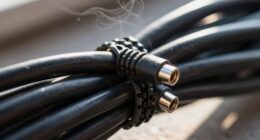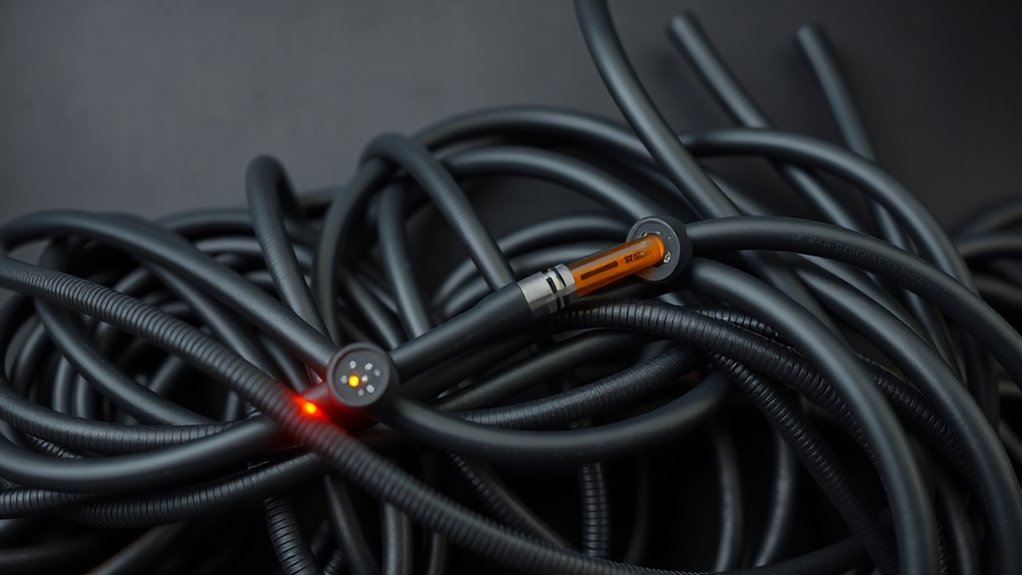

It’s no coincidence that many electrical failures happen during the hottest months of the year. As you manage your cables, keeping heat buildup under control becomes essential for safety and reliability. Without proper insulation, airflow, or organization, heat can cause damage that’s costly to repair. You might think your setup is fine, but small signs of overheating can be easy to miss—until it’s too late to ignore.
Key Takeaways
- Ensure proper airflow by maintaining adequate spacing and using ventilation solutions around cables.
- Use high-quality insulation rated for the current load and environmental conditions to reduce heat transfer.
- Organize cables neatly with trays or ties to prevent tangling and hotspots, facilitating heat dissipation.
- Regularly inspect cables for signs of insulation wear, discoloration, or melting, and address issues promptly.
- Control ambient temperature and avoid placing cables near heat sources to minimize external heat buildup.
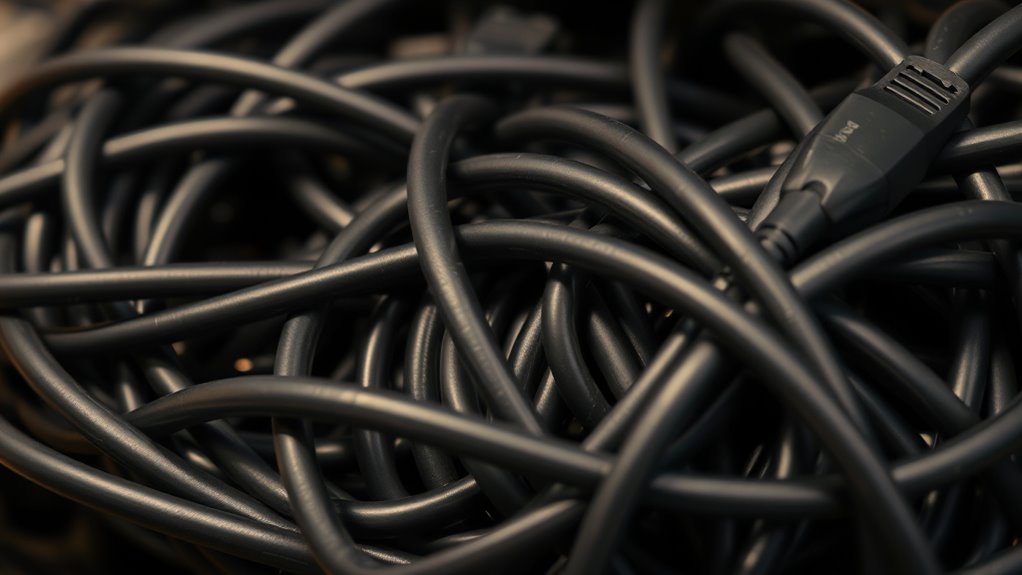
Cable heat buildup can cause performance issues and damage if not managed properly. When cables carry current, they naturally generate heat due to electrical resistance. If this heat isn’t properly dissipated, it can lead to overheating, which reduces cable lifespan and hampers the overall system performance. To prevent these problems, paying close attention to cable insulation and airflow optimization is essential.
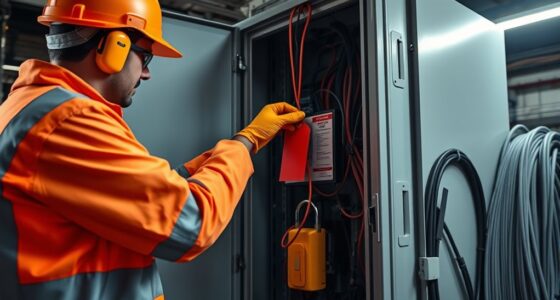
Your first step should be inspecting the quality of cable insulation. Good insulation material acts as a barrier, helping contain heat and preventing external elements from damaging the cable. Worn or degraded insulation can expose conductors, increasing the risk of overheating and short circuits. When replacing or installing new cables, choose insulation rated for the specific current loads and environmental conditions. Proper insulation not only protects the cable but also supports heat management by reducing heat transfer to surrounding components.
Inspect and choose high-quality insulation to protect cables and improve heat management.
Alongside insulation, airflow optimization plays a critical role in managing heat buildup. Proper ventilation ensures that heat generated by cables is effectively carried away from the system. If cables are tightly packed or run through confined spaces, airflow can be obstructed, causing heat to accumulate. To combat this, arrange your cables with sufficient space between them, promoting natural airflow. Installing cooling fans or ventilation ducts can further enhance heat dissipation, especially in high-density setups or server rooms. Remember, even a slight increase in airflow can markedly lower the temperature of your cables, extending their lifespan and maintaining system stability.
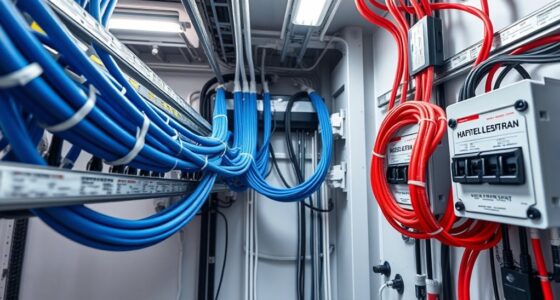
Furthermore, organizing cables neatly helps improve airflow and makes monitoring easier. Use cable ties, trays, or conduits to keep cables orderly and prevent tangling. When cables are bunched together, heat can become trapped, creating hotspots that threaten system reliability. Regularly inspect your setup to identify any signs of overheating, such as melting insulation or discoloration. If you notice these issues, take immediate action by adjusting the cable arrangement or adding cooling solutions.
Finally, consider ambient temperature and environmental conditions. High temperatures in the surrounding environment can exacerbate heat buildup. Keep the area cool and dry, and avoid placing cables near heat sources like direct sunlight or heating vents. Implementing temperature controls or climate management systems can further help keep your cables within safe operating limits. Recognizing the importance of proper insulation and airflow, as highlighted in security system deterrence studies, can significantly improve your cable management strategy.

Official Pi 5 Active Cooler Compatible with Raspberry Pi 5, Pi5 Active Cooler Combines Temperature-Controlled Blower Fan and Aluminium Heatsink, Comes with Thermal Tapes for Better Heat Dissipation
Official RPi 5 Active Cooler — This is Official RPi Active Cooler for the latest RPi 5 4GB/8GB…
As an affiliate, we earn on qualifying purchases.
As an affiliate, we earn on qualifying purchases.
Frequently Asked Questions
What Are the Long-Term Effects of Cable Heat Buildup?
If cable heat buildup persists, it can cause long-term damage like thermal degradation of the cable insulation, leading to brittleness and cracks. Over time, this weakens the cable’s integrity, increasing the risk of short circuits or failures. You might also notice reduced performance and potential safety hazards. To prevent this, make certain proper ventilation and avoid overloading circuits, protecting your cables from heat-induced deterioration.
Can Heat Buildup Damage Specific Types of Cables More Than Others?
Did you know that cables with lower thermal conductivity, like rubber insulation, are more prone to heat damage? Heat buildup can severely damage specific types of cables, especially those with poor insulation or low thermal conductivity, causing insulation to degrade faster. This increases the risk of electrical faults. You should regularly check cable insulation and make sure proper ventilation to prevent heat accumulation and protect your cables from damage.
How Does Ambient Temperature Influence Cable Heat Management?
Ambient temperature greatly influences your cable heat management because higher temperatures reduce the effectiveness of ambient cooling. When the surrounding environment exceeds the cable’s temperature thresholds, heat dissipation becomes less efficient, risking damage or failure. To prevent this, you should monitor ambient temperatures closely, ensure proper ventilation, and use cooling measures when needed. Maintaining a cooler environment keeps your cables operating safely and prolongs their lifespan.
Are There Industry Standards for Maximum Cable Temperature?
Yes, industry standards specify maximum cable temperatures to guarantee safety and performance. You should check standards like IEEE and IEC, which set limits based on cable insulation and thermal conductivity. These standards help you prevent overheating, assuring your cables operate within safe temperature ranges. By adhering to these guidelines, you protect your cables from insulation damage and maintain ideal thermal management, reducing risks and extending cable lifespan.
What Are the Signs Indicating a Cable Is Overheating?
Your cable’s overheating signs are like a warning siren blaring in your ear. You’ll notice insulation degradation, which weakens the protective layer, and connector failure, causing intermittent connections or sparks. Feel excessive heat, see discoloration or melting, and smell burnt insulation. These are clear signals your cable’s under stress, risking failure and potential hazards. address these signs promptly to prevent damage and ensure safe, reliable operation.

Silicone Fiberglass Sleeve, Wire Heat Shield for Electroheat Component, Cable Sleeves Cord Management for Appliances, High Temperature Electrical Insulation Self-extinguishing, (3/16"- 10ft)
【Wire Heat Shield】High temperature fire rated insulated hose reduces radiant heat by up to 70%. Perfect for cable…
As an affiliate, we earn on qualifying purchases.
As an affiliate, we earn on qualifying purchases.
Conclusion
As you implement these strategies, imagine a system where cables stay cool even under heavy load. But don’t let your guard down—hidden hotspots could be lurking, waiting to cause damage. Regular inspections and proper airflow are your best defenses. Stay vigilant, because a small oversight could lead to overheating and costly repairs. Keep your cables safe, and you’ll prevent disaster before it ever strikes, ensuring your system runs smoothly for years to come.

KHAMAL Cable Management Under Desk 26PCS – Cable Management Tray Kit Ventilated Hexagonal Design with Cable Clips, Wire Ties, Cord Holder & Screws for Office, Home (Black)
Durable & Heavy-Duty Build – KHAMAL cable management under desk is made from sturdy metal with a scratch-resistant…
As an affiliate, we earn on qualifying purchases.
As an affiliate, we earn on qualifying purchases.

Under Desk Cable Management Tray No Drill, Metal Mesh Cable Management Under Desk with Clamp Mount, 2 Hole Cable Tray with Wire Management and Cord Organizer for Home Office Standing Desk
【No Drill Mounted】Cable management tray can be assembled in as little as 3 minutes or less-simply. Side clips…
As an affiliate, we earn on qualifying purchases.
As an affiliate, we earn on qualifying purchases.