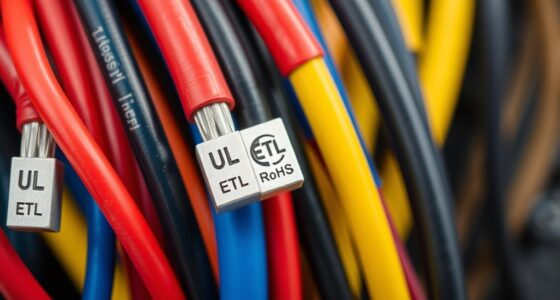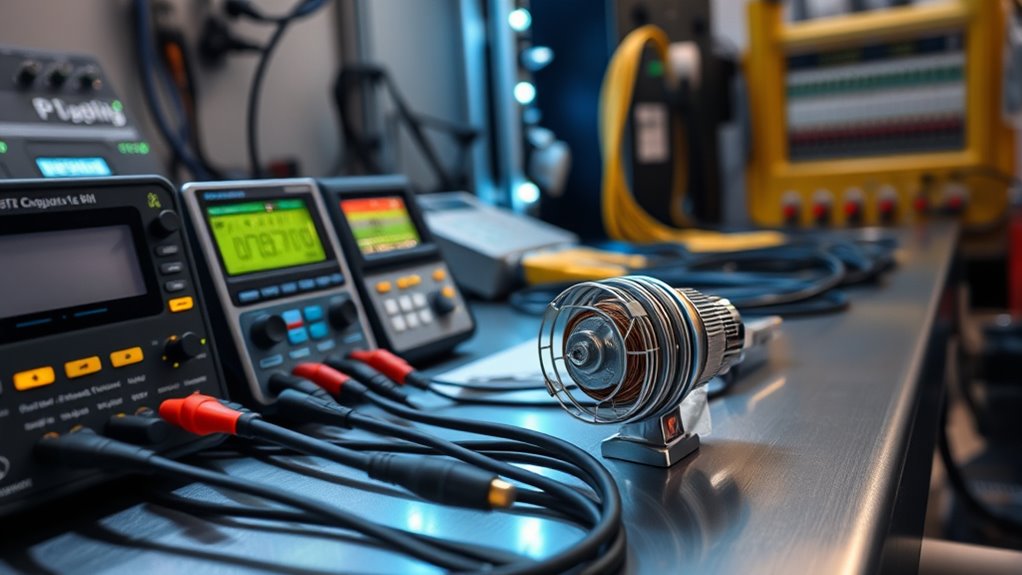

While Category 8 cabling is designed for extremely high frequencies, the role of baluns in this environment isn’t often emphasized enough. Proper balun selection and installation are vital for ensuring signal integrity up to 2000 MHz. If overlooked, they can cause issues like increased crosstalk or reflections, compromising network performance. Understanding what makes a balun suitable for Category 8 testing is essential to maintaining compliance and achieving reliable connections.
Key Takeaways
- Baluns must support frequencies up to 2000 MHz as specified for Category 8 cabling.
- Proper installation of baluns ensures impedance matching and signal integrity during testing.
- Testing should verify parameters like return loss and near-end crosstalk (NEXT) with installed baluns.
- Compatibility of baluns with Category 8 standards prevents undue attenuation and crosstalk.
- Using certified, high-quality baluns and proper termination techniques ensures reliable test results.
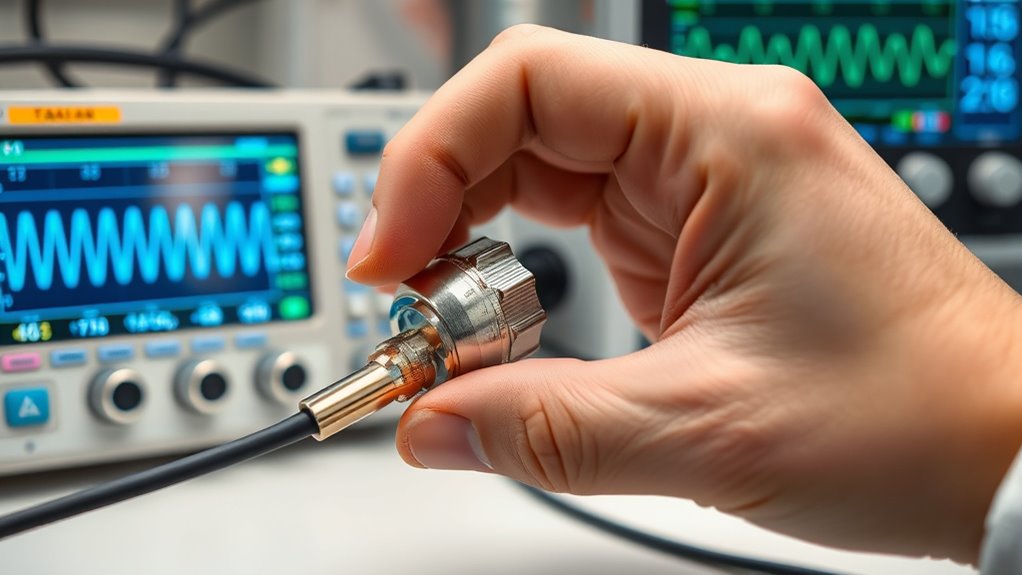
As Category 8 cabling pushes the limits of high-speed data transmission, understanding balun requirements becomes essential for successful testing and installation. Baluns, or balanced-to-unbalanced transformers, are critical components that enable you to connect twisted pair cables to various networking devices. When dealing with Category 8, which supports frequencies up to 2000 MHz, ensuring proper cable termination is paramount. Incorrect termination can introduce impedance mismatches, leading to signal reflections and degradation of signal integrity. This makes precise termination techniques vital, especially since Category 8 cables are designed for demanding environments where even minor faults can cause significant performance issues.
Proper cable termination isn’t just about connecting wires; it directly influences signal integrity. As you work with high-frequency signals, even small imperfections in termination can cause increased insertion loss and crosstalk, reducing the overall performance of your network. You need to pay close attention to the termination process—using the correct tools and following manufacturer specifications—to safeguard against issues that compromise data accuracy and transmission speed. Good termination practices ensure that the impedance remains consistent throughout the cable run, which is crucial for maintaining the integrity of high-frequency signals. Remember, the goal is to minimize any disruption that can distort or weaken the data signal, especially at the higher bandwidths Category 8 demands.
When testing Category 8 cabling, you must verify that your baluns are compatible with the cable’s specifications. This involves selecting baluns that can handle the frequencies involved and ensuring they are properly installed to maintain both cable termination quality and signal integrity. Using improper baluns or neglecting installation guidelines can result in increased attenuation or crosstalk, which diminishes network performance. During testing, pay close attention to parameters like return loss and near-end crosstalk (NEXT), which are indicators of how well your cable and balun setup preserves the integrity of the transmitted signals. If these parameters are outside acceptable limits, it indicates issues with cable termination or balun compatibility that need correction before deployment.
Category 8 balun for high frequency testing
As an affiliate, we earn on qualifying purchases.
As an affiliate, we earn on qualifying purchases.
Frequently Asked Questions
How Do Balun Specifications Differ for Different Cable Lengths?
You need to take into account cable length considerations when selecting balun specifications, as longer cables can impact impedance and signal integrity. Balun scaling becomes essential; for extended lengths, choose baluns with appropriate impedance matching and higher power ratings to maintain performance. Shorter cables may require less robust baluns, but always ensure the balun can handle the frequency and power levels to avoid signal degradation or loss.
Are There Industry Standards for Balun Manufacturing Tolerances?
Did you know that over 80% of baluns fail quality tests due to manufacturing inconsistencies? Industry standards for manufacturing tolerances guarantee reliable performance, requiring baluns to meet specific criteria for impedance, insertion loss, and isolation. These standards often align with industry certifications like UL or ISO, which help maintain high manufacturing precision. Following these guidelines guarantees your baluns perform correctly, especially in demanding applications like Category 8 testing.
Can Existing Baluns Be Adapted for Category 8 Testing?
Yes, existing baluns can often be adapted for Category 8 testing through proper adapter modifications. You should verify balun compatibility with Category 8 standards, ensuring they meet the necessary frequency and shielding requirements. If they don’t, you might need to upgrade or modify your adapters to maintain performance. Keep in mind, proper testing and validation are essential to confirm your adapted baluns perform reliably in Category 8 environments.
What Are Common Troubleshooting Steps for Balun Failures?
You might think troubleshooting balun failures is straightforward, but don’t be fooled—it’s like chasing a ghost. First, check shielding effectiveness to ensure there’s no interference. Then, verify impedance matching to prevent signal loss. Inspect connections for corrosion or damage, and test the balun with a multimeter. Sometimes, the problem isn’t the balun itself but external factors, so stay thorough and patient—it’s all about precision and attention to detail.
How Do Environmental Factors Affect Balun Performance?
Environmental factors profoundly influence balun performance. Temperature sensitivity can cause impedance variations, leading to signal loss or distortion. High humidity effects may promote corrosion or moisture buildup, degrading connections and insulation. You should monitor ambient conditions and guarantee proper sealing to minimize these issues. Regular inspections and environmental controls help maintain ideal balun operation, reducing potential failures caused by temperature fluctuations and humidity exposure.

Rooyar 1:9 Balun Frequency Band Long Wire RTL-SDR Antenna
As an affiliate, we earn on qualifying purchases.
As an affiliate, we earn on qualifying purchases.
Conclusion
Think of the balun as the quiet guardian of your network’s symphony, ensuring every note hits perfectly at soaring frequencies. When you meet Category 8 standards, you’re building a bridge that withstands the storm of signals and interference. By choosing the right balun and installing it correctly, you’re not just connecting wires—you’re crafting a resilient, harmonious network that stands the test of time and technology’s relentless evolution.

Cable Matters 6-Pack Tool Free Shielded RJ45 Cat 8, Cat8 Field Termination Plug, Cat 8 Connector, Cat8 Plug
Full metal jacket RJ45 field plug for Cat 8 channel network switch and server connections; Modular plugs with…
As an affiliate, we earn on qualifying purchases.
As an affiliate, we earn on qualifying purchases.
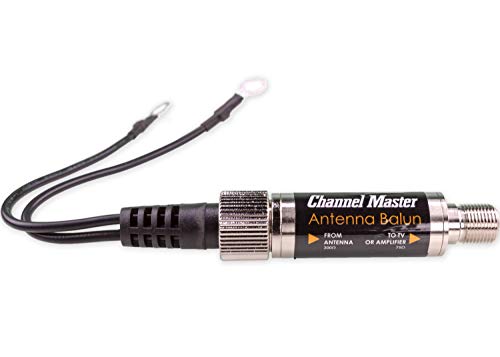
Channel Master Outdoor Balun/Matching Transformer Deluxe | 300 Ohm to 75 Ohm Matching Transformer/Adapter – Twin Lead to Coaxial F-Type Connector for Indoor & Outdoor Antennas
Professional-Grade Performance: Connects 75 Ohm coaxial cable to 300 Ohm outdoor TV antennas, delivering superior signal quality.
As an affiliate, we earn on qualifying purchases.
As an affiliate, we earn on qualifying purchases.