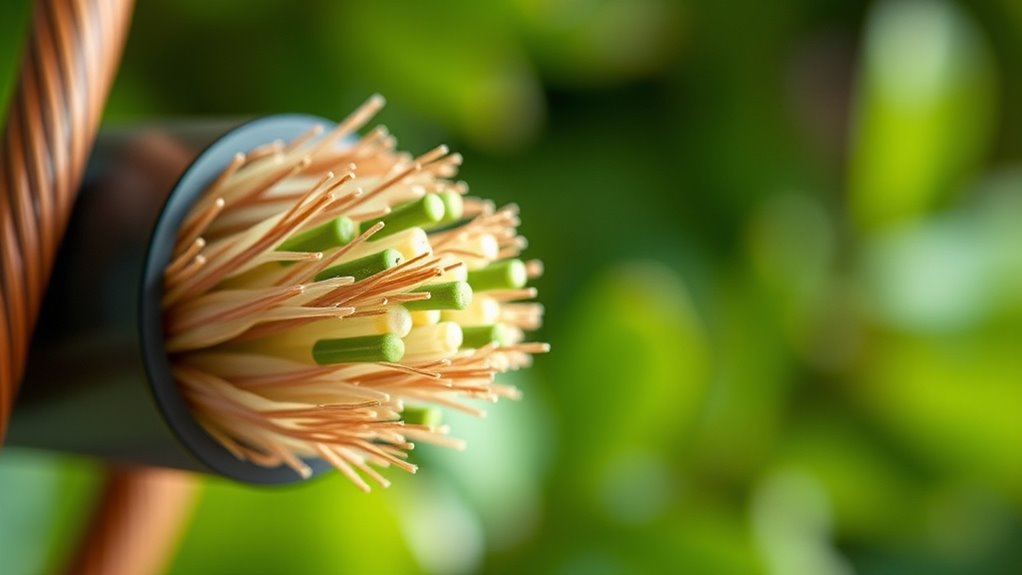

Did you know that traditional cable insulation contributes substantially to plastic waste, with millions of tons ending up in landfills annually? As environmental concerns grow, so does the demand for sustainable alternatives that don’t compromise performance. Innovations in biodegradable cable insulation could transform how we think about electronic waste, but many questions remain about their durability and practicality. Discover how recent advances are shaping a greener future for electrical infrastructure.
Key Takeaways
- Development of biocomposites combining natural fibers with biodegradable polymers enhances insulation durability and eco-friendliness.
- Engineering materials to withstand environmental stresses while maintaining biodegradability improves long-term performance.
- Innovations in eco-friendly additives and cross-linking techniques increase resistance to moisture, heat, and mechanical wear.
- Advances in bioplastics, such as polylactic acid (PLA), offer sustainable alternatives with improved electrical insulation properties.
- Research efforts are focused on balancing biodegradability with safety standards to accelerate industry adoption of sustainable cable insulation.
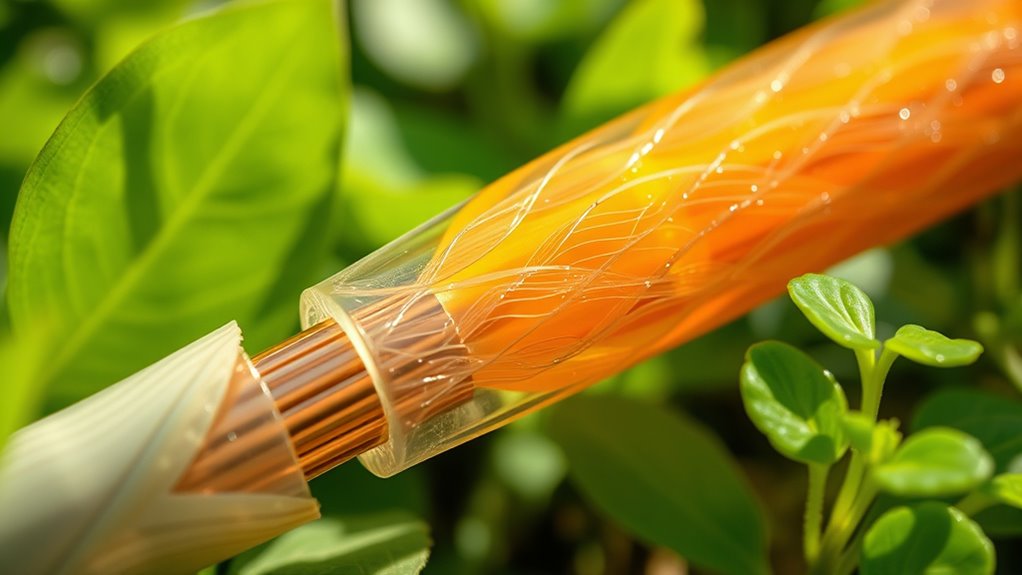
Have you ever wondered if cable insulation could be environmentally friendly? It’s a question many of us ask as we become more conscious of our ecological footprint. Traditional cable insulations, often made from plastics like PVC or polyethylene, pose significant recycling challenges. These materials are durable but not always easy to process once they’re discarded. Recycling challenges stem from their complex chemical compositions and the difficulty in separating different layers or compounds. When these insulations end up in landfills, they can persist for decades, contributing to pollution and harming wildlife. The idea of biodegradable cable insulation aims to address these issues by introducing materials that break down naturally, reducing long-term waste. However, designing such insulation isn’t without its hurdles. Ensuring that biodegradable materials maintain the necessary material durability for electrical safety and performance is a primary concern. You need insulation that can withstand environmental stresses, mechanical wear, and electrical loads over time, all while being eco-friendly.
The challenge lies in balancing biodegradability with durability. Many biodegradable materials tend to degrade faster under certain conditions, which could compromise their effectiveness in protecting electrical components. Researchers are exploring innovative composites that combine natural fibers, bioplastics, and other eco-friendly components to create a product that is both resilient and environmentally responsible. These new materials are being engineered to resist moisture, temperature fluctuations, and mechanical damage, ensuring they perform reliably during their lifespan. At the same time, they are designed to degrade after disposal, reducing environmental impact. It’s a delicate balance—materials must be tough enough to serve their purpose but still break down safely once their job is done. Additionally, advances in biodegradable material science are expanding possibilities for sustainable insulation solutions.
You might be surprised to learn that advances in material science have made this possible, yet widespread adoption still faces obstacles. Cost remains a barrier, as biodegradable options can be more expensive than conventional plastics. Additionally, existing recycling systems are not fully equipped to handle these new materials, which complicates their integration into current waste management practices. The shift requires not only technological innovation but also changes in industry standards and consumer awareness. While biodegradable cable insulation offers a promising solution to the recycling challenges posed by traditional materials, it’s still in development. The goal is to create a product that’s environmentally friendly without sacrificing the durability needed for safe and reliable electrical insulation. As research progresses, you can expect to see more sustainable options that meet both performance and ecological standards, helping to shape a greener future for the electrical industry.

ISPINNER 12pcs 1/2 Inch PVC Pipe Straps, 2 Holes Plastic Conduit Strap for PVC pipes, conduit and cables, UL Listed
HIGH QUALITY - These pipe straps are made from high quality PVC, sturdy and durable, anti-corrosion. The surface...
As an affiliate, we earn on qualifying purchases.
Frequently Asked Questions
How Does Biodegradable Insulation Perform Under Extreme Temperatures?
Biodegradable cable insulation offers decent thermal resilience, but it may not perform as well as traditional materials under extreme temperatures. You might notice reduced material stability when exposed to high heat or cold, leading to potential degradation or loss of insulating properties. While advancements are ongoing, it’s essential to take into account these temperature limits for applications requiring consistent performance in harsh environments.
What Is the Typical Lifespan of Biodegradable Cable Insulation?
You can expect biodegradable cable insulation to last around 10-15 years, depending on the degradation rate and storage stability. Proper storage in cool, dry conditions can prolong its lifespan by slowing down degradation. However, exposure to extreme temperatures or moisture accelerates deterioration. Regular inspections help guarantee safety and performance. Overall, while it’s eco-friendly, you should plan for a shorter lifespan compared to traditional insulation.
Are Biodegradable Materials Cost-Effective Compared to Traditional Options?
Biodegradable materials are increasingly cost-effective compared to traditional options, especially when considering long-term savings and environmental benefits. You’ll find a positive cost comparison as manufacturing processes improve, and material durability advances, ensuring reliable performance. While initial costs may be slightly higher, the overall savings from reduced environmental impact and compliance with regulations make biodegradable cable insulation a smart, budget-friendly choice for future projects.
How Recyclable Is Biodegradable Cable Insulation After Use?
You’ll be amazed by how recyclable biodegradable cable insulation is after use, making it a game-changer for sustainability. Although recycling challenges exist, the biodegradability process guarantees it breaks down naturally, reducing environmental impact. Unlike traditional materials that clog landfills, this insulation can often be composted or recycled with minimal effort. By choosing biodegradable options, you’re actively contributing to a cleaner planet and promoting eco-friendly practices in electronics.
What Are the Environmental Impacts of Producing Biodegradable Insulation?
Producing biodegradable insulation reduces environmental pollution and resource depletion compared to traditional materials. You’ll find that it requires fewer harmful chemicals and less energy during manufacturing, which minimizes pollution. Additionally, using renewable resources for production helps conserve non-renewable resources, lowering your environmental footprint. Overall, this process supports sustainability by lessening environmental impacts and promoting eco-friendly practices in the cable industry.

Sigma Engineered Solutions ProConnex 44919 One-Hole BX Strap 3/8-Inch Conduit Fitting, 10-Pack
Supports runs of AC, MC or FMC
As an affiliate, we earn on qualifying purchases.
Conclusion
As you explore biodegradable cable insulation, you’ll find that recent innovations now make these materials withstand environmental stresses for up to 10 years—comparable to traditional plastics. With natural fiber composites gaining ground, it’s exciting to see a future where over 60% of new cables could be eco-friendly by 2030. Embracing these advancements means you’ll help reduce plastic pollution while enjoying reliable performance, making sustainability an achievable, everyday choice.

LOKMAN 20 Pack 1/2 Inch Stainless Steel Cable Clamp, Rubber Cushioned Insulated Clamp, Conduit Wire Holder Strap Clips for Tube, Pipe or Wire Cord Installation
HIGH QUALITY- Made from 304 Premium Stainless steel material with quality rubber cushioned. Salt resistant, anti rust, anti-corrosion,...
As an affiliate, we earn on qualifying purchases.

Demissle PVC Conduit Clamp 2 Hole Straps Heavy Duty Grey Plastic Conduit Strap U Clip Mounting Bracket for Cables(100 Pcs,1/2 Inch)
Practical Design: featuring the functional U shape, the 2 hole PVC straps has a special rut design, which...
As an affiliate, we earn on qualifying purchases.