
Microducts for fiber blowing provide a durable, flexible pathway that makes deploying fiber optic cables faster and easier. They protect cables from environmental elements like moisture and UV rays while supporting efficient installation through specialized blowing equipment. Proper design and material choice guarantee long-lasting performance, even in harsh conditions. Using microducts minimizes installation disruptions and future upgrades become simpler. If you want to discover more about the best practices and materials, keep exploring how microduct systems enhance fiber deployment.
Key Takeaways
- Microducts provide a protective, low-friction pathway ideal for fiber blowing techniques.
- Material selection (PE, PVC) ensures durability and resistance against environmental factors.
- Proper installation practices, including gentle bending and support, extend microduct lifespan.
- Modular and pre-connectorized systems facilitate future upgrades and maintenance.
- Microducts enhance installation efficiency, reduce disruption, and ensure long-term network reliability.
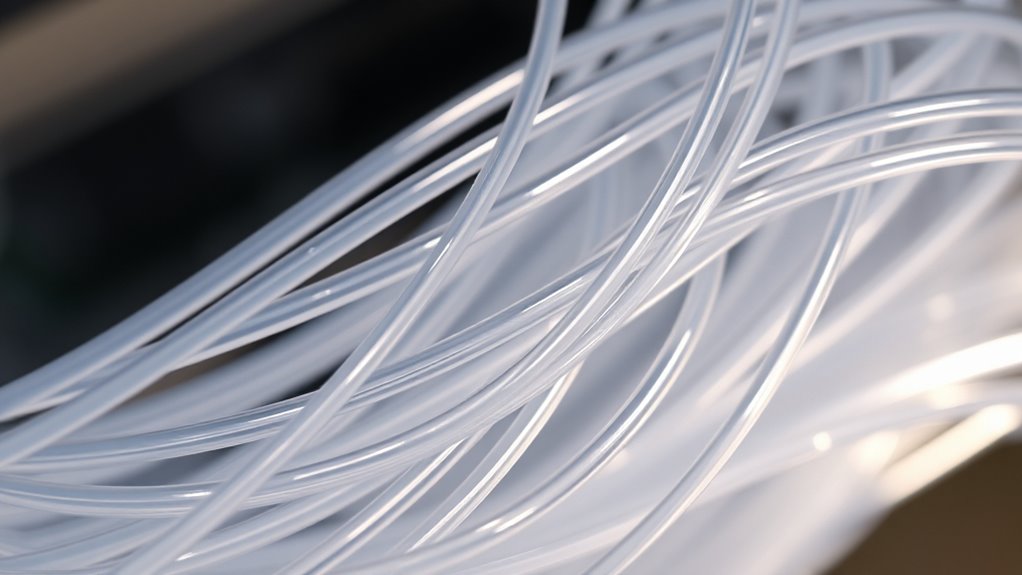
Microducts for fiber blowing have become essential in modern telecommunications infrastructure, enabling faster and more efficient installation of fiber optic cables. These tiny conduits serve as protective channels that streamline the process of laying fiber, especially in dense urban environments or complex underground networks. When considering how to install microducts, you’ll want to focus on effective installation techniques that ensure smooth cable blowing while maintaining system integrity. Proper trenching, precise positioning, and the use of specialized blowing equipment are critical steps that can greatly reduce installation time and minimize disruptions. You might also consider pre-connectorized microducts or modular systems to simplify future upgrades or repairs. The goal is to create a seamless pathway for fiber, reducing the risk of damage during installation and guaranteeing reliable performance over the long term. Additionally, selecting microducts with resistance to environmental stresses ensures durability in challenging conditions.
Effective microduct installation ensures smooth fiber blowing, system integrity, and long-term network reliability.
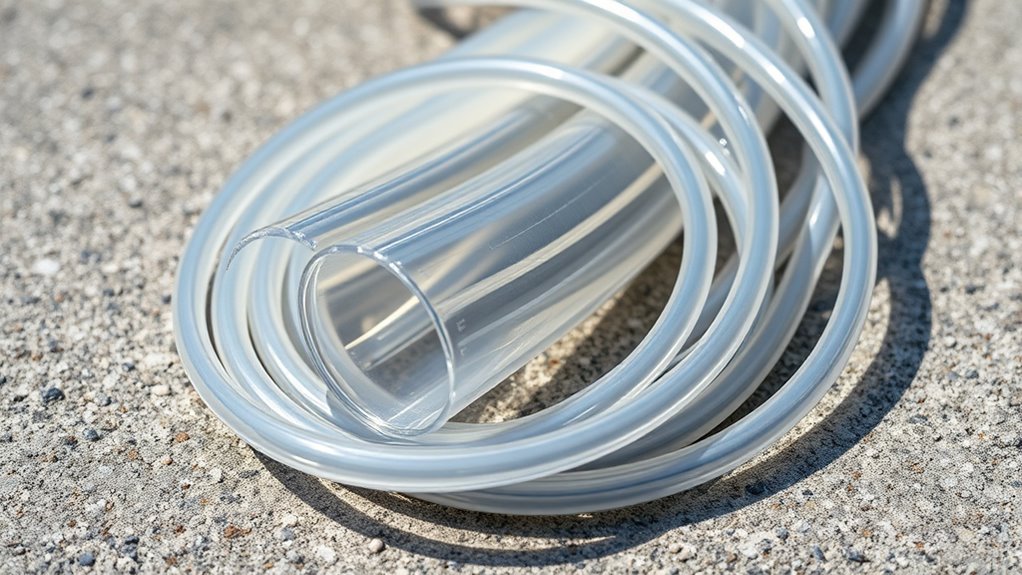
Material durability plays a vital role in selecting the right microducts for your project. Since these conduits are often buried underground or installed in harsh environments, you need materials that can withstand external stresses, chemical exposure, and temperature fluctuations. Polyethylene (PE) and polyvinyl chloride (PVC) are common choices because of their excellent resistance to moisture, UV radiation, and physical wear. You’ll want to look for microducts that have reinforced walls or added UV stabilizers if they’ll be exposed to sunlight or extreme weather conditions. The durability of the material directly impacts the microduct’s lifespan and the protection it offers to the fiber inside, so investing in high-quality, resilient materials pays off in the long run.
When you’re choosing microducts, consider not only their material properties but also how installation techniques can affect their longevity. For example, gentle bending radii during installation prevent cracking or deformation, which could compromise the conduit’s durability. Proper handling and installation practices help preserve the integrity of the microducts, ensuring they maintain their protective qualities over time. Additionally, selecting microducts with smooth internal surfaces reduces friction during fiber blowing, making installation easier and less damaging to the fiber.
In essence, the combination of sound installation techniques and durable materials forms the backbone of a successful fiber deployment. You want to guarantee that your microducts are installed correctly, with proper support and minimal stress, while also choosing materials that can withstand the environmental challenges they’ll face. This approach guarantees a resilient, long-lasting conduit system that facilitates efficient fiber deployment and future-proofing your network infrastructure.
Top picks for "microduct fiber blow"
Open Amazon search results for this keyword.
As an affiliate, we earn on qualifying purchases.
Frequently Asked Questions
How Do Microducts Impact Overall Network Installation Costs?
Microducts considerably reduce your overall network installation costs by enhancing installation efficiency. They allow you to bundle multiple fibers in a single duct, speeding up the setup process and lowering labor expenses. Additionally, microducts minimize the need for extensive digging and reduce material waste, contributing to cost reduction. Their flexibility and ease of use make installing and maintaining fiber networks more affordable, saving you time and money in the long run.
Are Microducts Suitable for Underground and Aerial Fiber Deployments?
Yes, microducts are suitable for both underground and aerial fiber deployments. Your microduct installation benefits from using durable microduct material designed to withstand environmental conditions, whether buried or suspended. These materials guarantee protection against moisture, UV rays, and physical damage, making microducts versatile for various deployment scenarios. Proper selection of microduct material and installation techniques ensures reliable fiber routing and long-term performance in diverse environments.
What Are the Environmental Considerations for Microduct Durability?
You should consider UV resistance and thermal expansion when evaluating microduct durability. UV exposure can degrade materials over time, so choose microducts with strong UV resistance for outdoor deployments. Also, account for thermal expansion, which can cause stress and potential damage during temperature fluctuations. Selecting microducts designed to handle these environmental factors ensures longer-lasting performance, especially in exposed or variable climate conditions.
How Do Microducts Compare to Traditional Conduit Systems?
Microducts excel over traditional conduit systems by offering greater fiber flexibility and easier installation. You’ll find that microducts are lightweight, making them simpler to handle and install in tight spaces. Unlike rigid conduits, they allow for quicker upgrades and maintenance. Their flexibility reduces the risk of damage during installation, ensuring smoother fiber blowing processes. Overall, microducts provide a more adaptable and efficient solution compared to traditional conduit systems.
What Are the Future Trends in Microduct Technology Development?
Think of future microducts as a smart garden, where smart materials and automation integration help systems grow seamlessly. You’ll see microducts designed with smarter, more flexible materials that adapt to environmental changes, reducing installation times and maintenance. Automation will streamline deployment, making fiber installation faster and more efficient. These innovations will create a resilient, intelligent network infrastructure that evolves with your needs, ensuring faster, reliable connectivity for years to come.
Conclusion
Think of microducts for fiber blowing as the delicate veins of a high-tech city, guiding your data swiftly and securely through its intricate network. By choosing the right microducts, you’re laying down the arteries that guarantee seamless connectivity and future-proof your infrastructure. Just as a well-planned road system keeps a city moving, these microducts keep your fiber optic pathways flowing smoothly. Invest wisely, and watch your network flourish like a thriving, vibrant metropolis.