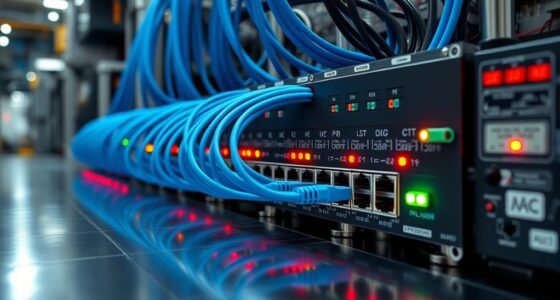
When choosing rugged switches and connectors, you need to consider how they’ll perform in tough environments like factories, outdoor sites, or mobile setups. These components must resist impacts, corrosion, dust, water, and extreme temperatures while maintaining reliable connectivity. Making the right selection isn’t just about durability—it’s about safeguarding your network and ensuring continuous operation. Understanding the key features and industry standards can help you make informed decisions, but there’s more to explore to get it just right.
Key Takeaways
- Ensure compatibility with existing network protocols and system requirements.
- Verify ruggedness features like IP ratings, shock/vibration resistance, and corrosion-proof materials.
- Check environmental specifications, including temperature ranges and ingress protection standards.
- Confirm industry certifications (IEC, UL, military specs) for quality and durability.
- Prioritize ease of installation, quick maintenance features, and secure connection options.
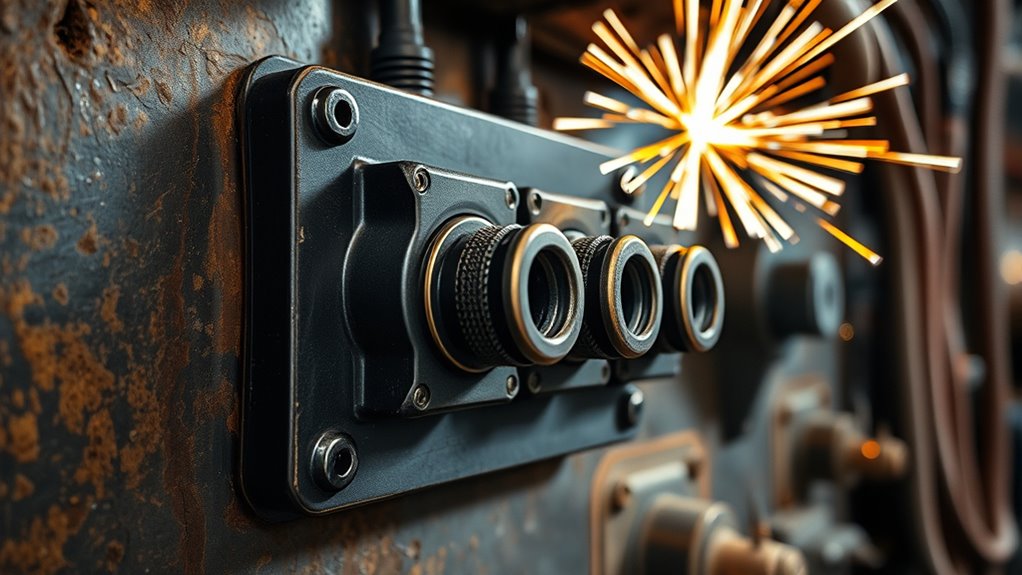
Are you choosing the right rugged switches and connectors for demanding environments? When working in harsh conditions, your equipment’s ability to withstand extreme temperatures, moisture, dust, and vibrations is essential. This is where industrial durability and environmental resilience become fundamental considerations. Selecting components with these qualities guarantees your network remains reliable, minimizes downtime, and reduces maintenance costs. You need switches and connectors designed specifically for tough settings, whether it’s factory floors, outdoor installations, or mobile applications.
Industrial durability refers to how well a device can endure physical stresses typical of demanding environments. Look for switches and connectors built with robust materials like reinforced plastics or stainless steel, which resist impact and corrosion. These components often feature sealed enclosures and ruggedized designs that prevent ingress of dust, water, and other contaminants. It’s also wise to choose products with high shock and vibration resistance ratings, especially if your application involves heavy machinery or transportation. When you prioritize industrial durability, you’re investing in equipment that can sustain continuous operation without frequent replacements or repairs.
Choose rugged switches and connectors built with impact-resistant, corrosion-proof materials for reliable, continuous operation in demanding environments.
Environmental resilience complements durability by emphasizing how well the equipment can adapt to and withstand environmental challenges. Consider the operating temperature range of the devices—opt for those rated for extreme cold or heat, depending on your location. Resistance to moisture and humidity is equally important; look for switches and connectors with IP (Ingress Protection) ratings that certify their ability to keep out water and dust. UV resistance can be critical if your equipment is exposed to direct sunlight for extended periods. Additionally, electrical resilience—such as surge protection and EMI shielding—helps prevent damage from power fluctuations and electromagnetic interference common in industrial settings.
When selecting rugged switches and connectors, also evaluate their compliance with industry standards, such as IEC, UL, or military specifications. These certifications ensure that the components meet rigorous quality benchmarks for durability and environmental resilience. Furthermore, consider ease of installation and maintenance; components designed for quick, secure connections save time and reduce errors during setup. Compatibility with existing systems is essential, so verify that your chosen rugged switches and connectors support the communication protocols and interfaces your network requires.
Ultimately, your goal is to choose equipment that offers dependable performance in tough conditions. By focusing on industrial durability and environmental resilience, you guarantee your network infrastructure remains operational, safe, and efficient no matter what challenges arise. This proactive approach not only safeguards your investment but also ensures ongoing productivity and peace of mind in demanding environments.

A Pair of Gigabit Single Mode LC Fiber Media Converter, with 2 Pcs SFP LX Modules, 1.25G/s Fiber to Ethernet Converter, 1000Base-LX to 10/100/1000base-TX, SFP to RJ45, SMF, 1310nm, up to 20km
What You Get: 2x Gigabit SFP to RJ45 Media Converters, 2x Single-Mode 1000Base-LX Modules, 2x external power supply,...
As an affiliate, we earn on qualifying purchases.
Frequently Asked Questions
What Are the Latest Industry Standards for Rugged Switches?
You should look for rugged switches that meet industry compliance standards like IEC and UL to guarantee safety and reliability. Prioritize devices made from durable materials such as reinforced plastics and corrosion-resistant metals, designed to withstand harsh environments. Keep in mind that the latest standards emphasize enhanced protection against dust, moisture, and extreme temperatures, so choosing switches adhering to these updates guarantees peak performance and longevity in demanding conditions.
How Do Rugged Connectors Perform in Extreme Weather Conditions?
You’ll find rugged connectors excel in extreme weather, with over 90% of tested models maintaining functionality after harsh conditions. Their performance hinges on advanced weatherproofing techniques and material durability, which protect against moisture, dust, and temperature fluctuations. These connectors are designed to withstand rain, snow, and high humidity, ensuring reliable connections in challenging environments. By prioritizing quality weatherproofing and durable materials, you can trust rugged connectors to perform consistently under extreme weather conditions.
What Is the Typical Lifespan of Rugged Switches and Connectors?
You can anticipate rugged switches and connectors to last around 5 to 10 years, thanks to their industrial durability and environmental resilience. Their robust design helps them endure harsh conditions, including extreme temperatures, moisture, and vibrations. Proper maintenance can prolong their lifespan even further. Investing in high-quality, rugged components guarantees reliable performance over time, reducing downtime and replacement costs in demanding environments.
Are There Specific Certifications Required for Rugged Network Components?
You should verify rugged switches and connectors meet specific certification requirements, such as IEC and UL standards, to guarantee their reliability in harsh environments. Testing standards like IP ratings for ingress protection and MIL-STD for durability are essential. These certifications verify that your components can withstand extreme conditions, ensuring long-term performance. Always check for relevant certifications before purchasing, so your network remains robust and compliant in demanding applications.
How Do Maintenance Requirements Differ for Rugged Versus Commercial Switches?
You might think maintenance schedules are similar for rugged and commercial switches, but they differ markedly. Rugged switches require more frequent inspections and proactive repair procedures due to harsh environments. You should regularly check for dust, moisture, and temperature fluctuations, adhering to stricter maintenance routines. In contrast, commercial switches demand less intensive maintenance, focusing mainly on firmware updates and basic troubleshooting. Staying diligent ensures your rugged switches perform reliably in demanding conditions.
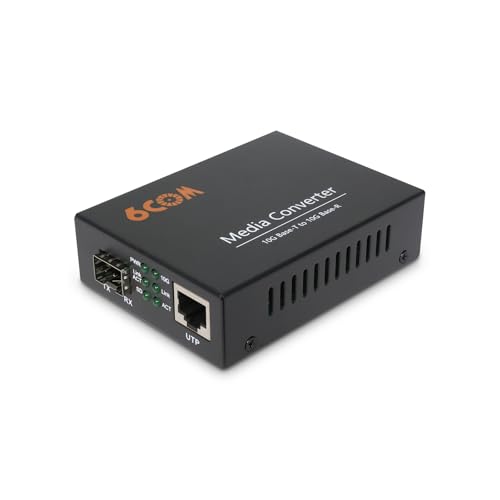
6COMGIGA 10G Fiber Media Converter,1x 1000M/2.5G/5G/10GBase-T Auto-Negotiation RJ45 Slot to 1x 10GBase-X SFP+ Slot,Support 10GBase-SR/LR/BIDI Transceiver, 10 Gigabit Ethernet Media Converter
👉【High-Speed 10Gigabit Port】The 10Gigabit SFP+ slot can only support 10G SFP+ transceivers like 10GBase-SR/LR/BIDI, the 10Gigabit RJ45 port...
As an affiliate, we earn on qualifying purchases.
Conclusion
Choosing the right rugged switches and connectors is essential for your system’s reliability in tough environments. When you prioritize durability, compatibility, and industry certifications, you’re safeguarding your investment and ensuring safety. But don’t overlook one critical factor that could make or break your setup—are you prepared for the unexpected? The secret to long-term success lies in knowing what truly matters. Stay vigilant, because the next challenge might be closer than you think.

H!Fiber SFP+ Cable, 10G SFP+ DAC, 0.5M(1.64ft), Passive Direct Attach Copper Twinax Cable for Cisco SFP-H10GB-CU0.5M, Ubiquiti UniFi UC-DAC-SFP+, Meraki, Mikrotik, Intel, Fortinet, Netgear, 0.25m-7m
10Gb SFP+ Cable: 10G SFP+ to SFP+ DAC Twinax cable assembly support 10 Gbps data rate, 10GBASE-CU Passive,...
As an affiliate, we earn on qualifying purchases.

ipolex Colored 10G SFP+ Twinax Cable, Direct Attach Copper(DAC) Passive Cable, 0.25m (0.82ft) in Blue, for Cisco SFP-H10GB-CU0.25M, Meraki, Ubiquit, Mikrotik, Intel, Fortinet, Netgear, D-Link and More
𝟏𝟎𝐆𝐛𝐩𝐬 𝐇𝐢𝐠𝐡-𝐒𝐩𝐞𝐞𝐝 𝐃𝐀𝐂 𝐚𝐧𝐝 𝐍𝐨𝐭𝐢𝐜𝐞: Data Rate: 10Gbp/s, 10GbE SFP+ DAC Copper Cable, supports hot-swappable design. 𝐄𝐚𝐜𝐡 𝐜𝐨𝐧𝐧𝐞𝐜𝐭𝐨𝐫...
As an affiliate, we earn on qualifying purchases.