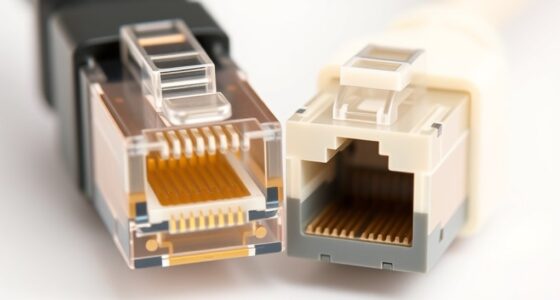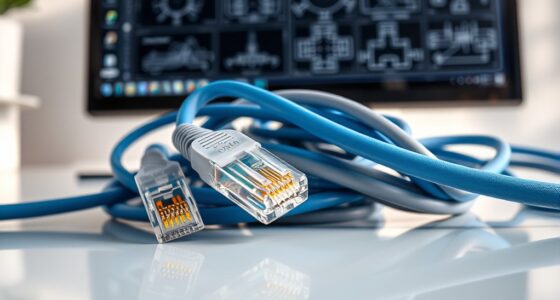

Did you know that upgrading to a Cat6 or Cat7 cable doesn’t necessarily mean your internet will get faster? Many believe that higher-category cables always boost speeds, but that’s not quite true. Several factors influence your actual connection, from your internet plan to your router. If you want to understand why cable categories alone aren’t a guaranteed fix, there’s more to think about beyond just the cable type.
Key Takeaways
- Upgrading to higher-category Ethernet cables alone does not increase internet speeds without supporting hardware and plan.
- Network performance depends on the internet service plan, router, and modem, not just cable quality.
- Faster cables won’t improve speeds if the existing hardware or provider limits bandwidth.
- Wireless solutions like Wi-Fi 6 or fiber optic internet can offer higher speeds more effectively than cable upgrades.
- The entire network infrastructure must support higher data rates; cables are only one component.

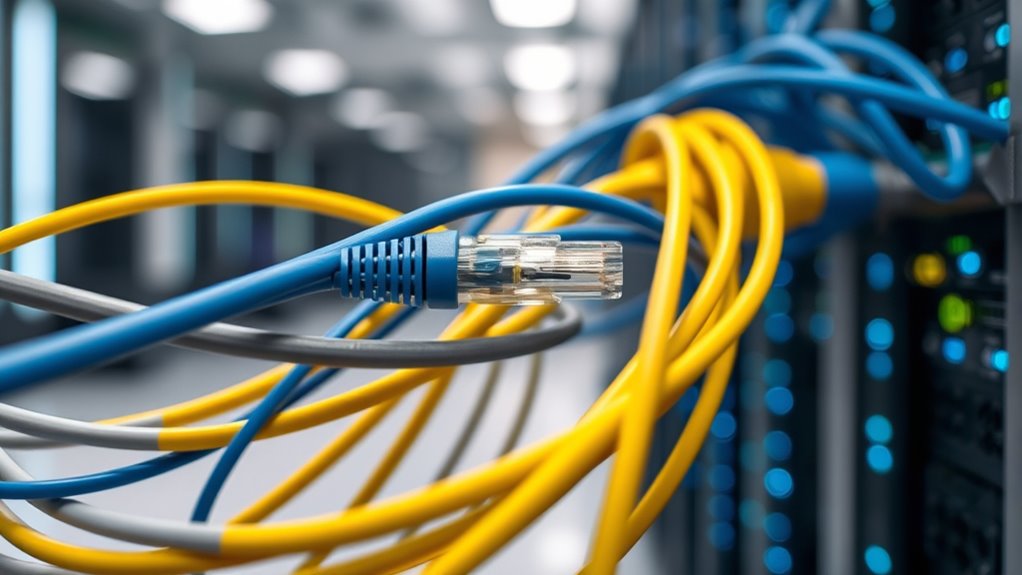
Many people assume that upgrading to higher category Ethernet cables, like Cat6 or Cat7, will automatically boost their internet speeds. While these cables can handle faster data transfer rates, simply swapping out your old cable isn’t always the answer. Your internet speed depends on multiple factors, including your internet service provider, network setup, and the devices you use. Higher category cables are designed to support higher bandwidths and faster speeds, but they don’t create those speeds on their own. If your internet package is limited or your router isn’t capable of handling gigabit speeds, upgrading your Ethernet cable won’t make a noticeable difference.
Upgrading Ethernet cables alone won’t improve your internet speed if your service plan or hardware limits performance.
Moreover, you should consider the role of alternative technologies like fiber optic connections and wireless options. Fiber optic internet, for example, can deliver much higher speeds and more consistent performance than traditional Ethernet cables. It uses light signals transmitted through thin glass or plastic fibers, providing a faster and more reliable connection over long distances. If your goal is to increase internet speed considerably, switching to fiber optic service could be more effective than upgrading Ethernet cables. Similarly, wireless standards such as Wi-Fi 6 or Wi-Fi 6E are designed to handle higher data rates and reduce latency. These wireless standards are capable of supporting the demanding needs of modern devices and streaming services, often providing faster speeds without the clutter of physical cables.
It’s also important to recognize that your network’s bottleneck might not be the cable at all. Your router, modem, or network hardware could be limiting your speed, regardless of the Ethernet category. For example, a router that only supports speeds up to 1 Gbps will prevent you from experiencing the full potential of a Cat6 or Cat7 cable. In these cases, upgrading your hardware might be a more effective way to enhance your internet experience.
Additionally, understanding the contrast ratio of your projector can help ensure you get a clear and vibrant image, especially in dark viewing environments. In essence, upgrading to higher category Ethernet cables can be beneficial, but only if the rest of your network infrastructure supports faster speeds. If your internet provider offers slower plans or your hardware isn’t compatible with higher speeds, then the cable upgrade won’t deliver the results you expect. Exploring fiber optic options or wireless alternatives might provide a more substantial boost. Think of the Ethernet cable upgrade as one piece of a larger puzzle; to truly improve your internet speed, you need to ensure the entire system—from your service plan to your router—is capable of supporting those faster data rates.

TP-Link ER605 V2 Wired Gigabit VPN Router, Up to 3 WAN Ethernet Ports + 1 USB WAN, SPI Firewall SMB Router, Omada SDN Integrated, Load Balance, Lightning Protection
【Five Gigabit Ports】1 Gigabit WAN Port plus 2 Gigabit WAN/LAN Ports plus 2 Gigabit LAN Port. Up to…
As an affiliate, we earn on qualifying purchases.
As an affiliate, we earn on qualifying purchases.
Frequently Asked Questions
Do Higher Category Cables Support Longer Distances Without Signal Loss?
Higher category cables do support longer distances without significant signal degradation, but only up to a point. As cable length increases, signal quality can weaken, affecting performance. Using higher category cables can improve cable longevity and reduce signal loss over longer runs, but it doesn’t eliminate the need for signal boosters or switches in extensive setups. Always choose the right cable for your specific distance and network demands.
Can Using Higher Category Cables Improve Network Security?
Using higher category cables can improve network security because their shielding reduces electromagnetic interference, which helps prevent data breaches from signal leakage. Better shielding minimizes the risk of unauthorized access or data interception, making your network less vulnerable. While higher category cables don’t directly encrypt data, their design enhances overall security by maintaining signal integrity and reducing vulnerabilities caused by electromagnetic interference.
Are Higher Category Cables More Durable Than Lower Ones?
Higher category cables aren’t necessarily more durable, but they often excel in flexibility and color coding, making installation easier and more organized. You’ll find that higher category cables, like Cat6 or Cat7, tend to have better shielding, which can protect against wear and tear. While they aren’t indestructible, their improved design helps them withstand bending and twisting better than lower categories, saving you from frequent replacements and headaches.
How Do Installation Environments Affect Cable Performance?
You should consider how installation environments impact cable performance because factors like interference resistance and installation flexibility matter. In environments with high electromagnetic interference, choosing cables with better interference resistance ensures reliable data transfer. Additionally, flexible cables make installation easier in tight or complex spaces. Properly matching your environment with the right cable specifications prevents performance issues and guarantees ideal network operation, regardless of the cable category.
Is There a Cost Difference Between Different Cable Categories?
You might think higher category cables cost more, but it’s not always the case. The cost comparison depends on manufacturing differences and quality standards. Sometimes, higher-category cables are more affordable due to mass production or brand choices. So, don’t assume that upgrading to a higher category automatically means spending more—compare prices, check specifications, and consider your specific needs before making a decision.

Bangun 50ft (15 Meters) SC/APC to SC/APC Fiber Optic Internet Cable, Armored Single Mode Patch Cable, Fiber Optic Jumper Optical Patch Cord – SIMPLEX – 9/125um – OS1/OS2 Compatible, LSZH White
Replacement fiber optic cable for ATT Fiber modem/router, Verizon Fios. This Optical Fiber cable suitables for all networks,…
As an affiliate, we earn on qualifying purchases.
As an affiliate, we earn on qualifying purchases.
Conclusion
Think of your internet like a car: upgrading the engine alone doesn’t make you faster if the road, tires, or driver’s skills aren’t also improved. I once swapped out my Ethernet cable for a Cat7, expecting lightning speed, but realized my old router and plan were the real bottlenecks. Remember, cables are just one piece of the puzzle—without the right hardware and plan, your speed won’t change, no matter the cable category.

TP-Link Deco X55 AX3000 WiFi 6 Mesh System – Covers up to 6500 Sq.Ft, Replaces Wireless Router and Extender, 3 Gigabit Ports per Unit, Supports Ethernet Backhaul, Deco X55(3-Pack)
Wi-Fi 6 Mesh Wi-Fi – Next-gen Wi-Fi 6 AX3000 whole home mesh system to eliminate weak Wi-Fi for…
As an affiliate, we earn on qualifying purchases.
As an affiliate, we earn on qualifying purchases.
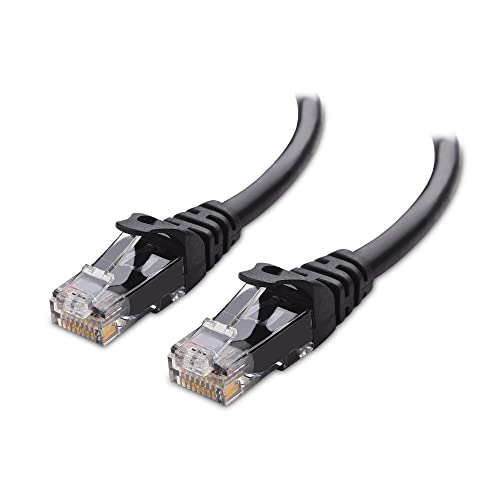
Cable Matters 10Gbps Snagless Cat 6 Ethernet Cable – 25ft, Cat 6 Cable, Cat6 Cord, Ethernet Cord, Black
High-Performance Connectivity: This Cat 6 ethernet cable is designed for superior performance, with a 24 AWG copper wire…
As an affiliate, we earn on qualifying purchases.
As an affiliate, we earn on qualifying purchases.